Your support helps us to tell the story
From reproductive rights to climate change to Big Tech, The Independent is on the ground when the story is developing. Whether it’s investigating the financials of Elon Musk’s pro-Trump PAC or producing our latest documentary, ‘The A Word’, which shines a light on the American women fighting for reproductive rights, we know how important it is to parse out the facts from the messaging.
At such a critical moment in US history, we need reporters on the ground. Your donation allows us to keep sending journalists to speak to both sides of the story.
The Independent is trusted by Americans across the entire political spectrum. And unlike many other quality news outlets, we choose not to lock Americans out of our reporting and analysis with paywalls. We believe quality journalism should be available to everyone, paid for by those who can afford it.
Your support makes all the difference.Read more
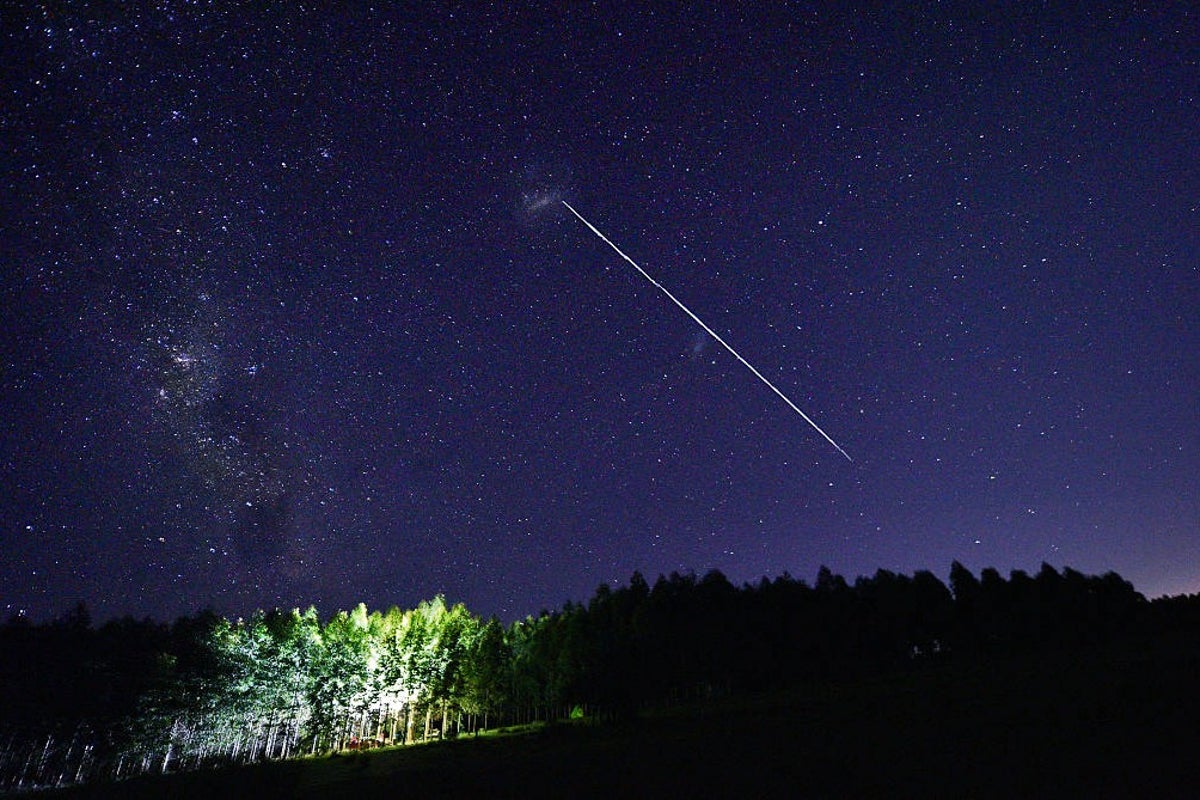
SpaceX has lost control of one of its Starlink satellites after it suffered a malfunction in orbit, Elon Musk’s company has warned.
The space internet satellite suffered an anomaly on Wednesday, SpaceX said, causing it to break up into a small number of objects.
The main part of the Starlink is now “tumbling” through space and is expected to fall from orbit in the coming weeks.
“The anomaly led to venting of the propulsion tank, a rapid decay in semi-major axis by about 4km, and the release of a small number of trackable low relative velocity objects,” SpaceX said in a statement.
“The satellite is largely intact, tumbling, and will reenter the Earth’s atmosphere and fully demise within weeks.”
The object’s current trajectory is below the International Space Station (ISS), according to SpaceX, meaning it poses no risk to the crew of the orbiting lab. SpaceX is coordinating with Nasa and the US Space Force to track the satellite.
It is one of more than 10,000 satellites that SpaceX has launched for its broadband network since 2019, with around 8,600 currently active and operational.
Earlier this week, SpaceX revealed that a Starlink almost collided with another launch by a Chinese competitor, with the two satellites coming within 200 metres of each other.
There have been several close calls for Starlink satellites, with experts warning that collisions could become increasingly common as mega constellations like Starlink fill low-Earth orbit.
Operational Starlink satellites have onboard thrusters that allow them to manoeuvre if necessary, though it requires space operators to collaborate with each other.
“Most of the risk of operating in space comes from the lack of coordination between satellite operators – this needs to change,” said Michael Nicholls, the vice president of Starlink engineering at SpaceX.
Chinese launch provider CAS Space also called for more collaboration between international space agencies and private companies.
Any potential collision could lead to what is known as the Kessler Syndrome, whereby pieces of debris cause countless more collisions in a domino effect that creates an impenetrable layer of debris that traps us on Earth.
As SpaceX continues to track the broken Starlink satellite, a company representative said that it is working to figure out what caused the issue in order to avoid it happening again.
“As the world’s largest satellite constellation operator, we are deeply committed to space safety,” SpaceX said in a statement.
“We take these events seriously. Our engineers are rapidly working to root cause and mitigate the source of the anomaly and are already in the process of deploying software to our vehicles that increases protections against this type of event.”