(Credits: Far Out / Alamy)
Sat 20 December 2025 1:00, UK
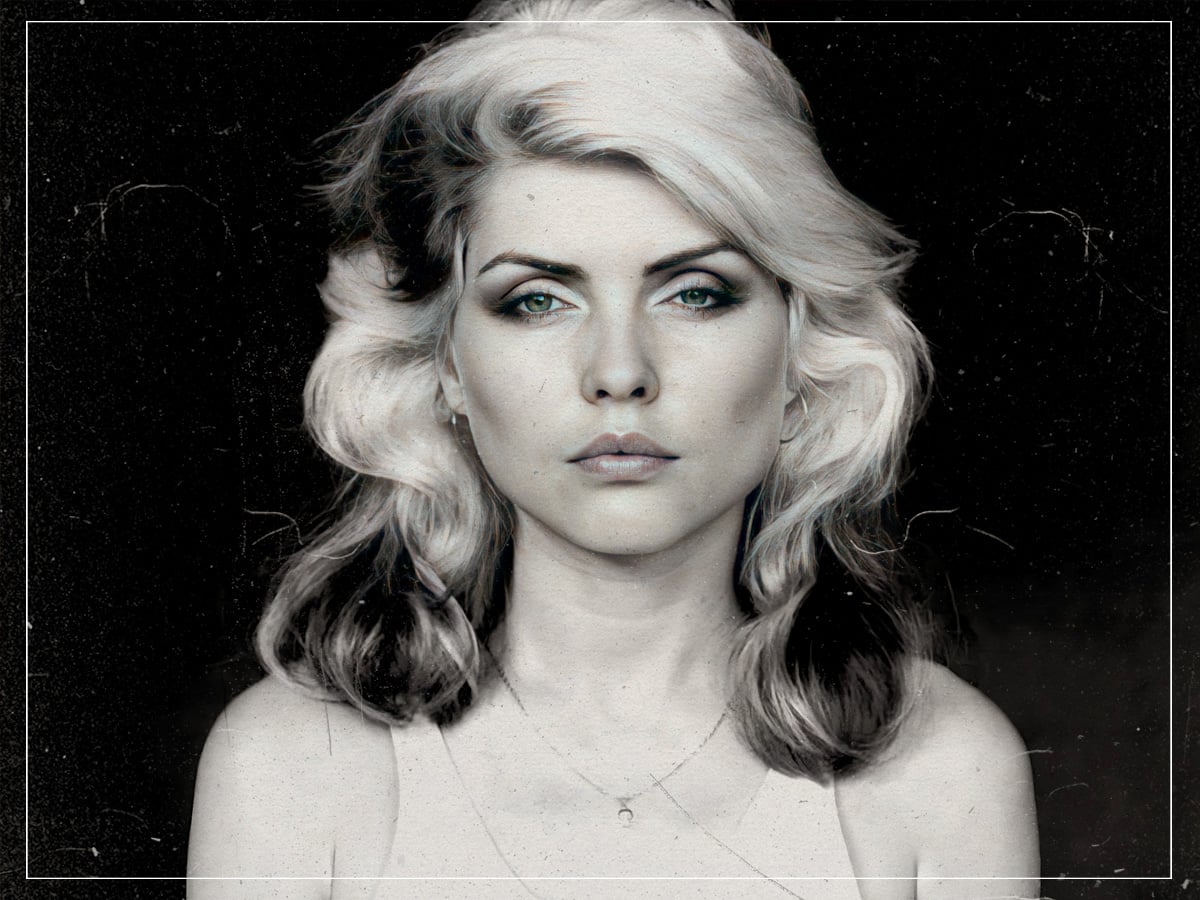
Although Blondie was, according to Debbie Harry, always a “group identity”, Harry was the singular face of the band, so much so that she often got mistaken for a solo act.
Of course, this occurred more in the beginning, when Harry’s magnetic aura as a frontwoman distracted from the other, just as important contributions within the band, specifically from Chris Stein, Jimmy Destri and Clem Burke. However, Harry remained the face of the band even after years of establishing themselves as major new wave pioneers, to the point where Blondie also became an interchangeable nickname for Harry herself.
It’s easy to see why. Beyond all of the more impressive and seemingly impossible reasons why Harry became a massive name in the scene, her visual aesthetic was a significant part of Blondie’s appeal, and she was able to stand out as a defining force without having to do anything inauthentic to get there.
One of the most commonly asked questions that Harry still faces to this day is how she managed to remain feminine in a male-dominated arena, and why she felt she was able to be herself without adopting different traits to get further than her peers, like becoming more physically masculine or acting a certain way to get people to take her seriously.
But Harry never really saw the need to embellish parts of herself that didn’t exist to begin with, especially when her main focus from day one was the music, and everything else came second. She was also a complete natural, able to appear effortlessly charismatic onstage and entirely in control, even in the piercing spotlight that often sought to tear women down.
However, despite all the positives that Harry enjoyed as the face of such an explosive movement, this introduced unexpected challenges later on, when Stein’s burgeoning illness and Harry’s desire to pursue other avenues began to emerge. Harry officially launched her solo career during Blondie’s hiatus in the 1980s, but some people still struggled to separate her from the band that gave her her name, wondering why she hadn’t just continued with it, even if she was the only one left.
“On the negative side, when I wanted to do something solo, all I ever heard was, ‘Can’t we call it Blondie?’” Harry told The Talks. “I am recognisably known as Blondie, and it was my idea for the band’s name – but we are partners, and we all have shares in the band. So, for me to use the name, it didn’t work right. Blondie is definitely a group identity.”
Harry also reflected on the fact that her relationship with her label wasn’t the best when she decided to pursue a solo career, but that she remains proud of what she did, despite the odds being against her. She even went so far as to say that “some of the best songs I’ve written are on those solo albums”, which is even more of a shame considering that many of them became overlooked by Blondie’s enduring legacy.
Sonically, many of Harry’s solo songs are definitely worthwhile, including the Rockbird staples, ‘French Kissin’ in the USA’ and ‘In Love with Love’, as well as the more ethereal ‘Chrome’ and ‘Rush Rush’, released as the first single following Blondie’s split. Most of them also reveal a different side to Harry outside of Blondie’s signature sound, exploring more experimental threads without compromising on her lyrical finesse.
Related Topics