THE City of Edinburgh Council has voted to provide “universal political education” to school children.
This means that the council is set to examine ways that schools in Edinburgh can make materials on voting systems and registering to vote more available in schools.
They will also consider ways to raise awareness of elections and provide instruction on registering to vote.
An SNP Edinburgh Councillor, Martha Mattos Coelho, was prompted to table this motion because of the obstacles that school pupils reportedly face in voting and engaging in politics.
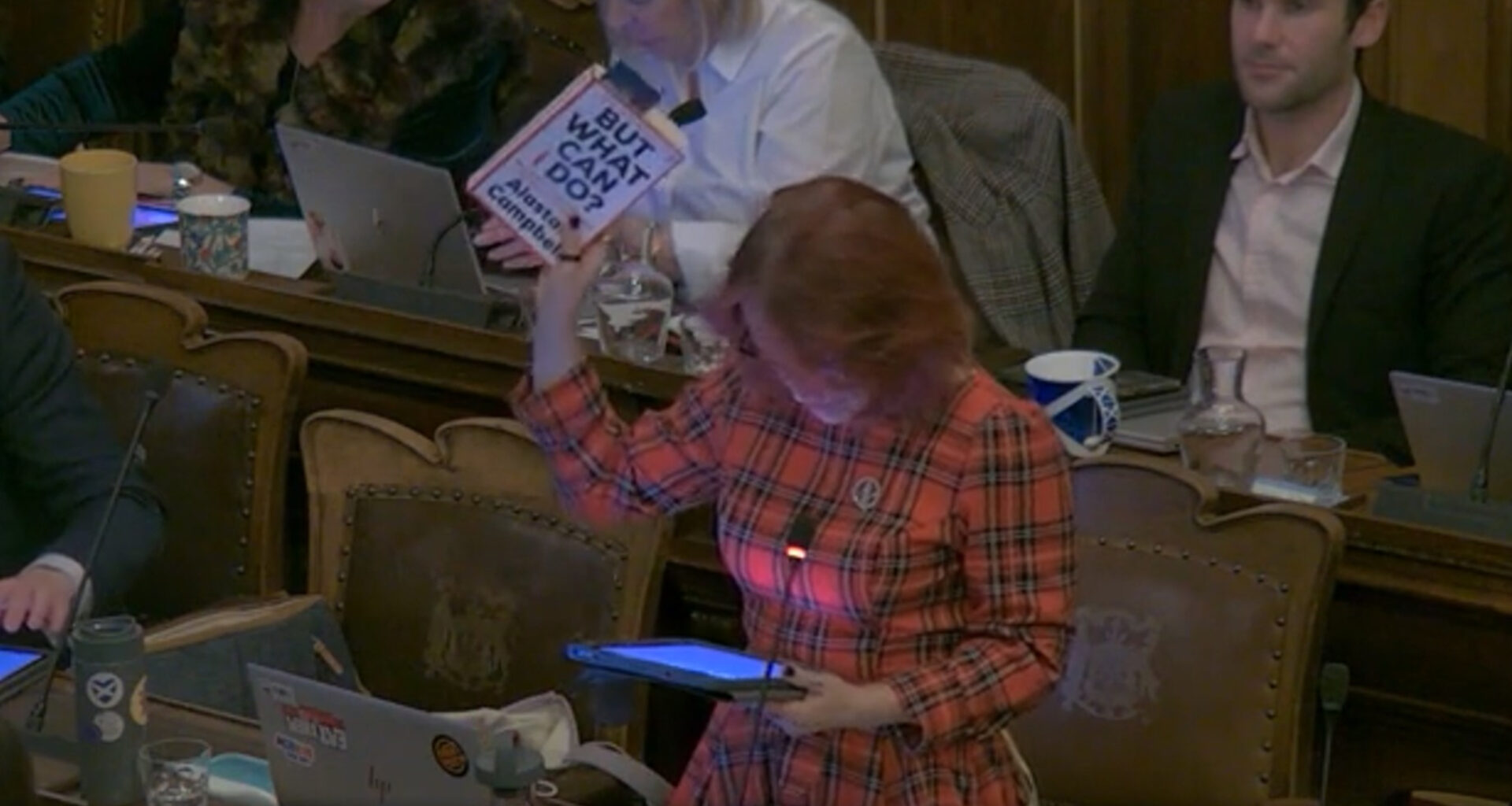
 Councillor Mattas Coelho cited Alastair Campbell’s book “But What Can I Do?” in the outline of her motion (C) City of Edinburgh Council
Her original motion, which would have seen council officers prepare a report into how political materials could be made available to all pupils, was, however, somewhat watered down by a Labour amendment.
Young Scottish voters face several barriers to voting, according to Councillor Martha Mattos Coelho, who represents the Liberton/Gilmerton ward, and can often be left feeling disenfranchised and confused by voting systems.
Mattos Coelho wants the council to recognise these barriers and allow young people to have universal access to materials about electoral systems, political beliefs and registering to vote.
She acknowledged that young people can receive modern studies tutoring, which will teach them about Scottish and UK politics, but she wanted to see these materials made available for all young voters.
She was also looking to get posters containing QR codes and information on registering to vote distributed among schools.
Mattos Coelho referred to the book But What Can I Do? by Alastair Campbell in her synopsis of the motion, saying: “The author says that it’s [disenfranchisement of young voters] because when he’s approached by a young person he says that it’s clear that while they have not yet reached the hopeless stage, they are headed there.
“This is why it’s so important for this motion to be passed – because young people are not voting and we need them to be voting.”
An amendment by the administration replaced the planned report to the Education, Children, and Families Committee with a business bulletin, removed some specific measures, and gave more licence to schools and teachers to decide for themselves how to provide political education.
An amendment by the Conservatives looked to essentially shelf the idea, with no report of business bulletin submitted.
They did, however, agree that it was important to encourage voting age school pupils to vote in elections.
Labour councillor James Dalgleish, proposing Labour’s amendment in response to the motion, said: “It always feels bad amending someone else’s motion when you agree with the thrust of it in getting more young people aware of politics.
“Universal political education sounds good, and we want to support that as much as we can, but if we’re going to bring forward a report that says modern studies materials should be made available to all student [sic].
“As someone who meets with teachers and trade unions on a weekly basis, i think it’s going to be very, very difficult and put a huge amount of pressure on teachers and school staff.
“I was to give [teachers] more of an opportunity to reach pupils within their limits and within their pressures to be able to further the democratic process.”
Labour councillor Margaret Arma Graham, seconding the motion, added: “It’s important that we don’t continually put pressure on our education system to educate young people on everything, when a lot of this education can be done at home.”
Councillor Christopher Cowdy, of the Conservatives, pointed out that a 2021 study by Cambridge University found “no support” for the idea that high school courses focusing on politics and civic skills development increase turnout.
Mattos Coelho initially tried to integrate parts of the labour amendment, turning her proposed report into a business bulletin, but the Labour group decided to pursue their motion independently anyway.
The original motion and the Conservatives’ amendment were shot down, while the Labour group amendment passed.
The council will now investigate ways that they can encourage teachers to provide political materials and information on registering to vote.
Related