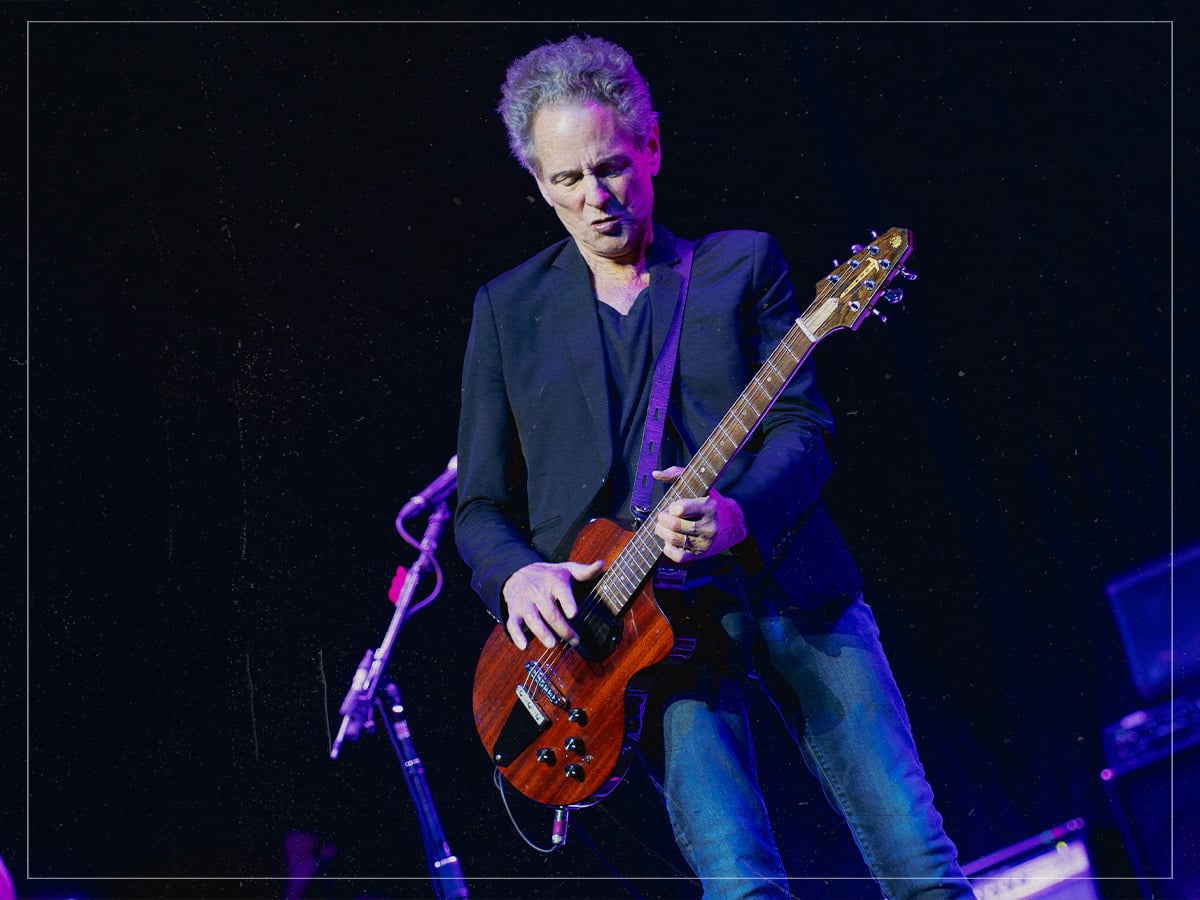
(Credits: Far Out / Raph Pour-Hashemi)
Sat 20 December 2025 18:25, UK
There’s something about making music for money that feels innately yucky. Art should arrive from the heavens and land in the soul, converting that into cash might be a necessity, but it doesn’t make the inner muso feel any better. But, for some, especially those in Fleetwood Mac, it was a difficult thing to overcome.
Making money has never felt aligned with rock music’s key ethos, but it somehow became a part of the drive for a whole run of bands. In the 1970s and ‘80s, how many records you sold was vitally important, well, for the most part. It turns out, though, that Lindsey Buckingham didn’t want Fleetwood Mac to follow the cash.
Fleetwood Mac were never a band known for being on the fringes of the rock world. They had their times when they were slightly more obscure in their early days as a blues rock outfit, but they were far from the kind of group that would get the same kind of credibility that the punks had when they started becoming superstars in the 1970s.
Lindsey Buckingham still took his craft very seriously, though, and he thought the Eagles were turning into self-parody by the time they hit the big time.
If you look at both bands’ trajectories, there’s actually a lot more overlap than you would think. Both groups had found pop success as rock outfits, but there was always a subtle hint of Americana throughout their music. Don Henley was proud to wear his country influences on his sleeve, and while Buckingham and Stevie Nicks were the only Americans in the group, the guitarist’s fingerpicking was much closer to bluegrass than rock and roll.
Still, Buckingham wasn’t looking to become the next answer to Glen Campbell on the charts or anything. He wanted to be a rockstar like the ones he idolised, and when he put his fingerpicking style through a Gibson Les Paul, the sound was deafening, giving simple pop songs like ‘Go Your Own Way’ much more bite when they came screaming out of the speakers.
The Eagles certainly could keep up with that, too, once Joe Walsh was brought into the mix. Their first albums might have had some country leanings, but bringing in the same guy responsible for ‘Funk 49’ was going to endear them to the stadium rock crowd, who just wanted to hear some rock and roll.
After the success of Hotel California, though, Buckingham became disappointed when he heard what the band were getting up to. Since The Long Run was made under extreme pressure and led to everyone moving on to a solo career, Buckingham thought that most of their output was just playing it safe.
When talking about Buckingham’s mindset, engineer Ken Callait remembered him thinking the Eagles had cashed in, recalling in Making Rumours, “Lindsey scoffed at bands that sold out. In fact, he thought the Eagles sold out during the next few years when they nearly duplicated the sounds of Hotel California on the next two albums. That’s why Fleetwood Mac departed so much from Rumours”.
It’s at least commendable for Buckingham not ot be pigeonholed, but there are more than a few times when his creativity backfired. Say what you want to about the bright moments of Tusk, but it’s by no means an easy listen from start to finish, especially when Buckingham tries to make the most off-the-wall experiment possible in the name of being “authentic”.
The Eagles weren’t exactly sticking themselves in a corner, either. The Long Run may have had a few similarities with Hotel California, but the use of talkbox guitar solos on ‘Those Shoes’ and the R&B sound on ‘I Can’t Tell You Why’ is much more interesting than just trying to back Hotel California 2: Check Out Time. Fleetwood Mac may have wanted to switch it up on every album, but even if Buckingham saw people selling out by making the same record, Rumours was the kind of perfection that anyone would try to copy.
Related Topics