Home » Latest Travel News » Thousands of Passengars Stranded In Europe As Netherlands, UK, Germany, France And Romania Delay 1,845 And Cancel 143 Flights, Impacting German Airways, KLM, Wizz Air And Others In Amsterdam, London, Berlin, Skopje and More
Published on
December 21, 2025

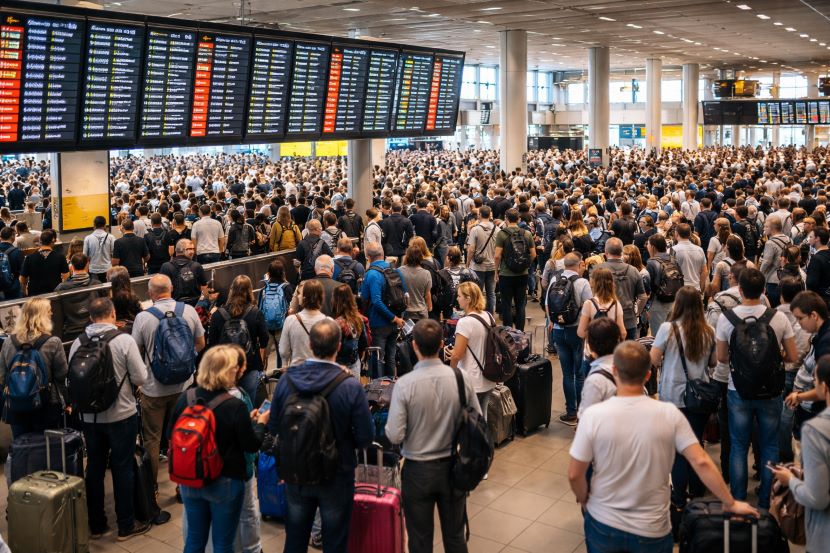
Thousands of travelers have been stranded across Europe as major airports in the Netherlands, UK, Germany, France, and Romania grapple with massive flight disruptions. A staggering 1,845 flights have been delayed, while 143 flights have been canceled, affecting major airlines such as German Airways, KLM, Wizz Air, and others. Airports including Amsterdam Schiphol, London Heathrow, Berlin Brandenburg, and Skopje have seen significant delays and cancellations, causing chaos for both business and leisure travelers.
Amsterdam Schiphol: The Worst Hit
Amsterdam Schiphol (AMS), one of Europe’s busiest airports, has been heavily impacted by both cancellations and delays. A total of 73 flights were cancelled, and a staggering 634 flights were delayed. Schiphol is known for its bustling international connections, serving as a hub for travelers heading to Europe and beyond. However, the chaos at AMS has disrupted travelers heading to various destinations, including holidaymakers, business professionals, and those on essential travel.
Skopje Airport Faces Significant Disruptions
Skopje Airport (SKP), the main international gateway to North Macedonia, has been struggling with a substantial number of disruptions, affecting travelers’ plans and creating challenges for both tourism and business travel. A total of 25 flights were cancelled, while 14 flights faced delays, causing a ripple effect throughout the region.
As one of the smaller but important airports in Southeast Europe, Skopje serves as a key hub for both international tourists and those traveling for business. The cancellations and delays have left passengers stranded at the airport for hours, missing connections or being forced to rebook their flights. This has had a particular impact on tourists planning their visits to North Macedonia, which has been seeing a steady increase in tourism in recent years.
London Heathrow Faces Major Disruptions
London Heathrow (LHR), one of the world’s busiest international airports, has been experiencing significant disruptions, with 9 cancellations and 292 delays impacting travelers in recent days. These disruptions have caused frustration for millions of passengers trying to reach their destinations, particularly during the busy holiday travel season when travelers are eager to reunite with loved ones or head on vacation.
As a key hub for international travel, Heathrow plays a critical role in the global travel ecosystem, connecting the UK to destinations across Europe, Asia, the Americas, and beyond. However, these recent disruptions highlight the challenges faced by one of the world’s busiest airports, where tight flight schedules and high passenger volumes often result in cascading delays and cancellations.
Manchester Airport Faces Travel Chaos
Manchester Airport (MAN), one of the UK’s busiest hubs, has been grappling with significant disruptions, as 6 flights were cancelled and 270 flights delayed in recent days. These disruptions are part of an ongoing challenge for airports worldwide, particularly during peak travel seasons. Manchester, which serves as a key gateway to the North of England, has witnessed a growing number of frustrated travelers stranded at the airport, facing long waits and travel uncertainty.
Berlin Brandenburg Airport Faces Disruptions
Berlin Brandenburg Airport (BER), the capital’s primary international hub, is experiencing significant operational challenges, with 5 cancellations and 109 delays affecting travelers over the past few days. These disruptions, while seemingly modest in comparison to some larger European airports, have nonetheless caused considerable inconvenience for passengers traveling to and from Berlin, especially during the peak holiday season. As one of the most important gateways to Germany, BER plays a critical role in connecting international visitors to the city’s rich history, culture, and business opportunities. However, these recent disruptions are threatening to sour what should be a smooth travel experience for many.
Charles de Gaulle Airport Faces Major Disruptions
Charles de Gaulle Airport (CDG) in Paris, one of Europe’s largest and busiest airports, is currently facing significant operational challenges, with 9 cancellations and 391 delays affecting thousands of travelers. These disruptions have come at a time when global travel demand is on the rise, and CDG plays a crucial role in connecting travelers from around the world to Europe and beyond.
As one of the most important hubs in Europe, particularly for long-haul international flights, these disruptions at CDG have created a ripple effect not just at the airport, but also across Europe, with travelers facing extensive delays, missed connections, and additional expenses. The impact of these disruptions goes beyond just the inconveniences faced by travelers; it extends to tourism, business, and the broader economy in Paris and the surrounding region.
London Luton Airport Faces Disruptions
London Luton Airport (LTN), one of the UK’s busiest international airports, has been facing operational challenges in recent days, with 4 cancellations and 124 delays affecting travelers. Though smaller than major hubs like Heathrow and Gatwick, Luton plays a crucial role in connecting London to Europe and beyond, particularly for low-cost airlines and budget-conscious travelers. The disruptions at Luton have caused considerable inconvenience for passengers, with delays impacting both leisure and business travelers during peak travel times.
Tuzla International Airport Faces Disruptions
Tuzla International Airport (TZL), located in Bosnia and Herzegovina, has recently experienced disruptions affecting both leisure and business travelers. With 3 flight cancellations and 4 delays, passengers traveling through this regional hub are facing delays in their journeys. While Tuzla may not be as large as major European airports, it still plays a significant role in the regional travel landscape, particularly for those flying to and from Bosnia and Herzegovina. These disruptions, although smaller in scale, highlight the vulnerabilities faced by regional airports, where operational efficiency is crucial for ensuring smooth travel connections.
Suceava International Airport Faces Disruptions
Suceava International Airport (SCV), a regional airport located in the northeastern part of Romania, has recently experienced operational challenges, with 7 flight cancellations and 5 delays affecting travelers. Although not as large as major international hubs, Suceava serves as an essential gateway for both domestic and international travelers, particularly for those flying between Romania and key destinations in Europe. These disruptions, though relatively small, have had a noticeable impact on passengers, particularly those who rely on the airport for efficient connections to other European cities.
Istanbul Sabiha Gokcen International Airport
Istanbul Sabiha Gokcen International Airport (SAW), one of the major international gateways to Turkey, has faced relatively minor disruptions, with 2 delays and no cancellations reported. While these delays are small in number, they still highlight the challenges that airports, even the most efficient ones, face in managing air traffic. As one of the busiest airports in Istanbul, particularly known for its role in handling low-cost and domestic flights, Sabiha Gokcen is a vital hub for travelers flying to and from Turkey. However, even minor delays can cause a ripple effect, especially for passengers on tight schedules or those connecting to other flights.
In a tabular Format
The travel industry continues to face operational challenges as various airports experience flight cancellations and delays. These disruptions have significant impacts on both leisure and business travelers, causing frustration and delays in travel plans. Below is a table summarizing the flight cancellations and delays at several key international airports, offering a clear comparison of how different hubs are managing their operations.
The data above reveals the varying degrees of disruption across major airports, with Amsterdam Schiphol and Charles de Gaulle experiencing the highest number of cancellations and delays. Travelers passing through these airports should stay updated on flight statuses, especially during busy travel periods. With more airports experiencing delays, it’s important for travelers to plan accordingly and consider alternative routes or connections when necessary. While these disruptions can cause short-term inconvenience, airports continue to work towards improving operational efficiency and minimizing the impact on passengers.
Airlines Affected Due to this Cancellation
KLM Faces Major Disruptions with 54 Cancellations and 323 Delays
KLM, the flagship airline of the Netherlands, has recently experienced significant operational disruptions, with 54 flight cancellations and 323 delays reported. These disruptions have had a profound impact on travelers, particularly during the busy travel season, affecting both leisure and business passengers. As a major European carrier, KLM connects passengers to destinations across the globe, and these delays and cancellations are causing widespread inconvenience.
Air France Faces Disruptions with 6 Cancellations and 16 Delays
Air France, one of Europe’s leading airlines, has recently experienced travel disruptions, with 6 cancellations and 16 delays impacting passengers. The 6 cancellations and 16 delays have affected both leisure and business travelers, causing frustration for those hoping to reach their destinations on time. With the holiday season approaching and global travel continuing to increase, these disruptions highlight the ongoing challenges faced by airlines in maintaining smooth operations amidst high passenger volumes.
German Airways Faces Disruptions with 4 Cancellations and 22 Delays
German Airways, a regional carrier serving both domestic and European routes, has experienced significant travel disruptions recently, with 4 flight cancellations and 22 delays affecting passengers. These operational challenges, though relatively small in number, have caused inconvenience for travelers relying on the airline for timely connections across Germany and Europe.
Wizz Air Faces Disruptions with 20 Cancellations and 8 Delays Impacting Travelers
Wizz Air, a popular European low-cost carrier, is currently experiencing operational disruptions, with 20 cancellations and 8 delays affecting passengers across its network. These disruptions come at a time when many travelers are eager to reach their holiday destinations or attend business meetings, making the timing particularly frustrating for those affected.
British Airways Faces Disruptions with 3 Cancellations and 111 Delays
British Airways, one of the world’s leading international airlines, has recently faced operational disruptions, with 3 flight cancellations and 111 delays impacting travelers. These disruptions come at a time when passengers are returning to the skies in greater numbers, and smooth air travel is more important than ever.
- Amsterdam Schiphol (AMS): With 73 cancellations and 634 delays, passengers had to face long wait times and missed connections, particularly those flying internationally or connecting through other European hubs.
- London Heathrow (LHR): 9 cancellations and 292 delays added unanticipated costs for passengers who had to rebook flights or stay overnight at the airport or nearby hotels.
- Manchester Airport (MAN): Passengers impacted by 6 cancellations faced additional accommodation costs or forced to take alternative routes, especially for those traveling internationally.
- London Luton Airport (LTN): 4 cancellations and 124 delays added travel uncertainty and extra financial burden, particularly for budget travelers who may not have had the flexibility to adjust their travel schedules without incurring extra costs.
- Charles de Gaulle (CDG): Travelers heading to Paris for leisure were impacted by 9 cancellations, with potential missed opportunities to visit attractions.
- Berlin Brandenburg (BER): 5 cancellations and 109 delays disrupted plans for tourists visiting Berlin for cultural and historical exploration, cutting into their planned time.
- Tuzla International (TZL): With 3 cancellations and 4 delays, passengers flying into Tuzla for leisure purposes had to adjust their travel schedules, potentially reducing their time exploring Bosnia and Herzegovina’s rich cultural heritage.
- Skopje (SKP): With 25 cancellations, passengers, particularly those traveling for the first time or on family trips, were left feeling stressed and anxious due to the uncertainty surrounding their flights and the long waiting times.
- Suceava International (SCV): Although 7 cancellations and 5 delays may seem minor, these disruptions still caused stress for passengers who had limited flight options and struggled with last-minute changes to their travel plans.
- Istanbul Sabiha Gokcen (SAW): 2 delays may have been minor in scale, but passengers still faced potential missed connections and frustration, especially those with tight schedules or attending time-sensitive events.
What Travelers Can Do1. Stay Informed and Monitor Flight Status
- Check flight updates: Regularly monitor your airline’s website or app for real-time updates on your flight status to stay informed about delays or cancellations.
- Stay in touch with your airline: Call your airline directly or visit the airline’s desk at the airport for information on rebooking options or compensation.
2. Rebook or Seek Alternatives Early
- Rebook as soon as possible: If your flight is cancelled, contact your airline immediately to rebook your flight for the next available time.
- Look for alternative routes: If your flight is cancelled and there are no available options, consider alternative airports or routes to reach your destination.
- Use the airline’s app or website: Many airlines offer self-service rebooking options via their mobile apps or websites to expedite the process.
4. Plan for Extra Time and Flexibility
- Arrive early at the airport: For connecting flights or during peak travel times, allow extra time to account for delays or longer check-in processes.
- Be flexible with your schedule: If possible, adjust your plans to accommodate the possibility of a delay or rescheduling, particularly for business trips or important appointments.
5. Stay Comfortable During Long Waits
- Bring essentials: Pack extra snacks, water, a phone charger, and entertainment to stay comfortable during long waits or layovers.
- Use lounges: If available, consider using airport lounges to relax, access Wi-Fi, and enjoy comfortable seating during a delay.
- Look for quiet spaces: Many airports offer designated quiet zones or seating areas where you can relax while waiting for updates.
Conclusion:
These widespread disruptions underscore the ongoing challenges facing the aviation industry, particularly during high-demand travel periods. As travelers scramble to adjust their plans, the impact on local economies and tourism is becoming increasingly evident. Airlines and airports must act swiftly to improve efficiency and restore passenger confidence.
Source:- FlightAware and Different Airports
