The principal shareholder declared the club were in a “strong position” amid Peter Lawwell’s departure
06:00, 21 Dec 2025Updated 20:01, 21 Dec 2025
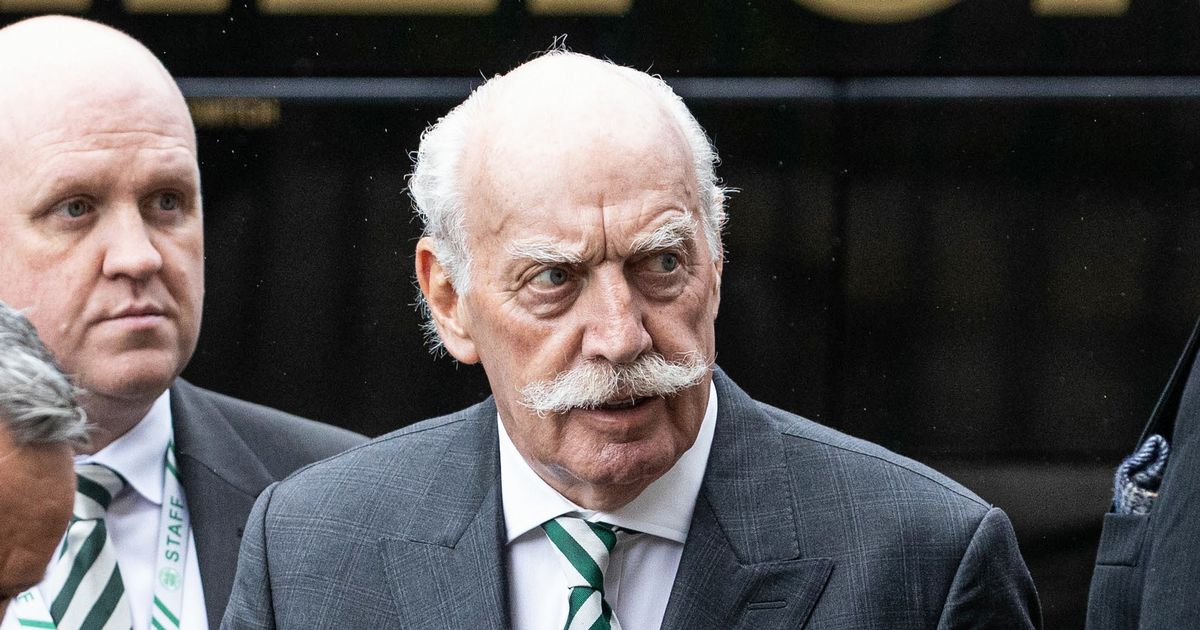
 Celtic majority shareholder Dermot Desmond
At the end of the club statement announcing Peter Lawwell’s imminent departure as chairman, principal shareholder Dermot Desmond was quoted as saying: “Celtic is in a strong position to withstand whatever the future may throw at us.” You could have fooled me.
Strong position? Johnny Kenny was humiliated at Tannadice in midweek – palpably out of his depth up front for Celtic and proving that was the case by missing sitter after sitter.
He is not even a Premiership player, far less a Celtic player. Kenny was then replaced by Shin Yamada, who’s even worse. Travelling Hoops fans dismissed coach Wilfried Nancy in the most graphic terms after four games in charge.
All of them lost. You know it’s crisis time when Celtic go into today’s home game against Aberdeen trying to prevent equalling a record of five defeats in a row set two years before I was born.
Strong position? In what way precisely? Celtic are mired in a mess of their own making and one that will ensure, from this distance, no trophies are won this season. And the nightmare scenario is still in the formative stages.
Rangers could go above their greatest rivals in the league if they beat Hearts prior to Celtic kicking off against the Dons today. And if Danny Rohl’s side then beat Celtic on their own ground on January 3?
 Wilfried Nancy is under serious pressure at Celtic(Image: ANDY BUCHANAN / AFP via Getty Images)
Search me. When a new manager is appointed by Celtic, he walks in the footsteps of iconic figures such as Jock Stein, Billy McNeill, Martin O’Neill and Brendan Rodgers.
It is about history, tradition and heritage. Nancy, who has Americanised his job by using Stateside phraseology and adopting the touchline mannerisms of someone in charge of a college basketball side, is miscast and misplaced. A mistake.
The support is presently involved in a protest against the club whereby they refuse to buy Celtic merchandise, a withdrawal of financial backing which lasts until February. They’re not buying excuses either.
Incredibly, Celtic CEO Michael Nicholson released a video prior to the 2-1 defeat against Dundee United in which he said discussions had already started between him and Nancy over signings that could be made in the January transfer window.
Nancy fronting the January window is what the Celtic fans are most afraid of at this time. Nicholson’s words were ill-timed, ill-advised and ill-considered.
Should he not have waited until the game was over and kept his thoughts to himself until public opinion could be assessed, especially in light of that fourth straight defeat?
Strong position? When Kilmarnock and Ross County dismissed Stuart Kettlewell and Tony Docherty over the space of 48 hours at the start of last week, they were acting out of an obligation to understand their clubs’ shared predicament.
Unless stringent action was taken, both clubs feared relegation from the Premiership and the Championship respectively would be the price of inactivity.
Celtic’s concern is obviously not demotion. It should be about how far they still have to fall while, incredibly, having more money in the bank than the rest of their league competitors put together.
Strong position? It was supposed to be that way but it didn’t work out as expected. Sometimes, when you think outside the box, you can go too far outside the box.
A left-field appointment can be a good idea, unless it’s too far left of the field. Like Nancy.
And then there’s the question of telling yourself you’re in a strong position when all of the evidence in front of you offers a contradictory opinion. If you can’t see the truth when it’s staring you in the face then myopia leads to self-delusion, which, in turn, leads to self-destruction.
Strong position? Not from where the crowd are sitting at Celtic Park this afternoon. Those supporters who bother to turn up, that is.
If a draw’s a disaster and a defeat’s a catastrophe, five losses in succession would surely have to be the calamitous catalyst for managerial change. If not, why not?