- A new report links forestry giant Royal Golden Eagle’s pulp supply chain to the clearance of 5,565 hectares (13,751 acres) of natural forest in Indonesian Borneo between 2020 and 2024, despite the company’s no-deforestation pledge. RGE says the clearing was likely non-compliant.
- The deforestation occurred in the Mahakam River watershed, one of Indonesia’s last intact rainforest regions and habitat for critically endangered species including Bornean orangutans, Irrawaddy dolphins and Sumatran rhinos.
- Timber from two Bornean concessions flowed through a single wood chip mill to RGE’s Asia Symbol pulp plant in China. The mill had already been linked to earlier deforestation breaches.
- The case may undermine RGE’s effort to regain certification under the Forest Stewardship Council (FSC), and has also renewed scrutiny of banks financing the group, with campaigners urging suspensions until deforestation across its supply chain stops.
See All Key Ideas
JAKARTA — One of the world’s biggest pulp and paper companies has acknowledged to Mongabay a potential breach of its no-deforestation commitment in its supply chain, raising questions about the company’s attempt to regain sustainability certification under the Forest Stewardship Council.
A new report by U.S.-based campaign group Rainforest Action Network (RAN) alleges that Singapore-based pulp and paper giant Royal Golden Eagle’s (RGE) supply chain is linked to deforestation in Indonesia, despite the group having adopted a no-deforestation policy in 2015.
RGE, owned by Indonesia’s billionaire Tanoto family, is one of the world’s largest producers of wood pulp and the various products made from it, including paper, tissue, packaging, and viscose rayon.
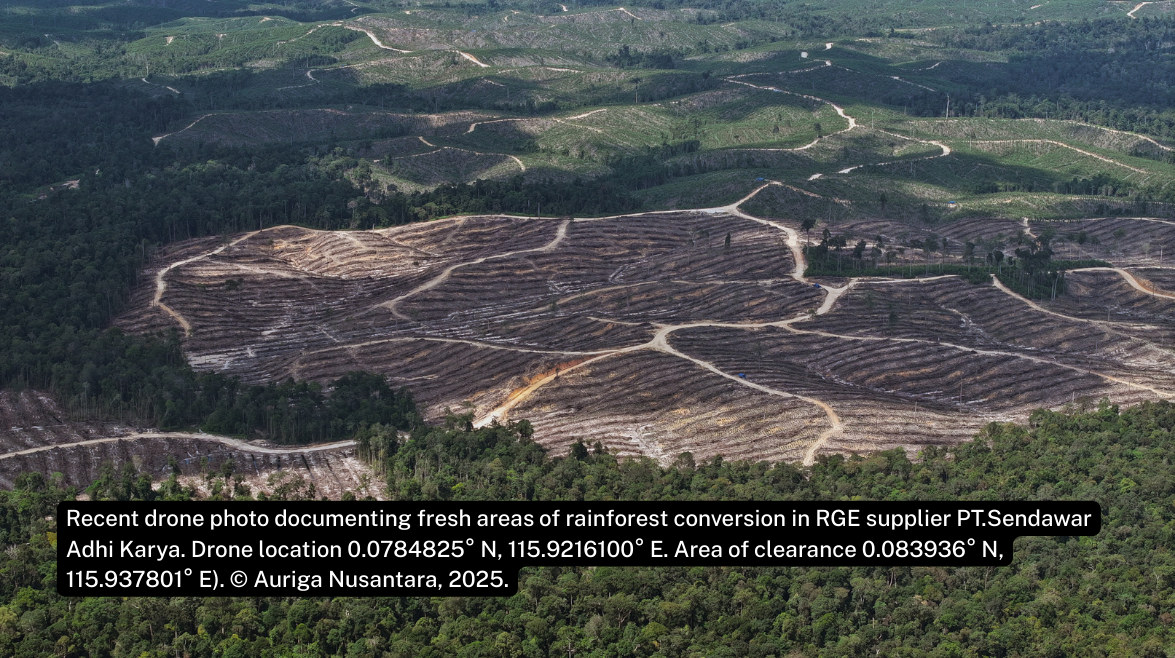
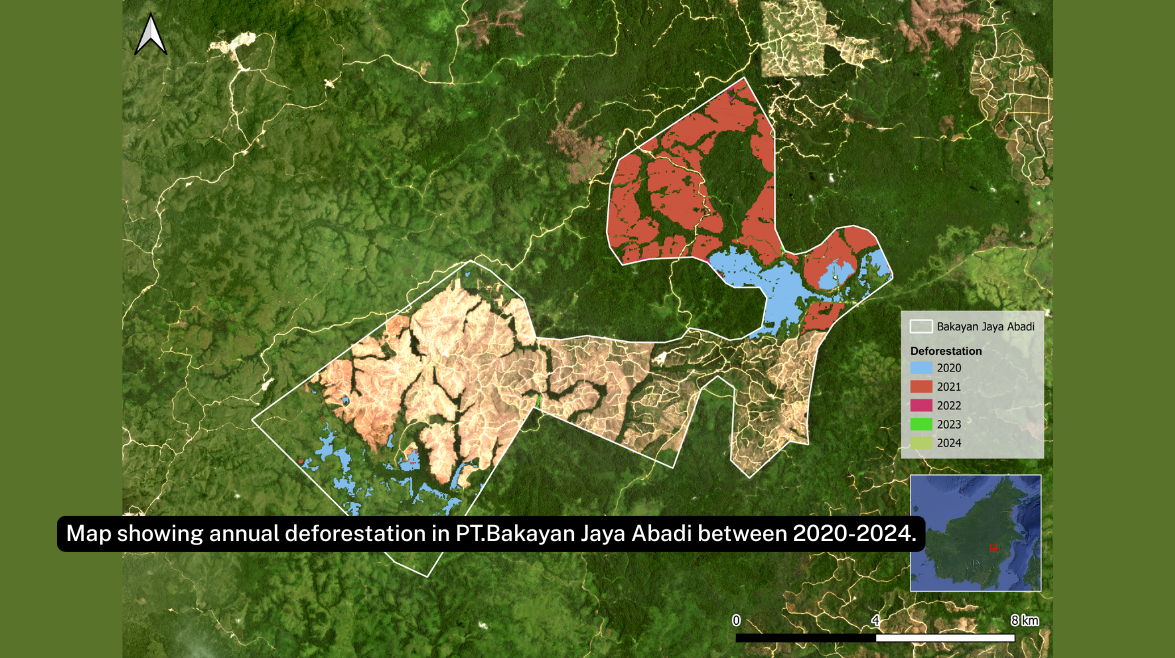
According to the report, RGE’s pulp and paper unit in China, Asia Symbol, sourced wood from two pulpwood plantations in Indonesian Borneo where 5,565 hectares (13,751 acres) of natural forest were cleared between 2020 and 2024.
The analysis draws on satellite data, field investigations, and customs and wood supply records compiled by supply chain transparency platform Trase in its latest update on Indonesia’s pulp sector.
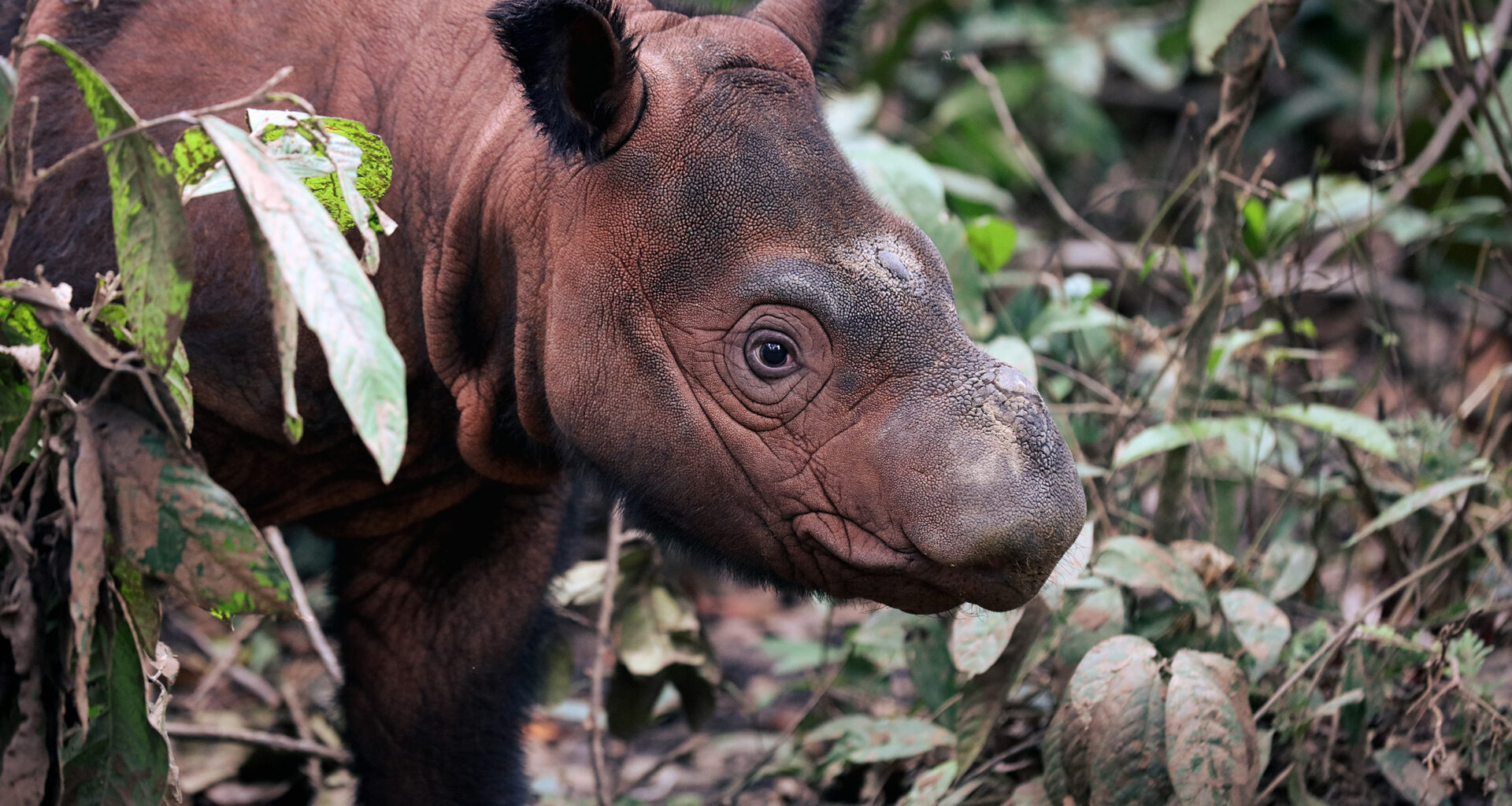
The forest clearance occurred in the watershed of the Mahakam River, which contains some of the largest remaining tracts of intact rainforest in Indonesia and supports populations of critically endangered and iconic species, including the Bornean orangutan (Pongo pygmaeus), Mahakam population of the Irrawaddy dolphin (Orcaella brevirostris), and the Bornean population of the Sumatran rhino (Dicerorhinus sumatrensis).
Previously thought to be extinct in the wild on Borneo, Sumatran rhinos were detected in the broader Mahakam region in 2016. One has since been captured for a captive-breeding program, with the surrounding forests remaining suitable habitat for potential reintroduction, according to RAN.
The group noted that one of the rhinos was spotted in the Belayan River area, not far from where the forest clearing took place, which RAN says emphasizes that the surrounding forests form part of Sumatran rhino habitat in Borneo.
Forest conditions in the cleared areas appear relatively intact, contradicting claims that the land was degraded prior to being cleared, RAN added.
The findings come amid a series of severe floods that have devastated communities across Indonesian Borneo and Sumatra, events that Indonesian government agencies and scientists have linked to upstream forest loss.
Scientists say the replacement of intact rainforest with industrial plantations can reduce the land’s ability to absorb rainfall, increasing erosion and accelerating flood and landslide risks.
RGE’s growing demand for wood fiber continues to pose “one of the single largest threats to Borneo’s remaining rainforests,” said Robin Averbeck, forest program director at RAN.
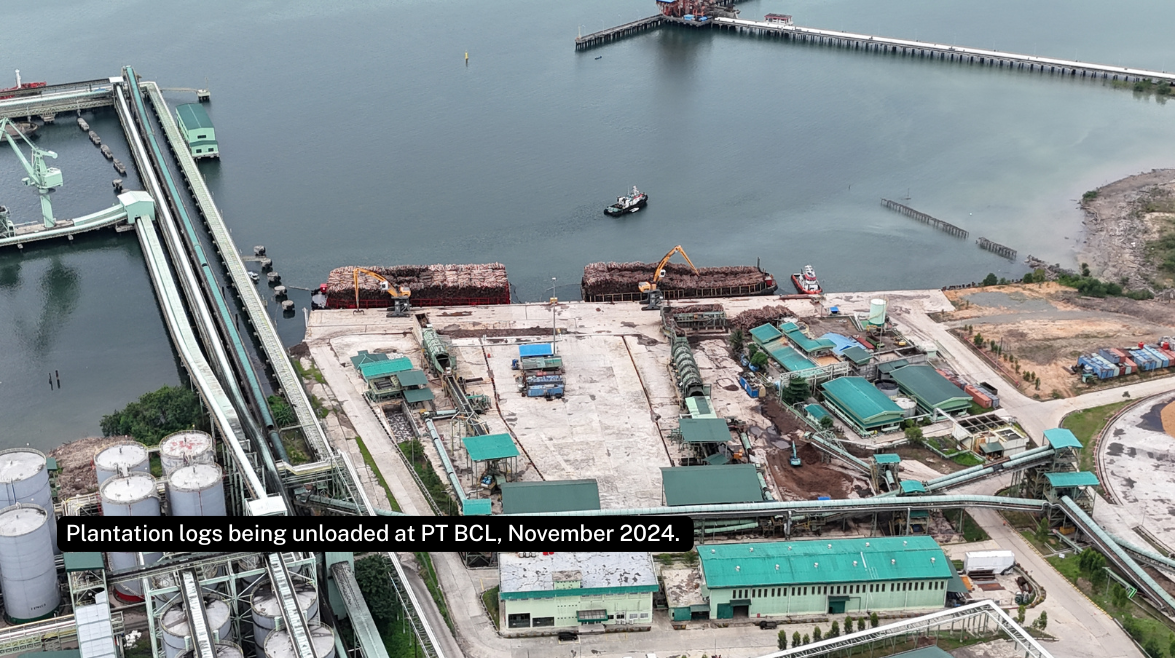
According to the report, deforestation-linked timber from two concessions — PT Sendawar Adhi Karya (SAK) and PT Bakayan Jaya Abadi (BJA) — entered RGE’s supply chain through PT Balikpapan Chip Lestari (BCL), which operates a wood chip mill in Balikpapan, East Kalimantan province.
Data reported by BCL to Indonesia’s Ministry of Forestry show that SAK and BJA sent all of their plantation timber — more than 400,000 cubic meters (14 million cubic feet) in 2024 — to the BCL mill. Shipment records indicate that in that same year, BCL exported all of its wood chips, totaling more than 800,000 metric tons and valued at more than $70 million, to Asia Symbol’s pulp mill in Rizhao, China.
“This volume is not marginal,” Averbeck said. “It represents a significant chunk of RGE’s global wood fiber supply.”
Response from RGE
In response to Mongabay’s questions, RGE said its “preliminary analysis … indicates that land cover change did occur in the concessions of SAK and BJA between 2020 and 2024 and that this land cover change was likely non-compliant with our no-deforestation and sustainable sourcing policies.”
This isn’t the first time RGE has acknowledged that its supply chain was exposed to deforestation through BCL.
In July 2023, Asia Symbol said BCL sourced wood from suppliers linked to deforestation between 2016 and 2022, in breach of the company’s no-deforestation commitment. In the wake of that incident, Asia Symbol said BCL was required to implement a robust due diligence system and conduct regular field verification for all wood sourced.
The latest clearing by SAK and BJA therefore appears “not an isolated occurrence,” Averbeck said, noting that the companies were meant to be under enhanced supervision following earlier supply-chain violations.
“This case clearly shows that RGE’s claim to have ‘zero tolerance’ for deforestation is bogus,” she said.
Following what it described as preliminary findings from its investigation — and citing the 2023 supply-chain issue involving BCL — RGE said Asia Symbol had decided to immediately cease all sourcing from BCL, and that Asia Symbol and other RGE companies would not source from BCL in the future.
While RGE says it has now severed ties with BCL, it didn’t explain why the compliance concerns identified in 2023 hadn’t resulted in permanent disengagement or earlier intervention.
Response from FSC
RAN said the findings could affect RGE’s attempt to rejoin as a member of the Forest Stewardship Council (FSC), which certifies wood and paper products worldwide and bills itself as “the world’s most trusted mark for sustainable forestry.”
RGE’s pulp and paper group, Asia Pacific Resources International Holdings Ltd. (APRIL), previously lost its certification (a process the FSC calls “disassociation”) over large-scale deforestation and social conflicts involving Indigenous and local communities in Indonesia.
In 2023, the FSC introduced a mechanism that allows disassociated companies such as APRIL to seek reassociation — but only if they address past environmental and social harms across their corporate group, not just at individual mills or concessions.
APRIL has entered this process, known as the Remedy Framework, but it was suspended in September 2025 following allegations that workers from PT Toba Pulp Lestari, part of APRIL’s corporate group, violently assaulted members of Indigenous communities in Indonesia’s North Sumatra province.
According to RAN, because BCL supplied wood exclusively to Asia Symbol, BCL should be considered financially controlled by RGE under the FSC’s new methodology for determining corporate group control. Under that interpretation, the deforestation linked to BCL would therefore constitute a direct breach of FSC policies as well as RGE’s own no-deforestation commitments, according to RAN.
RGE denies owning BCL. But RAN says overlapping corporate structures, shared infrastructure and exclusive supply relationships all point to what it describes as “shadow companies” operating as extensions of RGE’s pulp and paper business.
In its response, the FSC said it hasn’t reviewed RAN’s report and doesn’t yet have sufficient information to assess the scenarios described.
It said that where corporate structures are complex, it engages independent external experts to analyze control relationships, “as done in the corporate group review for RGE.” However, the FSC didn’t say whether BCL or its suppliers fall within RGE’s corporate group under its newly published Standard Operating Procedure to Determine Corporate Group Control.
The certification body said factors such as exclusive commercial relationships, shared resources or financial links are assessed on a case-by-case basis, and that determining control requires evidence of the ability to direct or decisively influence another entity’s strategic, operational or economic policies.
The FSC confirmed that it had suspended its memorandum of understanding with APRIL and its corporate group on Sept. 26, 2025, and said lifting the suspension would depend on the outcome of an independent investigation into the North Sumatra incident and the implementation of corrective measures under the Remedy Framework.
Financing deforestation
RAN’s report also highlighted the role of major Japanese bank Mitsubishi UFJ Financial Group (MUFG) in financing companies linked to deforestation in Borneo.
MUFG is the second-largest creditor to the RGE group across its pulp and palm oil divisions, providing $222 million to APRIL between 2020 and July 2025, according to Forests & Finance data. The bank also contributed $95 million to a syndicated loan to the group in 2024.
RAN says MUFG has failed to demonstrate how it applies its “No Deforestation, No Peatland, No Exploitation” (NDPE) commitments when dealing with clients that have opaque corporate structures.
MUFG declined to comment to Mongabay about the findings from RAN’s investigation, citing client confidentiality.
In light of the findings, RAN is calling on the FSC to extend the suspension of RGE’s reassociation process until all deforestation across the group’s supply chain has ceased and past harms have been remedied.
The group is also urging MUFG to halt new financing for RGE, and calling on global brands to suspend sourcing from RGE until the conglomerate can demonstrate deforestation-free operations across its corporate group.
“RGE is actively driving deforestation across Borneo while MUFG provides the financial fuel,” Averbeck said. “Communities will inevitably suffer the consequences, including landslides and catastrophic flooding. The Tanoto family’s business empire and the banks enabling it need to be held accountable.”
Banner image: Sumatran rhino. Image by Rhett Ayers Butler.
FEEDBACK: Use this form to send a message to the author of this post. If you want to post a public comment, you can do that at the bottom of the page.
