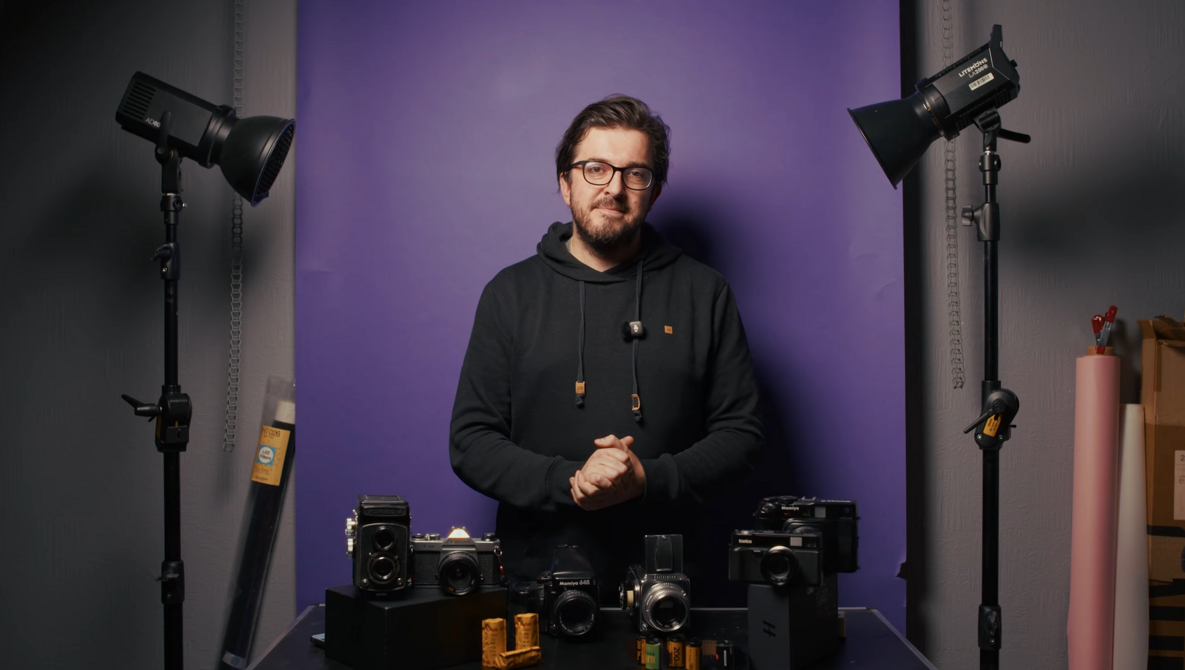
Film can make you slow down, commit to a frame, and accept that you will not know what you got until later. If film is calling your name, the fastest way to avoid wasting money is to understand the few choices that actually matter before you buy anything.
Coming to you from Andrew Lanxon, this practical video lays out the beginner path without pretending film is mysterious. You get a clear breakdown of camera types, starting with simple compacts that do most of the thinking, then stepping up to SLRs that ask more from you. Lanxon uses examples like the Canon Prima Zoom and the Konica Hexar AF to show what “easy” looks like in the real world. He also mentions the price-hype end of the pool with the Contax T2, which is exactly the kind of camera that can tempt you into spending big before you even know what you like. If you have ever bought gear because the internet made it seem inevitable, that section will feel uncomfortably familiar.
The camera advice gets more useful when he starts talking about “starter” SLRs that keep film fun instead of frustrating. He calls out classics like the Canon AE-1, Nikon F, and Pentax K1000, then shifts to a more modern option, the Canon EOS 1000F, for a reason that has nothing to do with nostalgia. If you already have compatible EF-mount lenses, that kind of body can be the cheapest on-ramp to film with the least friction. He also draws a clean line between 35mm and 120, including why medium format bodies like the Hasselblad 500C and the Mamiya 6 are better treated as a second step, not a first purchase. The part you will want to hear from him directly is how he thinks about “value” when one roll gives you far fewer frames and the camera gives you far fewer safety nets.
Once you have a camera, the next trap is film choice, because “just pick one” turns into a cabinet of half-used boxes fast. He points to Kodak Gold 200 as a sane starting point and explains how film locks in your ISO choice the moment you load it, which changes how you approach light. He contrasts slower stocks like Leica MONOPAN 50 with faster options like Ilford Delta 3200, then names dependable black-and-white picks such as Ilford HP5 Plus and Kentmere 400. He also touches on newer, stronger-look options like HARMAN Phoenix 200 and HARMAN Red without making it sound like you need “special” film to make interesting images. Then he gets into exposure and metering in plain terms, including what to do when your camera has no meter at all, plus one small habit that can save a roll when the light is tricky.
The back half is where the video becomes expensive in a helpful way, because it deals with what happens after you shoot. Lab developing sounds simple until you do the math across multiple rolls, and he talks through a workflow where you pay a lab for developing but scan at home. The gear angle here is not about flexing a fancy setup, it is about repeatable results and fewer surprises. He also gives a few beginner rules that sound boring until you live them, like starting cheap, not burning through frames out of habit, and accepting that mistakes cost money on film. One specific mistake he admits to is the kind you will remember the next time your thumb reaches for the back latch. Check out the video above for the full rundown from Lanxon.