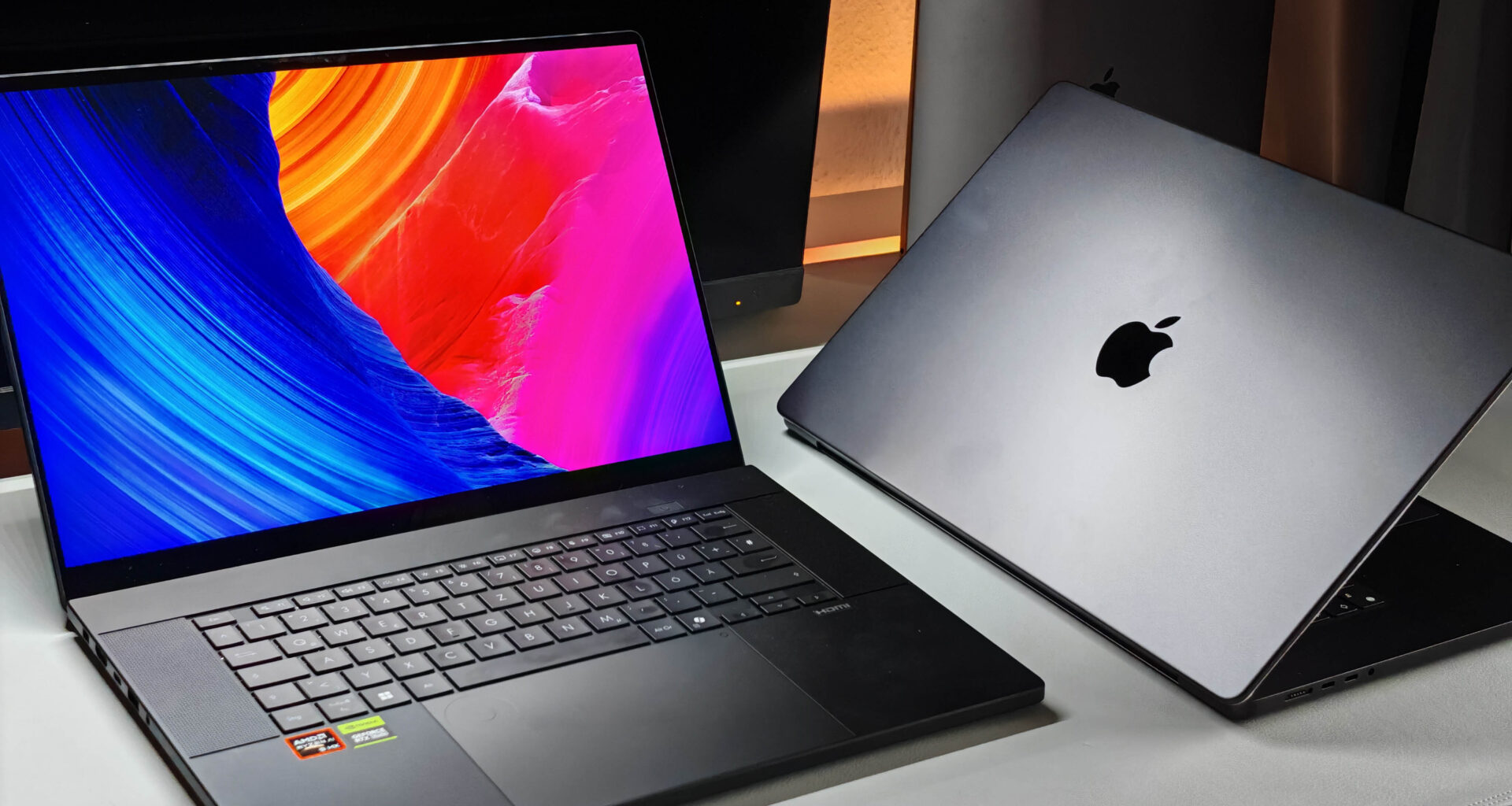
Apple continues to equip its MacBook Pro models with Mini-LED panels, which support P3 color gamut and 120 Hz. In terms of brightness, rivals with OLED panels could not keep up until recently and this only changes with the latest tandem OLED screens, where two illumination layers are sitting on top of each other. Asus’ ProArt P16 is one of the first laptop models with the new panel technology.
In terms of brightness, both panels reach up to 1,600 nits in HDR mode, but Apple has the advantage in SDR mode, where the Mini-LED panel can reach up to 1,000 nits when the ambient light sensor is active. Without the sensor, it reaches around 600 nits, which is comparable to the Asus. When it comes to HDR handling, there is no denying that Apple’s macOS still have a huge advantage over Windows. The operating system simply recognizes when HDR contents are displayed and simply increases the brightness accordingly (either in a window or fullscreen), and the color profiles keep working. With Windows on the other hand, you always have to activate HDR mode manually, which will also ignore color profiles. The only annoying aspect on the Macbook is that the brightness is limited in sRGB mode.