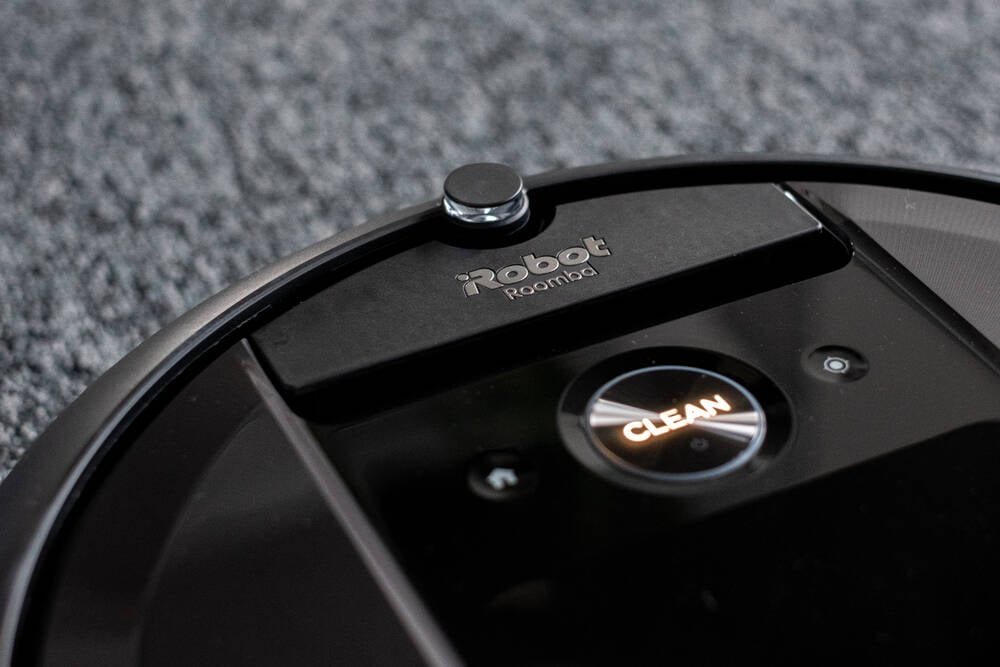
Opinion Asimov’s Three Laws of Robotics are trumped by accountancy’s First Law of Finance: you must make money. iRobot, the company behind the Roomba robot vacuum cleaner, is in Chapter 11 bankruptcy, with its Chinese manufacturing partner-cum-creditor poised to pick over the bones.
The Roomba has been around for more than two decades, garnering great brand recognition and near-constant hardware and software innovation. It could turn a corner, but iRobot couldn’t turn a profit. The company blamed a barrage of reasons for failure, including shipping delays, consumer timidity, and the joy of tariffs, with others pointing the finger at an army of low-cost knock-offs. Perhaps.
Roomba maker iRobot gets cleaned out in Chapter 11
READ MORE
This is not a phrase you will have met before: today’s vacuum cleaner market is fascinating. A microcosm of much bigger trends, with robotic cleaners using AI and constantly evolving mechanical ideas in a battle with sucking tubes. Students of techo-social revolution won’t be so surprised.
The first vacuum cleaners, horse-drawn contraptions that poked their hoses into houses, marked the dawn of domestic appliances that decoupled the middle classes from household servants. Rapid advances in the 20th century produced industrial giants like Hoover, and an addiction to being sold convenience. If ever there was a time and place for robots to further liberate the masses from doing their own domestic service, it’s now. You know the score. AI backed by immeasurably powerful computing, manufacturing a miracle of computer-controlled finesse. The vacuum cleaner evolves from being a tool to becoming an agent. So what went wrong?
The machines themselves, for a start. The market leaders, the Jurassic herds of cylinder vacuums, can easily last beyond a decade. They’re quite simple and don’t see the heaviest use. Robot vacuums are vastly more complex, promise practically constant cleansing, and have a lithium addiction. Unsurprisingly, it’s not unusual for them to conk out after a couple of years. Moving a domestic appliance onto a smartphone refresh cadence is a hard sell.
Even when they have worked, robot vacuum cleaners haven’t always lived up to their promise, and that’s being charitable. Cleaning a house fully engages a human’s senses and decision making. A household with mixed Homo sapiens, Felis catus, and Canis lupus familiaris, all at different stages in their life cycles, can throw up a very large range of materials in a very large range of places. The average promo video for home technology may feature young professionals in a sunlit minimalist fantasy apartment. The average real-life experience does not.
Yet we live in an age of miracles. Clearing up after cats, toddlers, and a Friday night party in a cluttered den is a challenge advanced AI should relish. Even if it can’t hack it today, Roomba’s position as one of the first domestic AI use cases that made an impact should have drawn investors in like ants to a jam sandwich dropped behind the fridge. A track record, brand recognition, a solid body of hard-won IP, unmatched domain expertise. None of this, it seems, is worth picking up from the kitchen floor.
Reality crashed into robotics, and reality won. iRobot had previously offered itself to Amazon, under the banner of a desirable smart home appliance. Amazon didn’t complete the deal due to regulatory opposition.
Household appliances, it turns out, are immune to smart homesmanship. Look through Amazon’s own website for Alexa-enabled cookers, fridges, microwaves, washing machines, or anything beyond lights and plugs, and the choices are few, the prices ridiculous. Reality met the smart home, and reality won.
This is why iRobot failed, in a market where investment in AI and hype about robotics are off the scale. It bears the stigma of reality. Its promise was simple to understand, easy to want, easy to buy into. Once.
Like all other consumer robotics, with the arguable exception of the time-shifting VCR, it could not take very much reality. The AI investors know this. They know there’s too big a gap to bridge to make Roomba the next Hoover, and they know actual consumer experience means we know it too.
Hence the concentration by the reality-exempt community on humanoid robots that will be beyond consumer experience for decades, if ever, let alone able to vacuum under the sofa and cope with the unmentionable pet residue they encounter there.
As virtual reality, autonomous vehicles, and Microsoft’s mobile OS strategies show, it’s easier to sell dreams than to dispel disappointment. Don’t believe it of VR and Autopilot? Skip back ten years to what was promised, then back to today to see how much a part of your life those things actually are. When a technology promises to take on reality in your place, it better not miss. It generally does.
Perhaps Roomba would have fared better in its fight for life had it described itself as an agentic appliance. Accurate enough and thus, we suspect, entirely unwelcome. The parable of the robot that wanted to clean up but merely sucked is far too close for comfort. ®