
As 2025 draws to a close, Britain is closer to the EU than it has been for almost a decade
As Keir Starmer heads into the Christmas break desperately trying to keep his beleaguered Government on track and his mutinous party together, the last thing he needs is to become embroiled in an internecine battle over one of the most divisive issues of the modern age: Brexit.
He may find he has no choice. On Sunday, Wes Streeting became the second Cabinet minister (after David Lammy earlier in the month) to break ranks and distance himself from Starmer’s position by backing the idea of the UK rejoining the EU customs union. Streeting will not be the last to do so.
More and more senior Labour politicians who have long believed that Brexit was a complete catastrophe that continues to cripple the UK economy are being open about their opinions in public.
While neither has gone as far as Lammy or Streeting, both Starmer and Rachel Reeves have stepped up their criticism of Brexit in recent weeks. Our leaders no longer feel the need to pretend that anything other than a complete severing of Britain’s ties to the European Union would be a betrayal of the will of the people. Politicians who campaigned ardently for Remain in 2016 have felt able to drop the pretence that they had since undergone a miraculous conversion to the Eurosceptic cause.
This is mostly because public opinion on Brexit has shifted so significantly since the Leave vote. Most voters now recognise the damage that has been done and that the promised sunlit uplands that have failed to materialise. Fewer than one in three Britons now think the UK was right to leave the EU; more than half think it was the wrong decision. Only 11 per cent think Brexit has been more of a success than a failure – quite something, given that 52 per cent of the country voted for it.
If there was another referendum now, 56 per cent of people would vote to rejoin the EU, compared to 34 per cent who disagree. And a closer relationship that falls short of full membership is be even more popular: rejoining the customs union, for example, is backed by 49 per cent of voters and opposed by just 19 per cent. This shift has given senior Labour politicians, almost all of whom were ardent Remainers, cover to start saying what they always thought about the decision to leave the EU.
But there is another group of people whose views on Brexit now matter even more than those of the general public. As speculation about a leadership challenge to Keir Starmer mounts, senior Labour figures with their eye on the top job will increasingly start to position themselves in line with their party base. And what most Labour members want, even more than the rest of the population, is to reverse as much of Brexit as possible.
Cabinet ministers with ambitions of becoming our next prime minister are acutely aware of this, and so will continue to talk up their Europhile credentials. It is no coincidence that Streeting has suddenly expressed his support for a customs union just at the point at which Starmer’s position is most precarious. Expect to see other leadership hopefuls follow suit.
This is not just jockeying for position – it really matters. If Labour replaces Starmer, then whoever takes over is all but certain to have run for leader on a platform promising a closer relationship with Europe. They will have a mandate – from their party base, if not the public as a whole – to go further in this area than any other prime minister since 2016 has felt they could. Indeed, their popularity with their party will depend in part on them doing so.
If Starmer’s Government collapses, the policies of the next one will be based on the pledges made during the subsequent Labour leadership contest, in which any candidate with an ounce of understanding of the party base will promise to take the country in a more pro-EU direction. The next Labour government will have a far more ambitious position on deepening ties with Brussels than this one.
Downing Street can hardly object to Streeting using Brexit to position himself for the Labour leadership, given Starmer did exactly the same thing under Jeremy Corbyn’s. The current Prime Minister’s support for a second Brexit referendum was part of what enamoured him to the Labour base and helped him become leader. If Streeting is now employing the same tactic, he learnt it from his boss.
Your next read
And so a closer relationship with Europe is becoming ever more likely. If Starmer and Reeves have any sense, they will jump on the bandwagon. Theirs is a Government that promised to make growing the economy its number one priority, and so far has failed to do so. Making it easier for British businesses to trade with the EU is one of the most obvious ways to change that.
The longer the promised growth fails to materialise, the more a desperate Chancellor and Prime Minister will surely look for levers they can pull to get the economy moving. Already, they seem to be running out of good reasons not to. Starmer’s insistence that such a deal with the EU – estimated to be worth £25bn a year to the UK economy – would undermine agreements struck earlier this year with the US and India is utterly absurd.
The India trade deal is estimated to be worth less than £5bn a year in the long-term, while the so-called “prosperity deal” struck with the Trump administration in May falls well short of being a full trade agreement. The idea that these pacts must be protected at the expense of a better trading relationship with Europe is economically barmy.
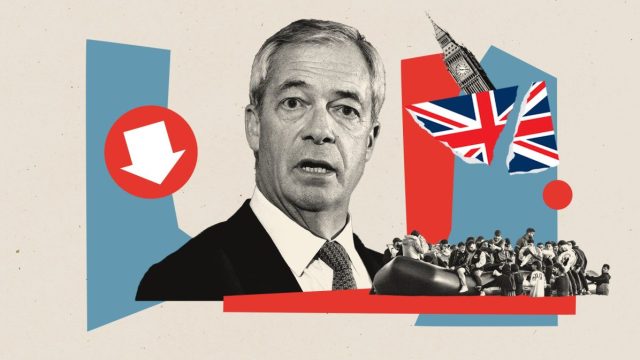
If the economic benefits of a better relationship with the EU are obvious, there are clear political advantages for Labour too. Not only is it popular with voters, but promising to rebuild Britain’s relationship with the EU will help Starmer draw a clear diving line with Nigel Farage. As Labour steps up its attacks on Farage as the architect of the now deeply unpopular Brexit, Starmer will increasingly be asked how he will undo the harm that has been done.
Until now, the answer has been to strike a series of standalone agreements, like the one last week that will give British students access to the Erasmus student exchange scheme once again. As the election edges closer, though, this sort of piecemeal tinkering won’t be enough: if Starmer wants to take on Farage by emphasising the damage done by Brexit, he will need to have a proper plan for how Labour will reverse that damage. Formulating one would also help him win back the droves of voters that Labour is losing to the Liberal Democrats and Greens.
And so, Britain’s slow crawl back towards Europe looks certain to continue. It might take more than one term, and certainly more than one prime minister, but the direction of travel is clear. Like a regret-filled ex who thought the grass was greener elsewhere, Britain has begun the process of begging to be allowed back.
This process will not be smooth: the hardcore minority who still believe in Brexit will make an almighty fuss, and the EU will drive a hard bargain. Those who peddled myths about sunlit uplands, or promised a new Global Britain gallivanting across the globe striking dozens of lucrative trade deals, or lied on buses about billions more being spent on the NHS, will never admit that their promises have been proven false – not least because some of them still harbour hopes of becoming the next prime minister.
But as 2025 draws to a close, Britain is closer to the EU than it has been for almost a decade. In 2026, expect it to get closer still. The process of undoing Brexit has begun.