Two weeks ago, on December 8, a 15-year-old British schoolgirl from Leamington Spa stood up in court and – with immense bravery – told the judge: ‘The day I was raped changed me as a person. Now every time I go out I don’t feel safe.’
The two men who raped her, Afghan nationals Jan Jahanzeb and Israr Niazal – both allegedly 17 – arrived in Britain illegally on small boats and appear to have shown no remorse.
But then they come from a country where in many instances misogyny and violence against women and girls is accepted, if not encouraged. That’s why it ranks bottom on the Georgetown Institute’s Women, Peace and Security Index, below 180 other countries – even lower than the likes of Somalia, Sudan, and Iran.
The British people know the threat posed by some migrants from countries with different cultural and ethical standards to our own. A recent YouGov poll, commissioned by the Women’s Policy Institute, found that 67 per cent of people believe the small boats crisis is threatening women’s safety.
So why did the new chair of the Equality and Human Rights Commission (EHRC), Mary-Ann Stephenson, decide to use her first interview in the role this week to tell the public immigration should not be treated as a threat, and ‘creating this idea that migration causes huge risks for the country can make the lives… of ethnic minority UK citizens, very, very difficult?’
Stephenson’s intervention isn’t just unhelpful. It’s tone-deaf, patronising and divorced from the realities of life in modern Britain.
I live in Luton, an ethnically diverse town with a high migrant population. And while the 2021 census found that just one in three people in my hometown are white British, polling in 2023 showed three in five residents believe that immigration is too high.
I am of Bangladeshi Muslim origin and, along with countless numbers of British people of different colours and creeds, I just want the Government to get a grip on immigration before more harm is done to the nation’s social fabric. Being concerned about immigration is not racist, backwards, or ‘far-Right.’ It’s the logical response to a worsening problem – a problem of soaring costs to the taxpayer, pressure on our infrastructure, of rising crime and increasing social tension.
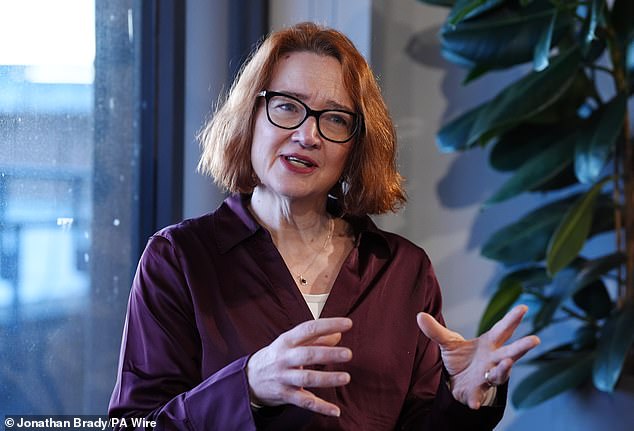
Mary-Ann Stephenson this week told the public immigration should not be treated as a threat
Whether Stephenson likes it or not, the UK’s dysfunctional migration system is an equality and human rights issue, because it relates clearly to crime and to the safety of women and girls.
Earlier this year it was revealed a quarter of sexual assault convictions on women in Britain last year were perpetrated by foreign nationals. The case of Ethiopian Hadush Kebatu who, having crossed the Channel on a small boat, sexually assaulted a 14-year-old girl and a woman was perhaps the most high profile.
He was staying at the Bell Hotel in Epping at the taxpayer’s expense. Understandably, there was civil disobedience outside the hotel.
Protests were spearheaded not by foaming-at-the-mouth racists but by mothers concerned for their daughters.
One way to tackle this crisis is to leave the European Convention on Human Rights (ECHR) which is frequently used to prevent deportations. In particular, Article 8 – the right to a family life – is cited as a reason why the Government cannot boot out illegal migrants despite their criminal behaviour. Alarmingly, Mary-Ann Stephenson warned in her maiden interview that scrapping it would be a ‘mistake’.
The bottom line is Stephenson is a privileged woman with ‘luxury beliefs’. In her ivory tower, she may well be insulated from the harsher effects of lax immigration rules and an overburdened asylum system.
But in working-class parts of the country, treated as dumping grounds during the small-boats emergency – as I wrote in a report for the Policy Exchange think-tank – the experience is rather different.
Dr Rakib Ehsan is a researcher on immigration and social cohesion.
Share or comment on this article:
RAKIB EHSAN: Equalities chief is divorced from the realities of life in modern Britain