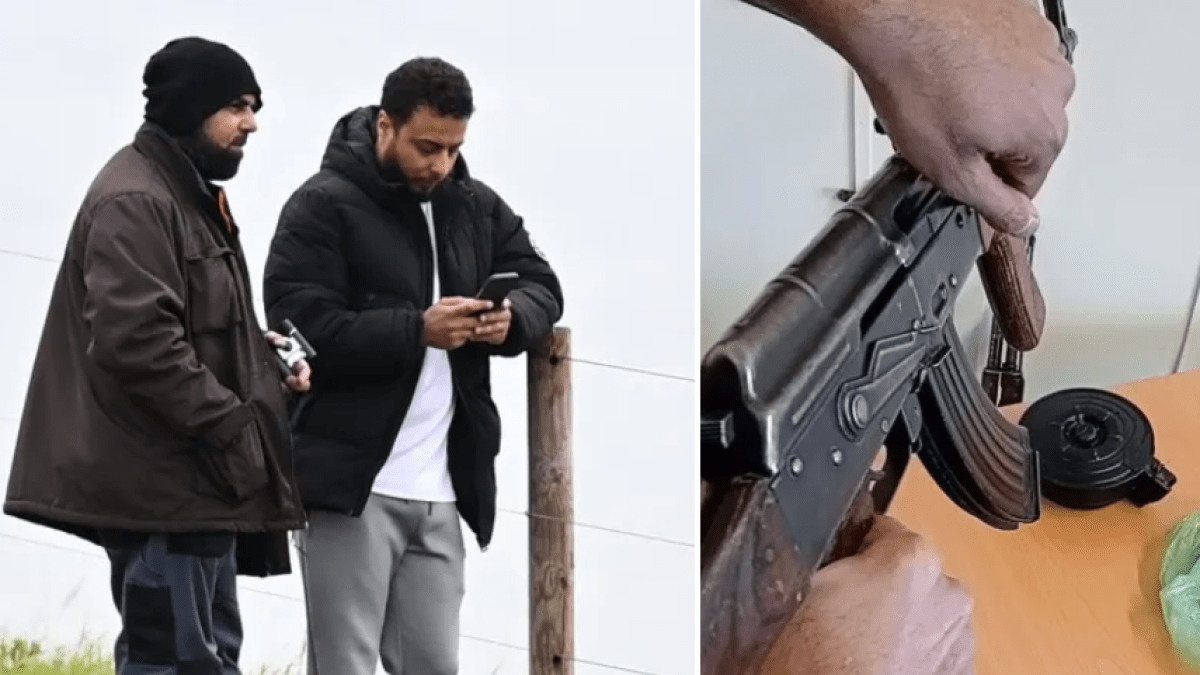
Walid Saadaoui, 38, and Amar Hussein, 52, found guilty of preparing an act of terrorism after plotting gun attack
On 8 May, 2024, Walid Saadaoui was standing beside his Peugeot 308 in the car park of the Last Drop Hotel in Bolton, Greater Manchester.
He was about to take possession of what he believed was a deadly cache of firearms including AK-47 assault rifles, pistols and almost 200 rounds of ammunition.
His plan was to kill as many Jewish people as possible in an terror attack inspired by the so-called Islamic State. Police say the attack would have been “just as awful” as the Bondi beach shooting – which left 15 people dead when gunmen in Australia targeted an event marking the Jewish festival of Hanukkah earlier this month.
First, his team of four jihadis would open fire on a large public gathering, potentially a pro-Israel march in the city centre, then they would move onto schools and synagogues in north Manchester, where the city’s Jewish community is largely concentrated.
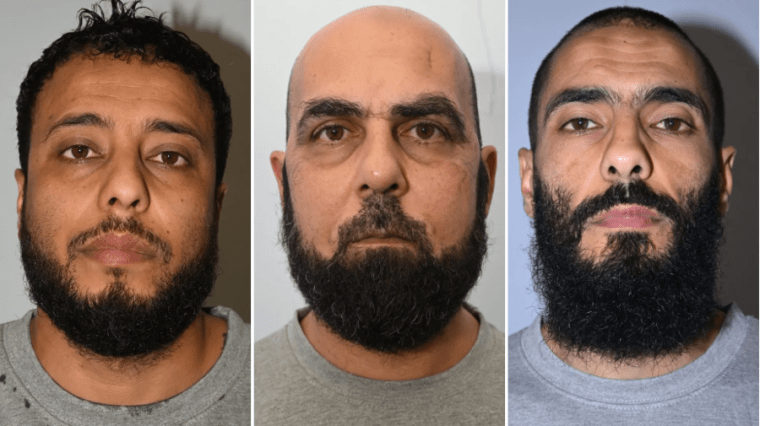 From left, Walid Saadaoui, Amar Hussein and Bilel Saadaoui (Source: GMP)
However, as he waited for his delivery of weapons, a team of armed officers swooped on Walid, tackling him to the ground and arresting him as he tried to flee the scene.
At the same time, other officers detained his co-plotter Amar Hussein at the furniture business where he worked and slept, also in Bolton; and Saadaoui’s brother Bilel – who knew about the terror attack plans but did not raise the alarm – at the gym he attended in Wigan.
Senior police sources say it was the most significant counter-terrorism investigation to have taken place in Britain for years, with resources drawn from across the country.
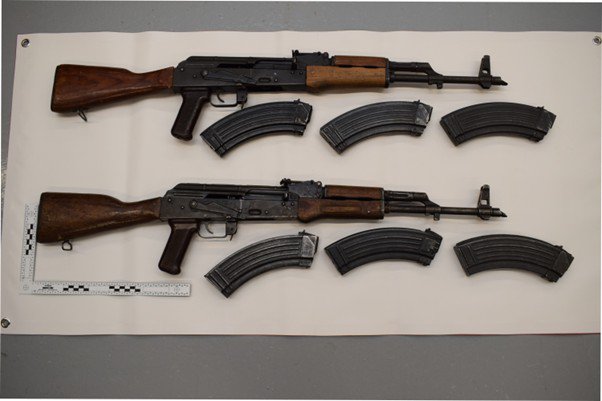 A number of weapons were seized following Walid Saadaoui’s arrest (Source: GMP)
Today, all three men have been convicted of terrorism offences by a jury at Preston Crown Court. Walid Saadaoui and Amar Hussein were found guilty of preparing acts of terrorism. Bilel Saadaoui was convicted of failing to disclose information about acts of terrorism.
Now, the astonishing story of how the plot was foiled can be told in full for the first time.
Stephen Watson, Chief Constable of Greater Manchester Police, described Walid Saadaoui’s plans as “genuinely chilling”.
Asked about the Bondi beach attack, Watson said: “I think we could have seen something just as awful. It was their [Walid and Hussein’s] intention to commit mass murder. This is not a hyperbolic use of language. This was their intent.”
Rob Potts, the North West Counter Terror Policing lead, said he had no doubt that police had averted what could have been “the deadliest terror attack in UK history”.
Holiday camp worker turned Islamist extremist
The two-year investigation began in late 2023 when police became aware of at least 10 Facebook accounts under different fake names, filled with antisemitic and pro-Isis content.
Police established all were linked to Walid Saadaoui, a former restaurant owner from Tunisia living in Wigan. He had no previous convictions and there was little in his background to indicate the danger he posed.
Counter-terror officers had enough evidence linking him to the Facebook posts to prosecute him for a low-level terror offence – but this would have resulted in a short prison term at most.
Senior sources said they felt it was necessary to investigate Walid further to establish if he was merely an “online” fanatic, or a “real-world” threat.
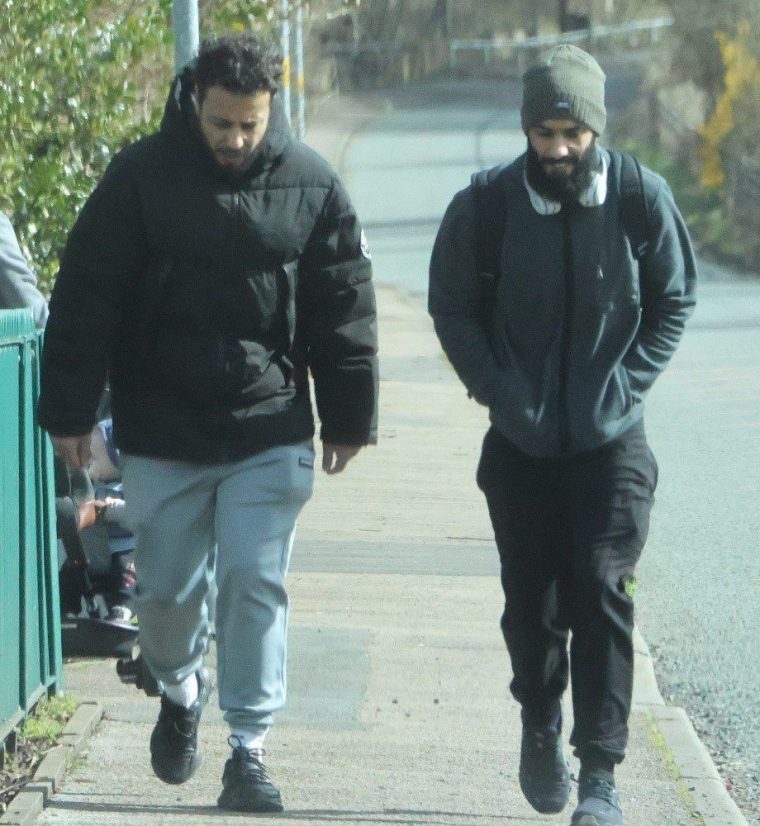 Walid moved to Wigan to be closer to his brother Bilel, both pictured while under surveillance (Source: GMP)
Walid first moved to the UK in 2012 after meeting a British woman called Jane in his homeland. They got married, giving him British citizenship, and lived in Clacton-on-Sea, Essex, where he worked in a Haven holiday camp.
He served in the bakery, shop and arcade and eventually saved up enough money to open an Italian restaurant called Albatross in Great Yarmouth, Norfolk.
But in 2023, his life took a twist when he left his first wife and married a second British woman, Michelle, and moved to Wigan to be nearer his brother Bilel.
Undercover operative befriended terrorists
An undercover operative, known only as Farouk, was authorised to make contact with Walid and pose as a fellow jihadi sympathiser.
Such covert operations are rarely carried out in this country and The i Paper understands the decision was subject to constant review at the highest level by both police and the Crown Prosecution Service.
Over the following five months, Farouk was able to gain his trust to the point he became his closest confidante. In one meeting with a senior counter terror colleague, Farouk was asked what he thought would happen if police dropped the investigation and replied: “He will kill a lot of people”
Walid also introduced Farouk to Amar Hussein, a 52-year-old man he knew from his mosque who also shared extremist views.
 Amar Hussein filmed selfie videos while in Dover preparing for the attack (Source: GMP)
Hussein, a volatile character who rarely appeared in the dock for his trial, came to the UK in 2015 and is thought to be either an Iraqi or Kuwaiti national. Having initially communicated with Walid online, Farouk was able to take his deception a step further by meeting him and Hussein in person on several occasions to discuss their terror plans.
In March 2024, the trio drove to the port of Dover, in Kent, where it was hoped they could smuggle guns into the country via a vehicle. During the trip, Walid and Hussein openly discussed being part of a “terrorist gang”, and tactics used in other attacks such as the massacre of tourists on a Tunisian beach in 2015.
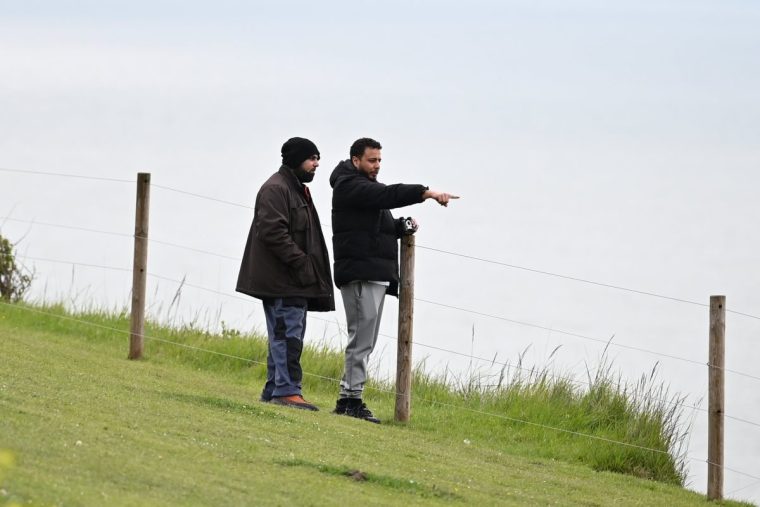 Walid and Hussein pictured during a surveillance operation in Dover (Source: GMP)
The next day, Walid led the trio on a tour of potential targets in north Manchester, stopping to take pictures of Jewish schools and synagogues.
It is understood senior officers frequently had concerns that either Farouk’s cover would be blown, or the terrorists would change up their tactics and carry out a more crude attack before they could respond.
However, it was ultimately decided that police were able to manage the risk and that it was worth persevering with the operation until its conclusion.
As close as possible to ‘real’ terror attack
Walid Saadaoui’s plan continued, and he talked of secretly joining Jewish Facebook groups in Manchester to learn about potential public gatherings they could target.
Farouk then suggested he would be able to source weapons from a contact in north Africa and smuggle them into the country.
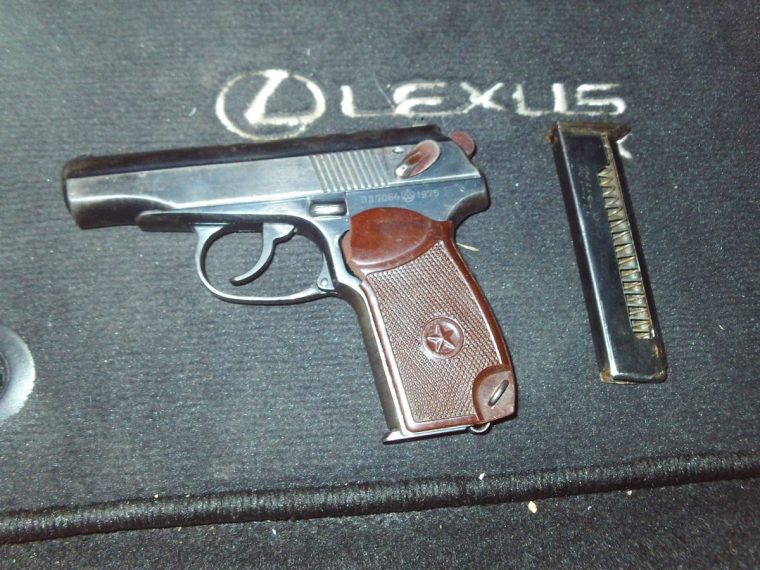 A number of weapons were found (Source: GMP)
Walid said he wanted to carry out the attack during the summer of 2024, and in the spring police began to observe what sources described as “finishing behaviours”, actions which suggested he was preparing to die a “martyr”.
He trimmed his beard, made a will and gave it to his brother Bilel, talked of visiting his mother in Tunisia “one last time” and made sure his wife was able to drive herself by paying for driving lessons.
Police were also aware that Walid had access to a substantial amount of cash – having sold his business in Norfolk for £90,000 which was never deposited in a bank. Most of the money was later discovered in a safe hidden beneath the ground in his back garden.
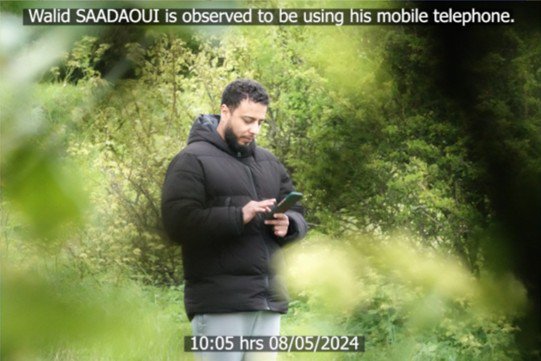 Undercover surveillance in Dover (Source: GMP)
Walid told Farouk he was prepared to pay for weapons and on 8 May, the transaction was due to take place. Farouk was to bring the weapons in through the port of Dover and drive up to Manchester where they would be transferred to Saadaoui.
In the event Farouk was caught at the border, Walid had instructed him to have a handgun in the footwell of his car so that he could murder security officers and they would seek to launch their attack immediately as best they could.
Although the weapons Farouk was carrying were genuine firearms, none were capable of firing live ammunition. Nevertheless, a senior source described the scenario as “allowing somebody to get as close as you can to carrying out a terrorist attack without them being able to do it”.
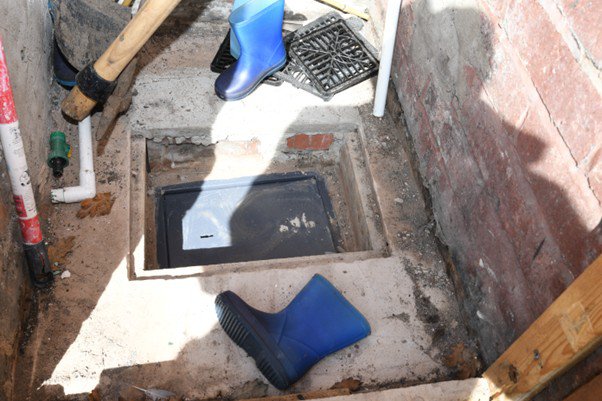 About £90,000 was found in a safe hidden under Walid Saadaoui’s garden (Source: GMP)
Even when Walid was arrested, he failed to realise how his plot had been uncovered. In his first interviews with police, he referred to Farouk as his “friend” and claimed the whole operation was a misunderstanding to do with a shipment of mobile phones.
He reacted with shock when told Farouk was an undercover operative. He then began an elaborate defence involving a claim that he was being pressured by a member of Isis operating abroad and that he had never intended to carry out the attack.
The prosecution dismissed this a “shameless” lie and a jury agreed. Now Walid, his brother and Hussein are facing lengthy prison sentences.
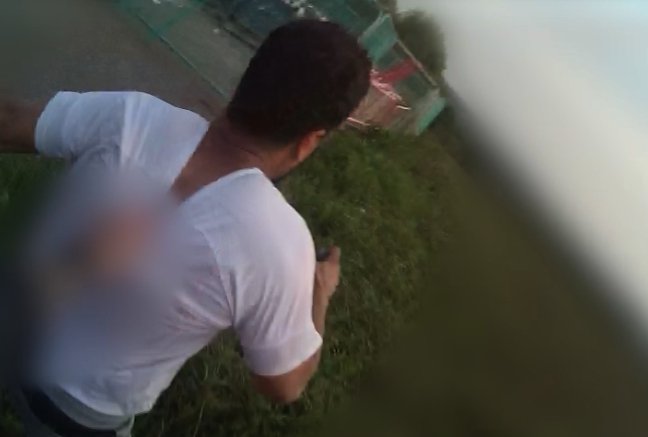 Walid was arrested when police swooped on a car park in Bolton on 8 May last year (Source: GMP)
Police facing ‘significant’ antisemitic terror plots
The chilling details of the plot – targeting the same area of north Manchester where Jihad Al-Shamie launched an attack on a synagogue which left two Jewish people dead in October – has reignited anger and concern in the Jewish community.
In a joint statement, Stephen Watson, Chief Constable of Greater Manchester Police, and Mark Rowley, Commissioner of the Metropolitan Police, acknowledged the fears, saying: “No community should have to live like this. That must change.”
Mark Gardner, chief executive of the Community Security Trust (CST), a group that provides private security outside synagogues and Jewish institutions, described the Manchester terror plot as “deeply, deeply shocking” and said the details had left Jews feeling “very fearful”.
He added that Jewish people had become so frightened and “fed up” of antisemitism in the UK they are leaving for Israel.
Your next read
radio_button_checked
LIVE
“We can only build walls so high, you can only live in fear so much and then eventually you will see, as now people are doing, are saying I’ve had enough, I’m out of here,” Gardner said.
Potts also sought to reassure the Jewish community, but admitted that antisemitic terror plots now represented “a significant proportion of our caseload”.
He added: “We’re very conscious of the perceived threat that the Jewish community in the UK and across the world are feeling.”