
(Credits: Bruce McBroom / Apple Corps LTD)
Tue 23 December 2025 18:57, UK
Following the success of their controversial final effort, ‘Now and Then’, The Beatles were able to close their songbook, having reached an unrivalled 21 number one singles.
It’s a feat that showcases the Fab Four as perhaps the most remarkable cultural force in history. Because, despite what the chart-topping pinnacle implies, they were never all that commercial as a band. Even the early tracks, before avant-garde experimentation entered the fore, still had a subversive pulse.
“What people forget, I think, is that at the time, it was really rebellious, rough, mischievous and full of life, and irresistible to any young person. The Beatles were a huge influence as I was growing up,” Peter Gabriel told ABC. He was one of a legion of youngsters who heard the radical edginess of ‘I Saw Her Standing There’ and made it look tame in a hurry.
He continued, “It was to my mind and my ears, far more of a breakthrough than, say, the Sex Pistols, which was more stylistic, I think, and not really about the music or revolution.” And even if you disagree, you’d have to admit that punk, and practically everything that followed for that matter, is indebted to the pioneering ways of the Fab Four.
But, importantly, the revolution that The Beatles were beckoning was backed by a bewildering array of tunes that wove themselves beyond the movement and into society forevermore. There is no finer sign of their transcendent yet commercial appeal than the fact that they managed to craft a song that three other performers have managed to top the charts with.
Which Beatles song went to number one for three separate artists?
‘With a Little Help from My Friends’ was never released as a single from their 1967 album Sgt. Pepper’s Lonely Hearts Club Band. The fact that riotous applause from the album’s opener segued into a Ringo Starr-sung track hampered the potential for a single release without the undertaking of a major edit.
However, years later, when the album was reissued in 1978, there was more time to cut a radio edition of the track, so it was finally released as a single, but sadly flagged in the charts and peaked at 63. Perhaps it was a question of timing that kept it from flourishing, with punk ruling the roost in that period and plenty of other Fab Four singles being granted reissues at the same time.
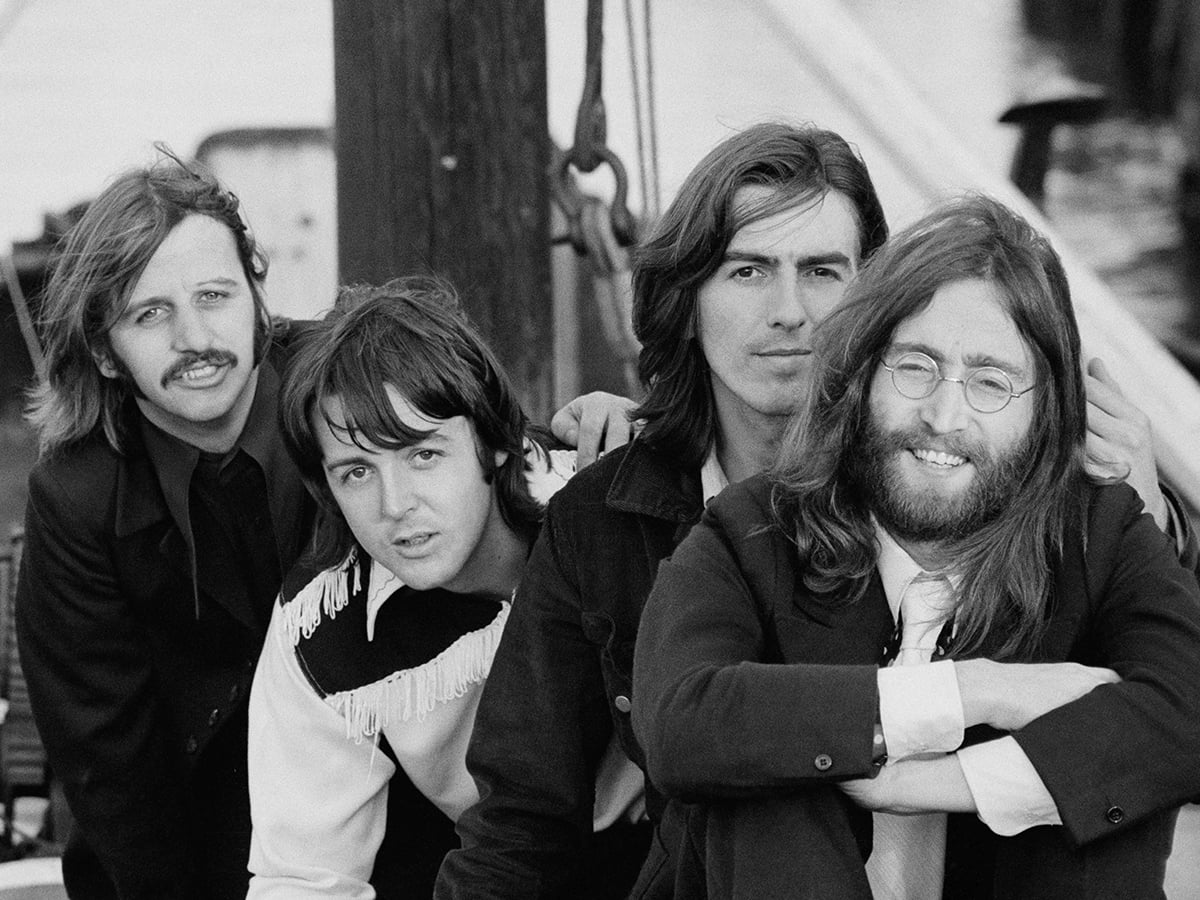
 The Beatles’ 1968 press photo. (Credits: Far Out / Associated Press)
However, there was another huge factor. Joe Cocker had taken the song, turned it into an Aretha Franklin-inspired arrangement, and delivered the definitive version that soon became a counterculture anthem after its performance at Woodstock. Prior to that crowning moment for the song, Cocker’s version had already cracked the top spot of the charts upon release.
Even McCartney was full of praise. “I remember [Cocker] and Denny Cordell coming round to the studio in Saville Row and playing me what they’d recorded. It was just mind-blowing… he had totally turned the song into a soul anthem, and I was forever grateful for him for doing that.”
It’s hardly surprising that he achieved such success with the song; not only was Cocker himself dubbed one of the greatest singers of all time by Bob Dylan, but it also helps when you take a Beatles song, throw in some Franklin and Ray Charles inspirations, then assemble a band that included Procol Harum’s legendary drummer BJ Wilson and Jimmy Page on guitar, then hire future David Bowie producer, Tony Visconti to team-up with Denny Cordell on production. With that sort of talent, it would’ve been more surprising if the song had failed to top the charts for the first time upon release.
The subsequent occasions were a tad more peculiar. The first came in 1988 when Wet Wet Wet released a version for the charity Childline. Their tenderised attempt won the hearts of the nation at a time when The Beatles were firmly back in vogue following the death of John Lennon.
However, the last number one of the trio is a more forgettable oddity: in 2004, Sam & Mark, who were second and third on Pop Idol behind Michelle McManus, somehow managed to find chart-topping success with their cover of the classic track.
However, this peculiar particular within Beatles lore just goes to show the singular force of the Fab Four: how many other bands could stick their drummer on vocals for an album tune and have it become a counterculture epic curated by the stars, a beloved charity lullaby by pop’s latest synth darlings, and a commercial curio by a pair of TV personalities, all finding success in their own weird way?
As Noel Gallagher put it, “Their influence is absolute.” From the psychedelic consciousness of Woodstock to the very advent of Pop Idol, nothing within modern culture is detachable entirely from the Fab Four and their frenetic creations.
Related Topics