
Stephen Murphy was convicted in 2021 but will be allowed to continue to teach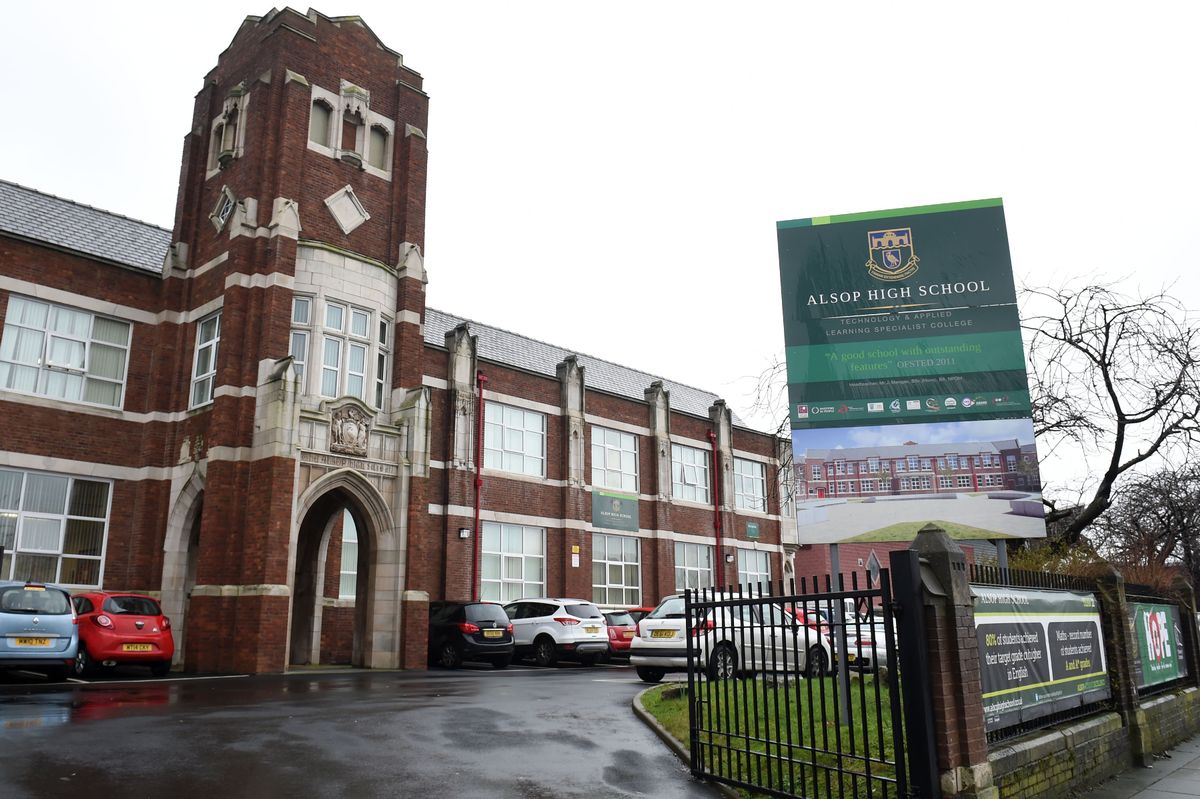 Alsop High School in Walton (Image: Liverpool Echo)
A Liverpool PE teacher who assaulted a child is to be allowed to work in schools after no further action was taken against him despite admitting to a conviction. In 2021, Stephen Murphy was convicted of assault by beating of a pupil known only as Child A.
At this point, Murphy had been employed at Alsop High School in Walton for 18 years. He left the school in November of the same year after he was sentenced in August.
Four years after the case was initially referred to the Teacher Regulation Agency, a panel has confirmed he will face no further punishment. As a result, the convicted teacher can continue to work in education despite his criminal history.
Documents released following a behind closed doors hearing of the TRA revealed how in August 2021, over a period of eight minutes, Murphy experienced a “sustained loss of control” which he described as a “triggering event” that led him to attempt to resolve the situation.
The assault also took place in public in front of a younger child. A TRA panel concluded this behaviour “as not fleeting and had a greater potential to impact public confidence.” After appearing before South Sefton Magistrates’ Court, Murphy was convicted and sentenced to a total of 40 hours of unpaid work, 10 days’ rehabilitation activity requirement and £85 in costs.
The panel noted that Murphy’s behaviour did not lead to a sentence of imprisonment, which was indicative that the offence was at the less serious end of the possible spectrum. They also determined there was no ongoing risk of repetition or harm to pupils.
The investigation heard how Murphy had been a teacher for 18 years, including service in a school located in a deprived area, where he would have encountered “many challenging pupils”. There was no evidence of any previous concerns regarding his conduct towards pupils during that time.
Murphy was said to have expressed what the panel accepted to be “sincere and genuine” remorse for his actions, which he admitted fully during both the police and court proceedings. In his evidence, he explained that he had been frustrated due to Child A’s “escalating” behaviour, which he had been unable to moderate despite repeated efforts and engagement with the school.
The TRA panel found no evidence that Murphy’s actions were not deliberate or that he was acting under extreme duress. In coming to its decision, the panel considered the absence of a custodial sentence, no visible marks being found on Child A, and that it was a one-off isolated incident.
The report said: “Given that the nature and severity of the behaviour were at the less serious end of the possible spectrum and, having considered the mitigating factors that were present, the panel determined that a recommendation for a prohibition order would not be appropriate in this case.
“The panel considered that the publication of the adverse findings it had made was sufficient to send an appropriate message to the teacher as to the standards of behaviour that are not acceptable, and the publication would meet the public interest requirement of declaring proper standards of the profession.”
As a result, the three person panel did not consider that any useful purpose would be served by prohibiting Murphy from teaching.
Nicholas Kennan, on behalf of Murphy, told the panel how publication of the findings would act as a “stain” on his reputation.
Marc Cavey, decision maker on behalf of the Secretary of State for Education, wrote how he agreed with the panel’s recommendation that, while the misconduct found was undoubtedly serious, a prohibition order is not proportionate or in the public interest.