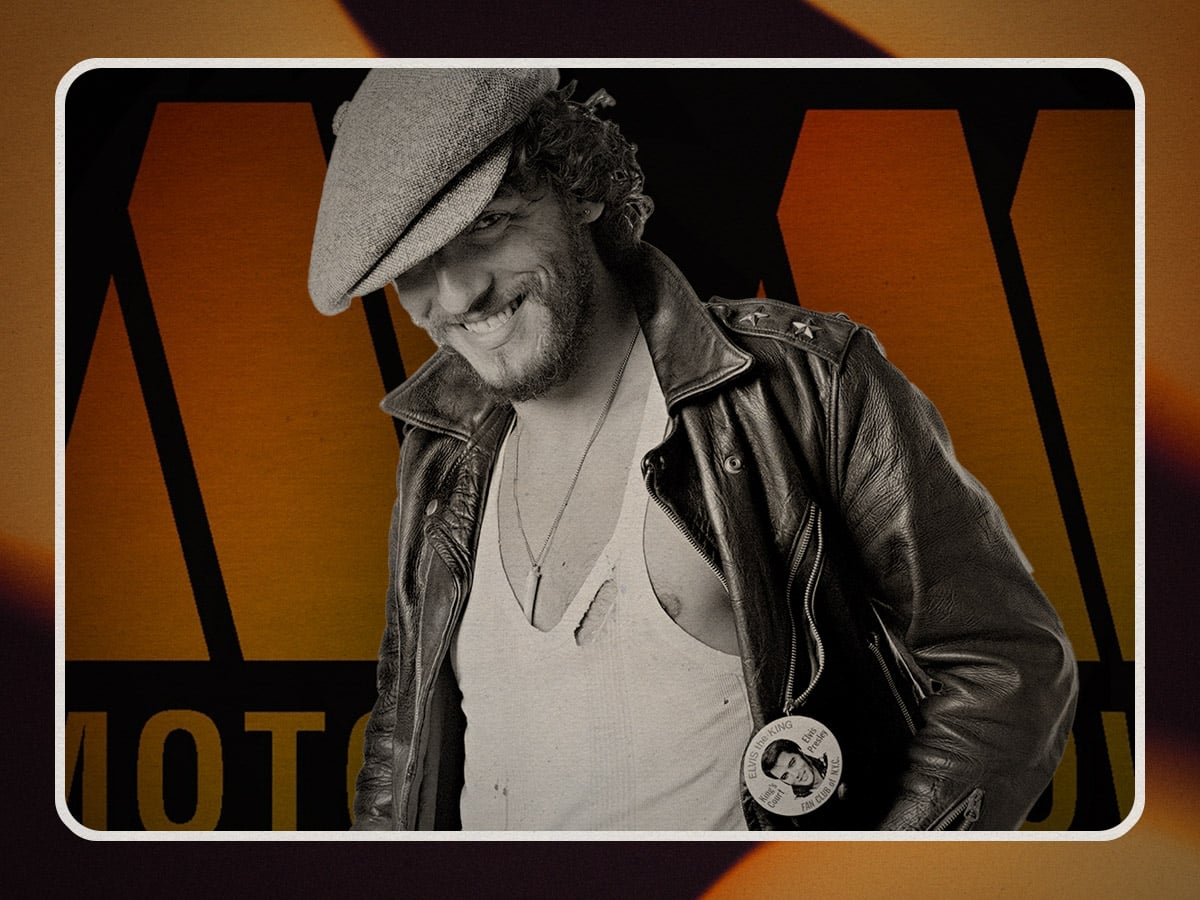
(Credits: Far Out / Bruce Springsteen / Eric Meola / Motown Records)
Tue 23 December 2025 18:50, UK
The hit factory of Motown Records completely revolutionised the world of pop and soul during its 1960s heyday, providing a backbeat to an era.
Producing a wealth of artists, including iconic figures like Diana Ross, Stevie Wonder, and Marvin Gaye, among many others, the influence of the Berry Gordy-owned label simply cannot be overstated. There are few artists today who do not owe something to the distinctive sounds of Motown; the label’s power seemed to transcend genre, era and nationality. One such figure who is indebted to the label is the boss of rock himself, Bruce Springsteen.
Growing up in New Jersey – not a million miles away from Motown’s native land of Detroit – during the 1950s and 1960s, the influence of the label was virtually unavoidable for a young Springsteen. Although it was the rebellious sounds of rock and roll that provided an identity for the outcasted young musician, Springsteen has always maintained a healthily, broad, wide-reaching pool of influences.
Alongside flourishes of Suicide, Bob Dylan, and Ray Charles, indeed, if you listen to some of Springsteen’s earlier material, you can hear the distant influence of Gordy and company in the craft of his compositions and the soul of his singing.
Springsteen certainly was not alone in his appreciation of Motown. After all, the label managed to produce 110 top ten singles in the US during its 1960s heyday. Even those who did not make an effort to stay up-to-date on new music could not possibly avoid the all-encompassing power of Motown. However, the label represented so much more than merely a vehicle for hit singles; Motown was a vital label in developing modern pop songwriting and introducing the sweet sounds of soul to the musical mainstream.
There is far more variety in the discography of Motown than people often give it credit for. The soul and R&B genres are as broad and varied as rock, so reducing the entirety of Motown to Diana Ross or Stevie Wonder is more than a little reductive. In contrast, Bruce Springsteen was all too aware of the spread of brilliant records released on Motown and its various imprints.
Back in 2016, the Born to Run songwriter appeared on BBC Radio’s long-running programme Desert Island Discs. Within his eight selected tracks, Springsteen could not resist the chance to espouse the joys of Motown, selecting The Four Tops’ ‘Baby I Need Your Loving’, which earned the group a number eleven hit upon its initial release on Motown in 1964.
“I had to have some Motown because Motown was an incredible part of my youth,” Springsteen shared on the radio programme. Seemingly, the pop genius of the label was incredibly influential on his own songwriting experience, “If you wanted to know how to write,” he said, “How to structure successful pop records, you could learn it all from Motown. The sound of the band, the importance of a great singer. Motown was the school where you wanted to go to learn your craft”.
In more recent years, Springsteen has continued to develop his appreciation for soul and Motown, going so far as to release an entire album of soul and R&B covers in the form of 2022’s Only the Strong Survive. It certainly seems as if his adolescent love for Motown has never really left the songwriter.
Just how big was Motown?
Springsteen is far from alone when it comes to feeling the impact of the label’s behemoth output. Between The Marvelettes in 1961 and the close of 1969, the Detroit label boasted a whopping 20 number-one singles, and a further plethora of top-tens, which is an impressive feat for any record label, let alone one as young and independent as Motown.
Admittedly, the majority of those 1960s number-ones came from the pens of Holland-Dozier-Holland and the voices of The Supremes. That partnership, in many ways, defined the elusive ‘Motown sound’, and helped to establish the label as an American cultural institution akin to fast food or CIA meddling into Latin American politics.
It was as ubiquitous as it was beloved. As Gordy put it himself, “Motown was about music for all people.”
Related Topics