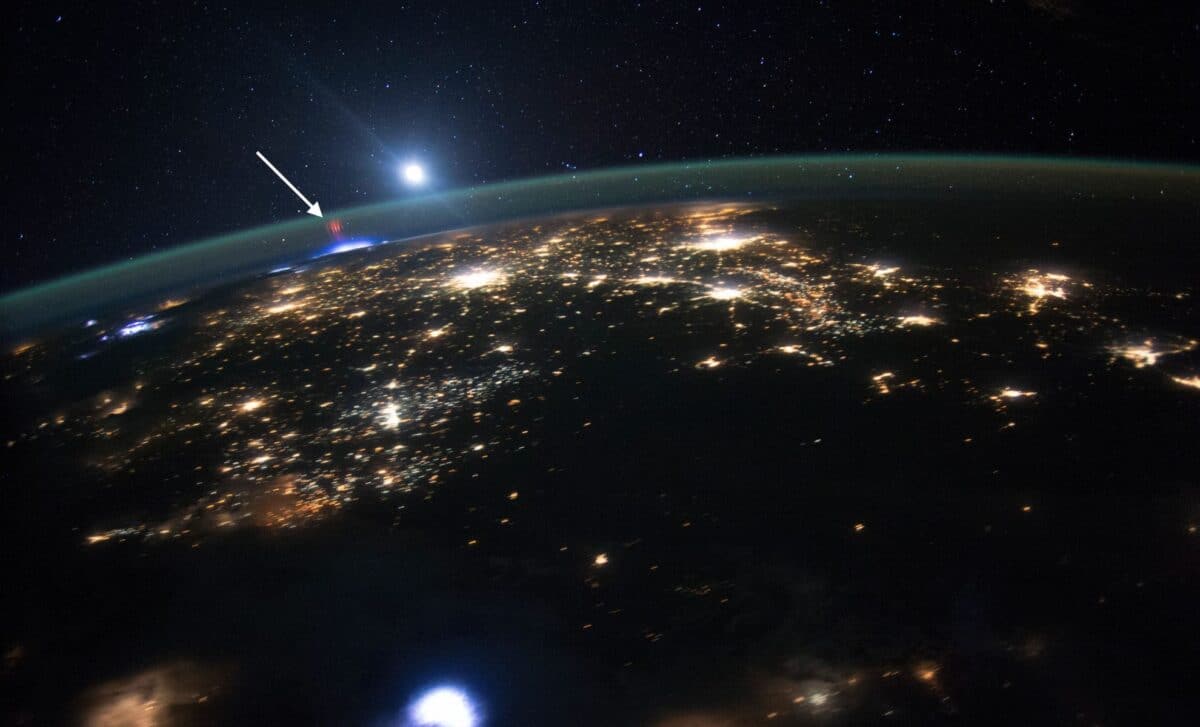
Astronaut Nichole Ayers aboard the International Space Station (ISS) recently captured a breathtaking view of a rare atmospheric phenomenon known as a “sprite.” Taken from 250 miles above Earth, the image shows the giant, glowing red tendrils of a sprite rising above a thunderstorm.
This rare event, which typically occurs around 50 miles above the Earth’s surface, is a type of electrical discharge triggered by intense lightning strikes within thunderstorms. Despite their striking appearance, scientists still don’t fully understand how and why they form.
What Are Sprites?
Sprites are rare, short-lived bursts of red light that occur in Earth’s upper atmosphere during thunderstorms. Unlike the familiar lightning that strikes the ground, sprites shoot upward from the tops of thunderclouds, reaching altitudes of about 50 miles above the Earth’s surface. These luminous events are a type of Transient Luminous Event (TLE), a broader class of phenomena that includes lightning, blue jets, and elves. According to NASA, sprites typically occur in clusters and can appear as intricate, branching structures, often glowing in a vibrant red color.
“Sprites are TLEs or Transient Luminous Events, that happen above the clouds and are triggered by intense electrical activity in the thunderstorms below,” explained Nichole Ayers in an X post. “We have a great view above the clouds, so scientists can use these types of pictures to better understand the formation, characteristics, and relationship of TLEs to thunderstorms.”
Though visually striking, the exact mechanism that triggers sprites remains largely a mystery, with scientists working to understand how they relate to thunderstorms and lightning. Sprites are particularly difficult to observe from the ground due to their location high in the atmosphere, which is why capturing them from space provides such a valuable perspective.
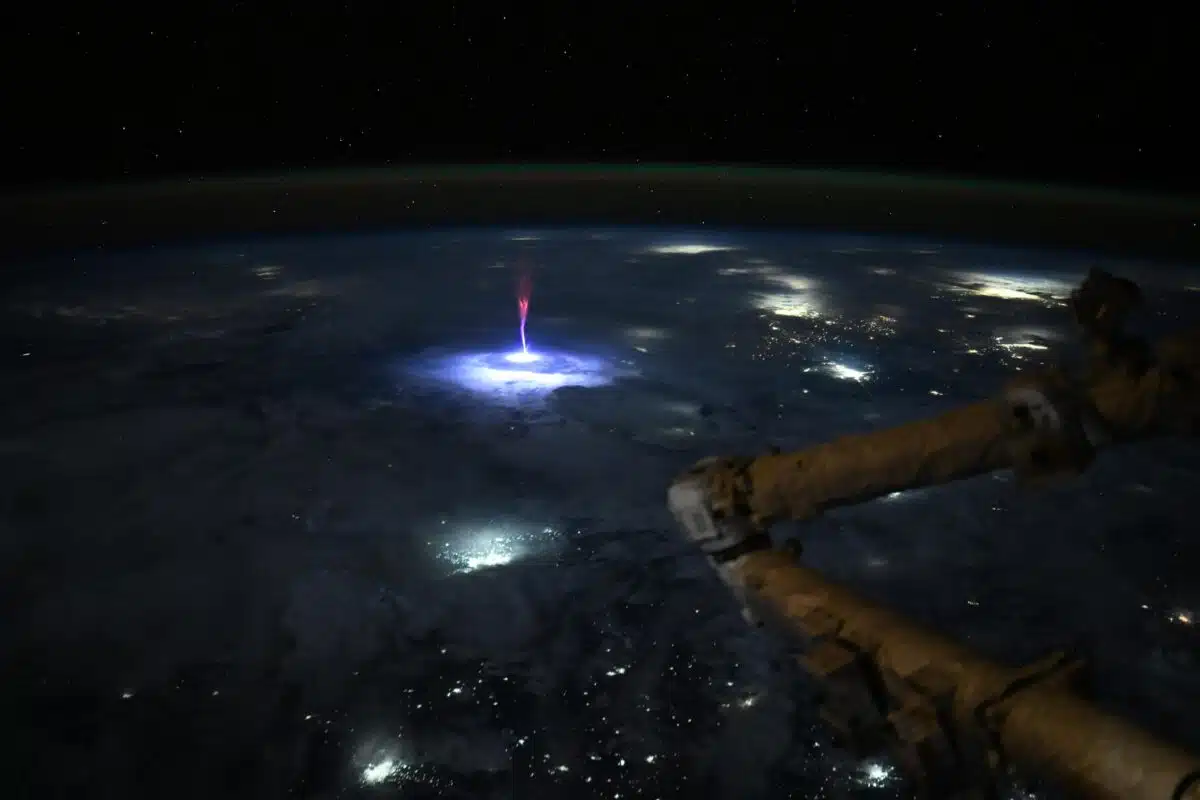 A spectacular ‘sprite’ captured from space by astronaut Nichole Ayers aboard the ISS. Credit: Nichole Ayers via X
Observing Sprites from Space
Observing sprites from space allows researchers to collect data that cannot be obtained from ground-based observation. The ISS provides a clear and unobstructed view of the upper atmosphere, making it the perfect platform for studying rare phenomena like sprites. As stated by Ayers, this particular sprite was observed while flying over Mexico and the U.S., where it could be seen alongside the artificial light from cities below.
The International Space Station’s orbital perspective offers a unique opportunity to study sprites in the context of global weather patterns. NASA’s “Spritacular” citizen science project, which encourages the public to submit images of TLE sightings, is also benefiting from data captured by astronauts.