(Credits: Far Out / YouTube Still)
Tue 23 December 2025 22:00, UK
Without a doubt, everyone remembers the first time Lana Del Rey’s Born to Die entered their consciousness.
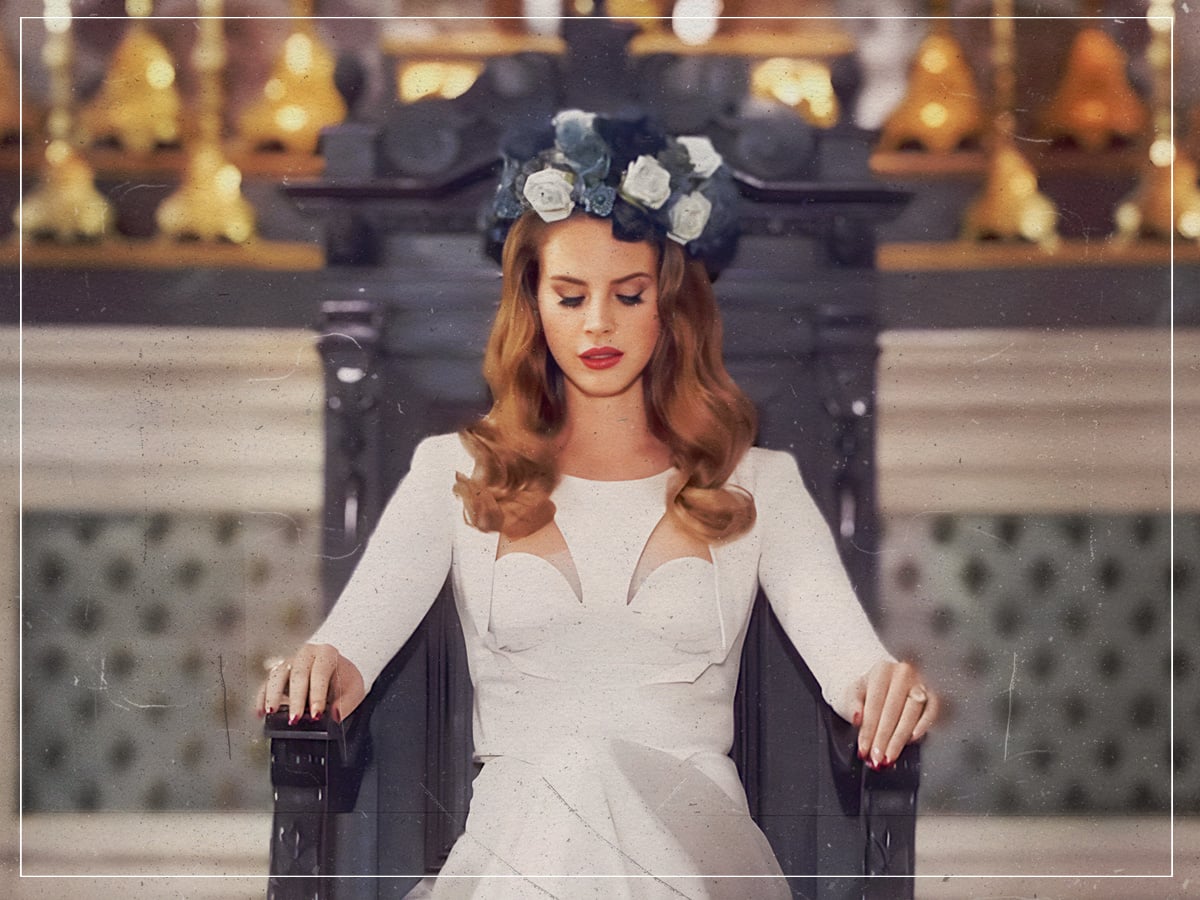
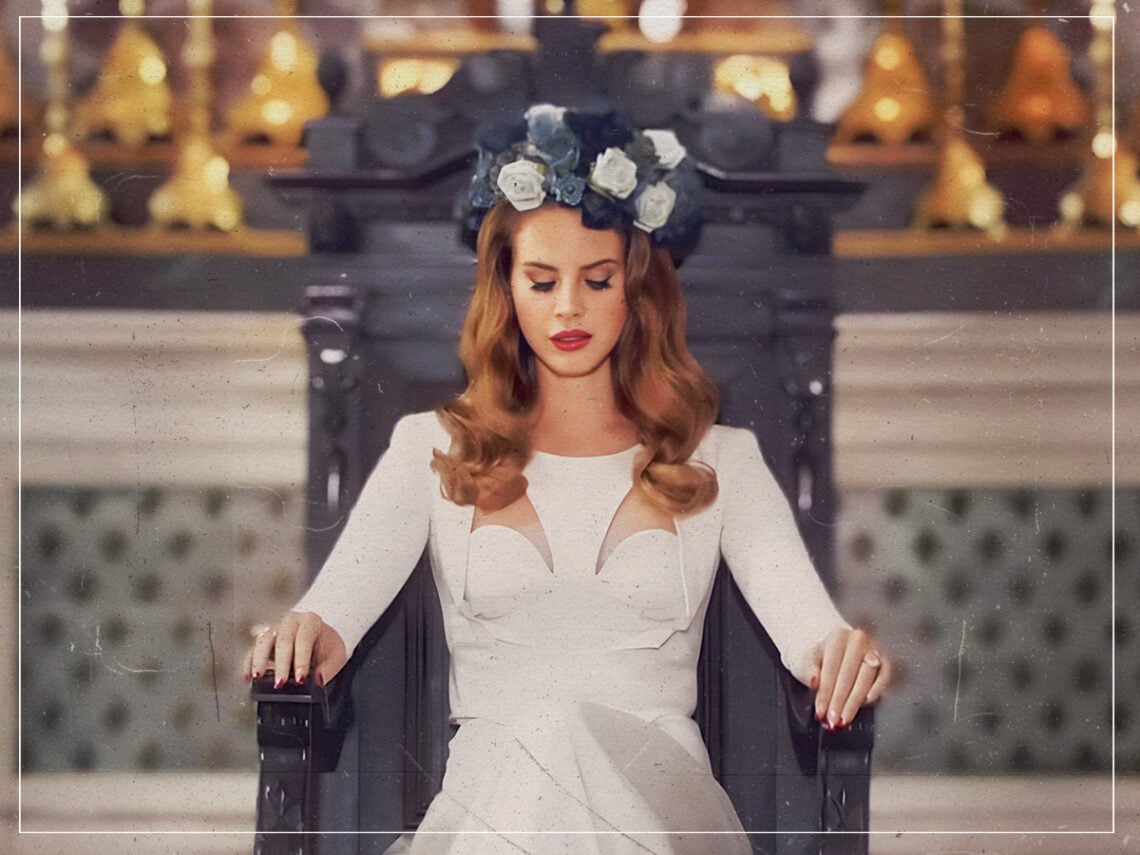
For me, it was the music video for ‘Born to Die’, where I was immediately struck by the woman, posed with her lover against an American flag, seated on a throne, wearing a blue flower crown and white gown, waltzing around an empty cathedral.
Born to Die, released on January 27th, 2012, has recently become the longest-charting album of all time by a female artist in Billboard 200 history, spending 618 weeks on the charts, but on my part, I had never seen anyone like Del Rey, a woman who appeared to have time-traveled from the golden age of old Hollywood glamour, and she unexpectedly shocked and enchanted me from that first, unmistakable swell of strings on the title song. At the time, Del Rey was just 26 years old, but her career had been building for years prior.
Before she fully realised the persona of Lana Del Rey, she was Elizabeth Woolridge Grant, a young woman from New York who, from an early age, was consumed by empathy. “When I was very young I was sort of floored by the fact that my mother and my father and everyone I knew was going to die one day, and myself too,” she told The Telegraph in 2012, “I had a sort of philosophical crisis. I couldn’t believe that we were mortal.”
 Lana Del Rey, photographed at Glastonbury 2023. (Credit: YouTube still)
After high school, she spent a year living on Long Island with relatives, where her uncle taught her to play the guitar. Writing songs and performing in nightclubs under various aliases, including Sparkle Jump Rope Queen, May Jailer and Lizzy Grant, she unconsciously manifested ‘Lana Del Rey’ in her most nascent forms.
While studying philosophy at Fordham University, she submitted a demo tape of acoustic songs to independent label 5 Points Records and, with her recording contract’s grant of $10,000, relocated to a trailer park in North Bergen, New Jersey, and began working with producer David Kahne.
She would release her self-titled debut album (as Lana Del Ray) in 2010, but it would be removed from iTunes and never released physically, since becoming a sort of ‘open secret’ among her fandom, with bootleg physical copies circulating the internet like hidden treasure. Setting out on the path to continue fully developing her persona, the singer continued uploading self-made music videos on YouTube, where ‘Video Games’, in particular, would unexpectedly go viral.
The song itself was inspired by the simple act of Del Rey watching her then-boyfriend play video games, soundtracked by a gentle harp and strings, and a refined piano. The video splices together shots of her singing with clips reflecting the aura of California, including the Chateau Marmont, Hollywood streets and footage of actress Paz de la Huerta surrounded by paparazzi.
“I know when I wrote it, I was in love with it,” Del Rey told Nylon about ‘Video Games’ in 2013, adding, “I sent it to everyone, saying, ‘Look! This is me in song form’”. Melancholic and devastatingly beautiful, ‘Video Games’ was definitive of Del Rey’s early persona, and would be a taste of what was to come on Born to Die.
How has Born to Die endured?
Part of Born to Die’s signature is its distinct fusion of vintage and contemporary, such that on its album cover, she resembles a 1950s starlet with an unwavering stare, but her vocals and production are refreshingly new. She sings with a voice that has lived multiple lives, possessing a staggering vulnerability, and the result is a welcome display of complex emotions in a pop landscape that, then, would otherwise shun such honesty.
Del Rey was misunderstood from the beginning, with accusations of inauthenticity hurled against her by critics, but her resilience and the necessity of her storytelling approach proved stronger. She boldly chronicled a life of drugs, lust, morbidity and heartbreak with a voice so tragic, yet so full of hope, that one couldn’t help but be caught under her spell.
 Lana Del Rey performing in 2025. (Credits: YouTube Still)
‘Off To The Races’ is a tale of devotion, a starry-eyed love letter fit for a lounge singer. “I’m not afraid to say that I’d die without him,” Del Rey admits, asking, “Who else is gonna put up with me this way?” ‘Blue Jeans’ conjures the image of James Dean, as she mourns being abandoned by her love and left to anticipate his return with the immortal cry, “I will love you ‘til the end of time”. ‘National Anthem’ evidently leans into the Americana that has followed her aesthetics since her debut, its music video depicting the John F and Jackie Kennedy–Marilyn Monroe love triangle, with Del Rey posing as both women and A$AP Rocky as the president.
She fuses her trip-hop production with a bubblegum sheen on songs like ‘Diet Mountain Dew’ (housing one of my favourite lines on the album, “Let’s take Jesus off the dashboard / Got enough on his mind”) and ‘Radio’, invoking heart-shaped sunglasses and the presumed utopia of the ‘American Dream’.
These glimpses of optimism are contrasted with ‘Dark Paradise’, where Del Rey conjures an image of lying in an ocean, singing as a way of mourning as she declares, “I wish I was dead”. As its title suggests, ‘Born to Die’ evokes the same helpless sentiment but instead, it finds euphoria in the inevitable, indulging in an all-encompassing love.
Born to Die, then, is partly defined by Del Rey’s depictions of her relationships, in all of their flaws; she writes with a romanticised gaze, sure, but is also unafraid to expose the brutality beneath the beauty, telling of the pain that comes with giving oneself over to someone, only to be met with remorse. Often, a criticism wielded against Del Rey is that she ‘glorifies’ abuse and codependency, singing of an impenetrable sadness, but the fact is, she warns against it, and her poems become living, breathing entities of a life spent yearning to be understood.
She never sugarcoats, reflecting her life’s tragedies and successes in all of their glory as she, indeed, lives to tell the tale. The contents of her debut may be shocking, but they are equally thrilling; to have a singer like her, communicating with an impassioned voice, is a comfort.
To think that an album like Born to Die, one not intended for the masses, continues to hold resonance, both on the charts and in the hearts of every devoted fan of Del Rey’s, is a vindication. She stands as a genuine icon, steadfast in her mission, as every album that she has released since carries a similar emotion as her debut, with this one remaining a radicalised display of womanhood, a truly timeless collection that continues to find every person who needs it, a testament to the beauty of Del Rey’s world.
Related Topics