A ‘perfect storm’ of an unsustainable funding model, ever-rising costs and restrictions on international students coming to the UK, who pay higher fees and therefore provide universities with vital income, has resulted in a decline in the financial resilience of the sector.
Universities in Northern Ireland have been operating under an unsustainable government funding model for more than a decade.
What exactly does this mean? Broadly, the funding that Ulster University and others receive for teaching and research from the Northern Ireland Executive amounts to less than it costs the university to deliver this provision and the associated services.
Additionally, with Ulster University operating, uniquely, as a multi-campus institution, these costs are even higher than those of a single-location institution.
All governments — north-south, east-west — agree that universities are vital for economic growth, skills development, innovation and social mobility, but without the necessary level of funding and investment in our higher education system, it is inevitable that the breadth and quality of our third-level education, the degree of accessibility for young people from low-income backgrounds, and indeed the long-term feasibility of higher education in this region will all be at risk.

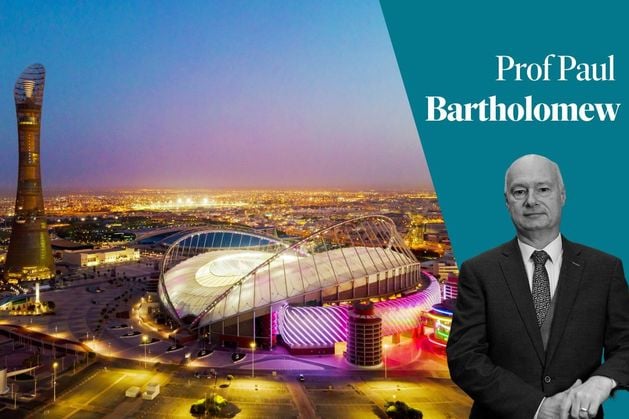
In February 2020, UU established a partnership in Qatar with City University College to offer a range of UU business degree courses to students in Doha and elsewhere
Faced with this gap, universities like ours have developed other income streams to offset the losses incurred by delivering provision here in Northern Ireland.
One example is the partnerships we have nationally and internationally, in London, Birmingham, Manchester, Qatar and further afield.
And although these activities have their own associated travel, publicity and support costs, we nonetheless generate surpluses that can offset the losses we make in running our Northern Ireland provision.
International students and international education partners value a UK education, and third-level education here is held in high esteem.
This creates a demand for our qualifications and an opportunity to generate much-needed income. The revenue so generated offsets a proportion of the losses that we incur due to systemic underfunding in Northern Ireland.
Put simply, it is necessary for us to operate in international markets, to exploit our expertise and to generate additional income to support our core mission. When we do this at an overseas location, it is called transnational education.
Despite the significant growth achieved in recent years, this has been overwhelmed by the increase in the costs we are incurring, many of which are outside of the university’s control — including rising National Insurance contributions and utilities bill.
This means income growth has been insufficient to keep up with the rising costs we face. Accordingly, we must and will do more transnational education, with more partners, in more global locations.
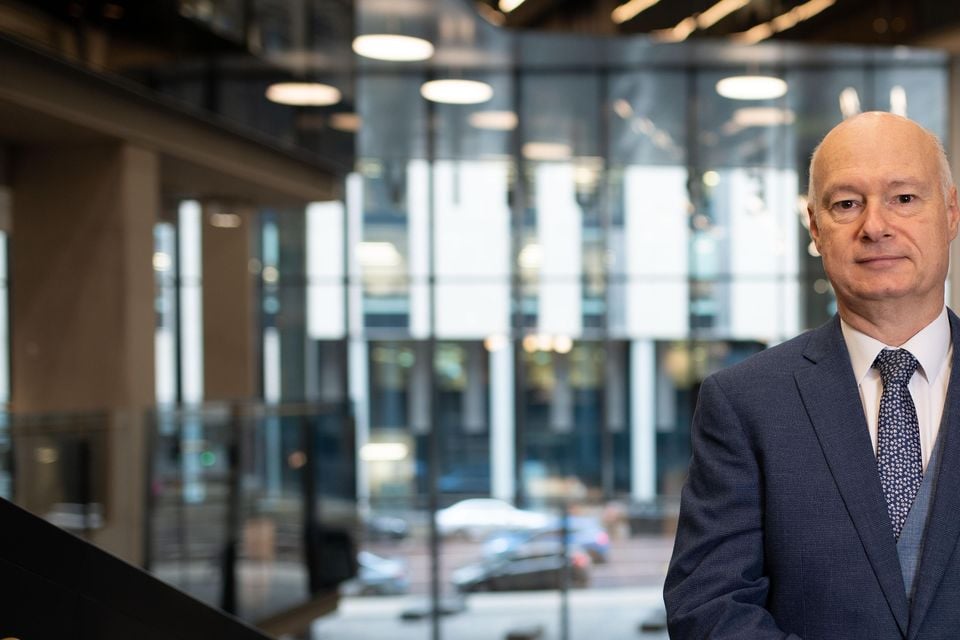
Ulster University Vice-Chancellor Professor Paul Bartholomew
To be clear, these activities are no substitute for the necessary updating of the current Northern Ireland higher education funding model, but they do offset some of our losses.
Of course, there are also tangible wider benefits that fall to us from our global connections. At Ulster University, we value our partners in Great Britain and overseas greatly, and with their contributions, we support a large number of students who otherwise wouldn’t be able to benefit from an Ulster award.
For those who can travel, articulation arrangements, where students start their degree in another country and finish them in Northern Ireland, really enrich our campuses, our research and our teaching.
Far from representing a drain on our resource to deliver for NI, our overseas and international-facing activities are both self-funding and return surpluses that are essential to the delivery of our mission.
Professor Paul Bartholomew is Vice-Chancellor at the Ulster University