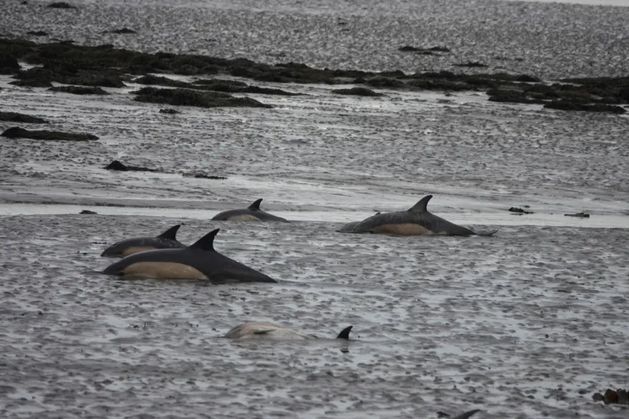
Rescuers from the Irish Whale and Dolphin Group and the National Parks and Wildlife Service responded after a pod of common dolphins became trapped on a falling tide in muddy coastal terrain
On Sunday, December 21, a total of 27 common dolphins were discovered stranded near Ballyvaughan, Co Clare, in what the IWDG described as the second-largest mass stranding of the species recorded by the organisation.
The group said the dolphins were in good body condition, suggesting the pod had been healthy prior to the incident. It believes the stranding was most likely caused by a navigational error on a falling tide, which left the pelagic pod disorientated in shallow, muddy terrain and unable to escape before the water receded.
Responders faced significant challenges at the site due to the soft mud, which limited safe access to the animals. The IWDG said the safest option for both volunteers and dolphins was to wait for a natural refloat as the tide returned.
When the tide began to rise on Sunday afternoon, the first four dolphins refloated at around 1.30pm, with the remaining 24 returning to the water shortly before 3pm. Once conditions allowed for limited intervention, responders assisted several animals, including calves that were swimming in the wrong direction. Some calves were freed from seaweed and gently guided back towards their mothers.
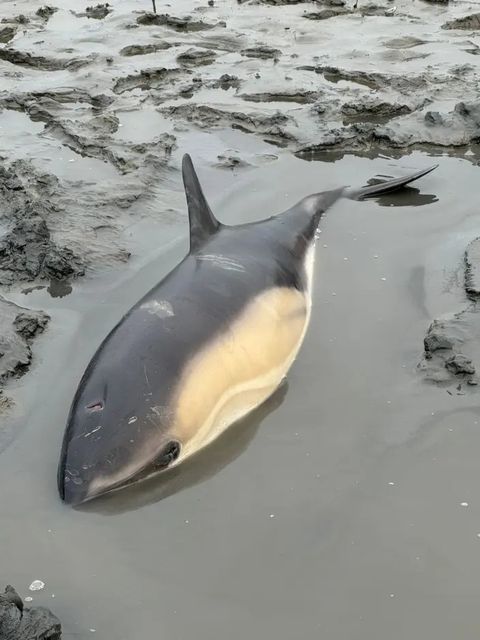
27 common dolphins were found stranded in Ballyvaughan, Co Clare on Sunday. Photo: IWDG
Despite the rescue efforts, seven dolphins died, primarily those that had stranded on their sides. The remaining animals were observed swimming into deeper water as the tide continued to rise.
Early the following morning, Monday, December 22, members of the local community reported that several dolphins had once again been spotted in shallow water in the area. Volunteers were mobilised, and with assistance from the National Parks and Wildlife Service (NPWS), eight dolphins were located and attended to.
These animals were positioned upright, closely monitored and cared for while responders waited several hours for the incoming tide. All eight dolphins were successfully refloated and herded out of the bay. When the final volunteer left the area, there was no sign of the animals, and the IWDG said it hopes they remained offshore overnight.
In a statement, the organisation said live strandings are among the most difficult and distressing incidents to manage. “Responders on scene worked calmly and carefully to give these dolphins the best possible chance of survival in an area where deep mud severely limits intervention,” it said.
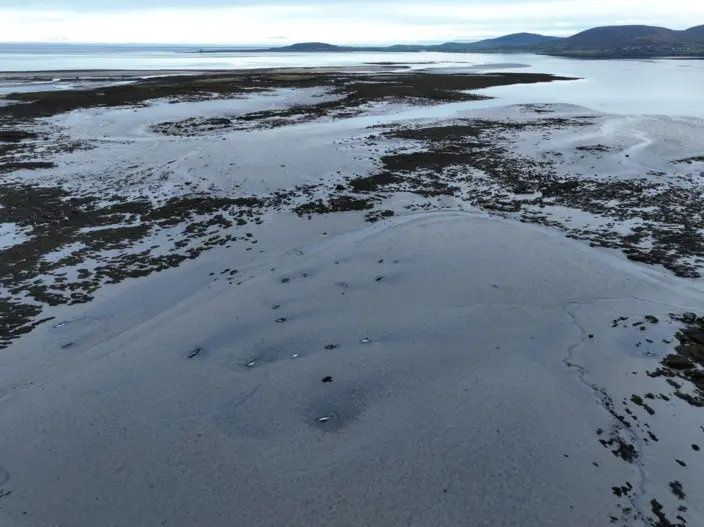
27 common dolphins were found stranded in Ballyvaughan, Co Clare on Sunday. Photo: IWDG
The IWDG also paid tribute to all those involved in the operation, including its own responders and officers, the NPWS and members of the local community. It noted that some volunteers attended on both days, which involved long and physically demanding hours.
The organisation is reminding the public that if they encounter a live-stranded dolphin, they should not attempt to drag the animal, particularly by the tail, as this can cause serious or fatal injuries. Instead, people are asked to take a photo or short video, record the location using GPS or a mapping app, and immediately contact the IWDG Emergency Stranding Hotline on 097 28128. Responders can then assess the situation and determine the safest course of action for both animal welfare and human safety.