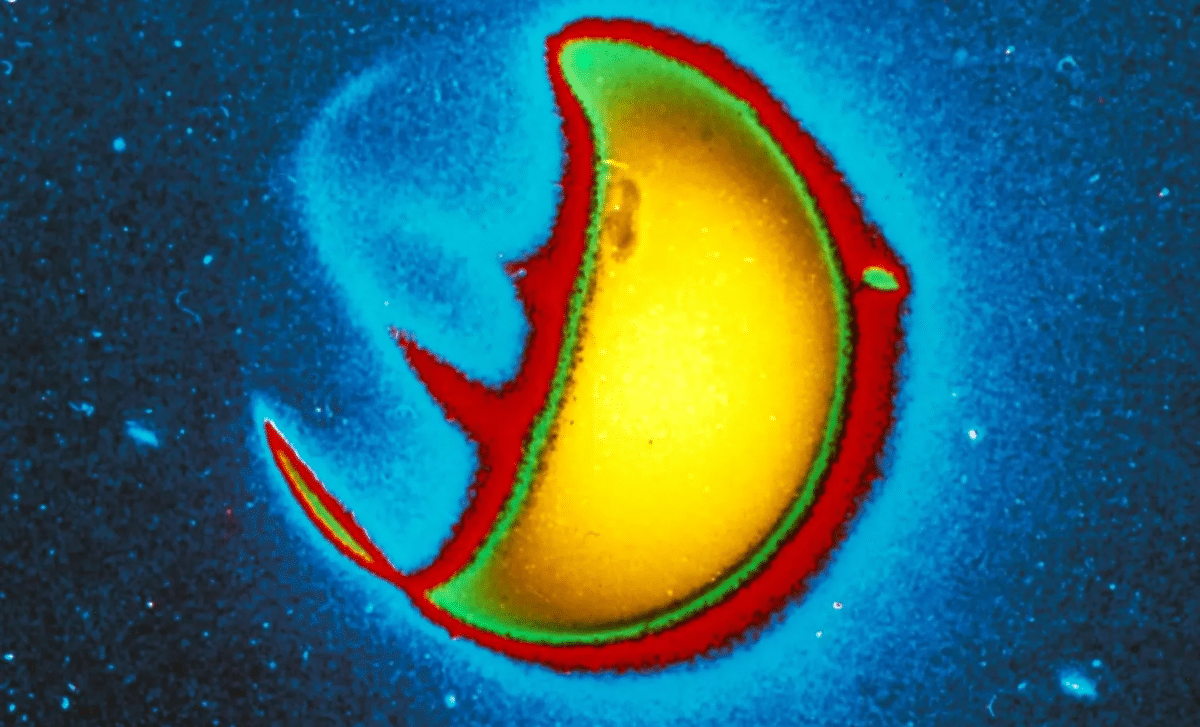
NASA’s Carruthers Geocorona Observatory, a groundbreaking mission, is set to provide new insights into the outermost layer of Earth’s atmosphere, the exosphere. The mission will capture detailed images of this elusive region, shedding light on how space weather impacts our planet.
Unveiling the Invisible: Earth’s Exosphere and the Carruthers Mission
The exosphere, Earth’s outermost atmospheric layer, is so faint that it has remained largely invisible to scientists until now. NASA’s Carruthers Geocorona Observatory, launched in 2025, will provide the first continuous view of this elusive region, revealing its dynamics and interactions with solar activity. The mission aims to capture the full expanse of the exosphere, offering critical data that could influence space weather forecasting and our understanding of planetary habitability. With this mission, NASA is embarking on a journey that could not only protect astronauts on future space missions but also offer key insights into why Earth has been able to retain its atmosphere while other planets have lost theirs.
The Invisible Halo: What Is Earth’s Exosphere?
The exosphere, which starts about 300 miles above the Earth’s surface, is a thin, rarefied layer composed mostly of hydrogen and helium atoms. These particles are so sparse that the region is nearly impossible to detect with conventional methods. The exosphere’s faint ultraviolet glow, known as the geocorona, is the only way scientists have been able to study it. However, until now, no mission has been dedicated to capturing detailed observations of this atmospheric layer. The Carruthers mission promises to fill this gap by providing the first detailed, continuous images of this dynamic layer, allowing researchers to study its shape, composition, and reaction to solar activity in ways never before possible.
The Historical Context: Apollo 16’s First Glimpse of Earth’s Geocorona
While the Carruthers mission is groundbreaking, it has deep historical roots. The first image of Earth’s exosphere was captured during the Apollo 16 mission in 1972. Dr. George Carruthers, the pioneering scientist behind the Carruthers Geocorona Observatory, developed a specialized ultraviolet camera that captured the first images of the geocorona from the Moon.
“The camera wasn’t far enough away, being at the Moon, to get the entire field of view,” said Lara Waldrop, principal investigator for the mission. “And that was really shocking that this light, fluffy cloud of hydrogen around the Earth could extend that far from the surface.”
These early observations sparked a fascination with Earth’s outermost atmosphere, but it wasn’t until the launch of the Carruthers mission that scientists could fully investigate this phenomenon.
The Carruthers Mission: A New Era of Exospheric Observations
NASA’s Carruthers Geocorona Observatory, launched in September 2025, is equipped with advanced imaging technology to capture the most detailed observations of Earth’s exosphere. Unlike the Apollo 16 mission’s limited view, the Carruthers mission will observe the entire exosphere from Lagrange Point 1 (L1), located about a million miles from Earth. The spacecraft carries two ultraviolet cameras, including a near-field imager and a wide-field imager, to provide both detailed close-up views and a comprehensive, full-scope look at the exosphere. “We’ve never had a mission before that was dedicated to making exospheric observations,” said Alex Glocer, the Carruthers mission scientist. “It’s really exciting that we’re going to get these measurements for the first time.” This mission is poised to make unprecedented contributions to our understanding of the exosphere’s role in space weather and atmospheric escape.
Space Weather and Its Impact on Earth: Why It Matters
Understanding the exosphere is more than a matter of scientific curiosity. It has significant implications for space weather prediction and planetary defense. The exosphere acts as the first line of defense when solar eruptions, such as solar flares and coronal mass ejections, reach Earth. These solar particles interact with the exosphere before reaching the lower layers of the atmosphere. The Carruthers mission will provide new data about how these solar disturbances impact Earth’s atmosphere and could affect spacecraft, satellites, and astronauts traveling beyond Earth’s protective magnetic field. The ability to better predict space weather events is critical for safeguarding human exploration of the Moon, Mars, and beyond.
The Role of Hydrogen in Atmospheric Escape: Clues to Earth’s Water Retention
The exosphere is also crucial for understanding how Earth’s atmosphere gradually loses gases like hydrogen, which is a key component of water. Unlike other planets, Earth has managed to retain its water, and scientists believe this could be linked to the behavior of the exosphere. As hydrogen escapes into space, the Earth’s water content decreases. By studying the hydrogen particles in the exosphere, the Carruthers mission could offer valuable insights into why Earth has retained its water while other planets, such as Venus and Mars, have not. “Understanding how that works at Earth will greatly inform our understanding of exoplanets and how quickly their atmospheres can escape,” said Waldrop. This research could provide critical information in the search for habitable exoplanets beyond our solar system.
The Mission’s Journey to Lagrange Point 1: A New Perspective on Space
After its launch, the Carruthers spacecraft will travel to Lagrange Point 1 (L1), a position about a million miles away from Earth, offering an uninterrupted view of both the Earth and the Sun. This strategic location will allow the spacecraft to capture the full scope of the exosphere, including the regions farthest from the planet. From L1, the Carruthers spacecraft will use its advanced imaging systems to track hydrogen atoms as they move from the exosphere into space, providing valuable data on how Earth’s atmospheric particles escape. The data gathered could also be applied to the study of exoplanets, as understanding the processes of atmospheric escape on Earth can inform our knowledge of distant planets.