
The United Kingdom’s £6 billion Ajax armoured vehicle programme has entered a new period of uncertainty after Defence procurement minister Luke Pollard announced that trials had been paused as a precautionary measure. The decision follows earlier moves to halt the vehicle’s use in training and exercises while a safety investigation is conducted, highlighting the scale of the challenges facing one of Britain’s most ambitious land programmes.
Ajax was conceived as the British Army’s next-generation tracked reconnaissance platform, designed to operate as a key element within the Army’s ISTAR architecture. The programme was intended to replace the ageing Cold War-era CVR(T) family and deliver a step change in capability through advanced sensors, digital connectivity, enhanced protection and a 40 mm cannon, enabling networked reconnaissance in high-intensity warfare. In total, 589 vehicles across multiple variants were planned, with Ajax expected to form the backbone of the Army’s future reconnaissance force.
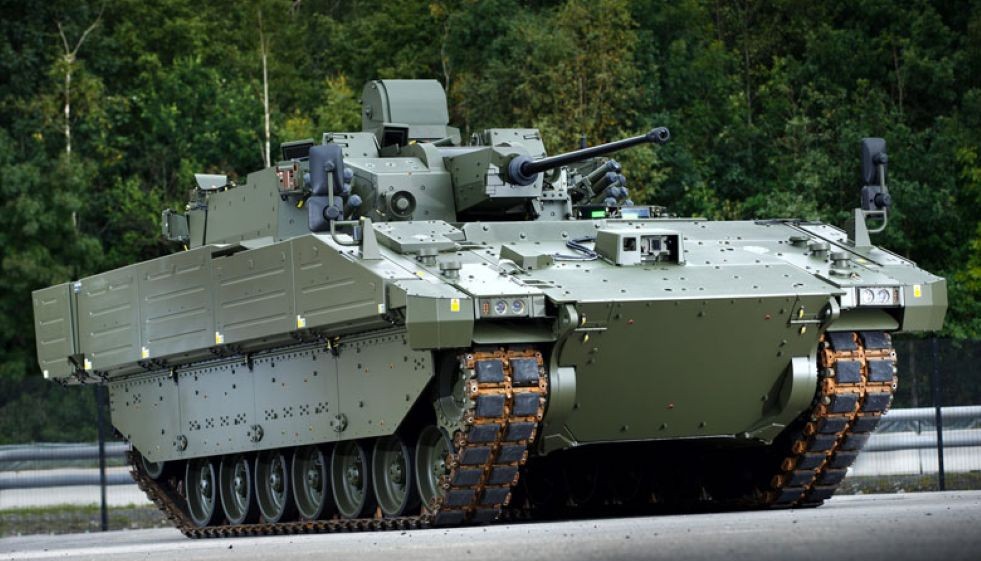
The programme has faced difficulties almost since its inception. The British Army ordered Ajax in 2014, with General Dynamics later constructing the vehicles at its South Wales facility. Repeated delays, design changes and performance issues pushed the originally planned 2020 entry into service back to 2024, with initial deliveries only beginning after years of criticism over defence procurement failures in the UK.
The latest setback centres on human-factors concerns. During recent trials, around 30 soldiers reported feeling unwell due to excessive noise and whole-body vibration, with symptoms including severe shaking and nausea. On safety grounds, the Ministry of Defence decided to pause all trials pending the outcome of an official investigation. Pollard said the findings would be published and that a decision on whether trials can resume would be taken in the new year, aligned with the government’s wider Defence Investment Plan.
According to Reuters, the pause represents another serious blow to a programme already weakened by years of technical and managerial difficulties. Reuters described Ajax, valued at roughly £6 billion, as a case study in how ambitious requirements, insufficient early risk management and poor integration of human factors can undermine even strategically important defence projects.
At the heart of the problem lies a mismatch between vision and execution. Ajax was intended to deliver persistent, high-tempo reconnaissance while keeping crews operationally effective for extended periods. However, unresolved noise and vibration issues raise doubts about whether the platform can safely sustain the missions for which it was designed. In operational terms, fatigue and health-related degradation directly undermine situational awareness, decision-making and combat effectiveness, particularly for reconnaissance units operating at the forward edge of the battlespace.
The UK National Audit Office has repeatedly highlighted systemic problems in defence acquisition, including cost overruns, weak financial planning and limited value for money. Within this broader context, Ajax has emerged as a prominent example of how unresolved technical and human-factors issues can translate into strategic challenges for force structure and readiness.
While the Ministry of Defence maintains that the pause is a precautionary measure rather than a cancellation, the programme’s future direction remains uncertain. With billions of pounds already spent, limited capability delivered and fundamental safety questions still unresolved, Ajax now stands at a crossroads. Whether it can still fulfil its original vision as the cornerstone of Britain’s armoured reconnaissance capability will depend on the outcome of the safety investigation and the government’s willingness to address deeper structural weaknesses in defence procurement.
Author: Özgür Ekşi