Unlike many other major Tanzanian cities, Dar es Salaam has been particularly vulnerable to the failure of the October to December rainy season.
Even Dodoma, which often receives little rainfall throughout the year, is less affected thanks to its man-made dams.
In contrast, Dar es Salaam lacks a nearby freshwater source, is heavily populated, and experiences some of the country’s highest temperatures, currently averaging around 33 °C.
Although it is next to the sea, there is no desalination plant to make the ocean water usable for residents.
Much of the city’s drinking water (about 70%) comes from the Ruvu River, whose flow is closely linked to seasonal rainfall inland.
Smaller volumes are drawn from other rivers and from sources such as boreholes, but these provide only limited relief when rains fail.
When the Ruvu’s flow drops, as has happened this time, the effects are felt almost immediately, especially in high-lying areas and newly developed suburbs of the city.
The impact is widespread but uneven, depending on a household’s economic status.
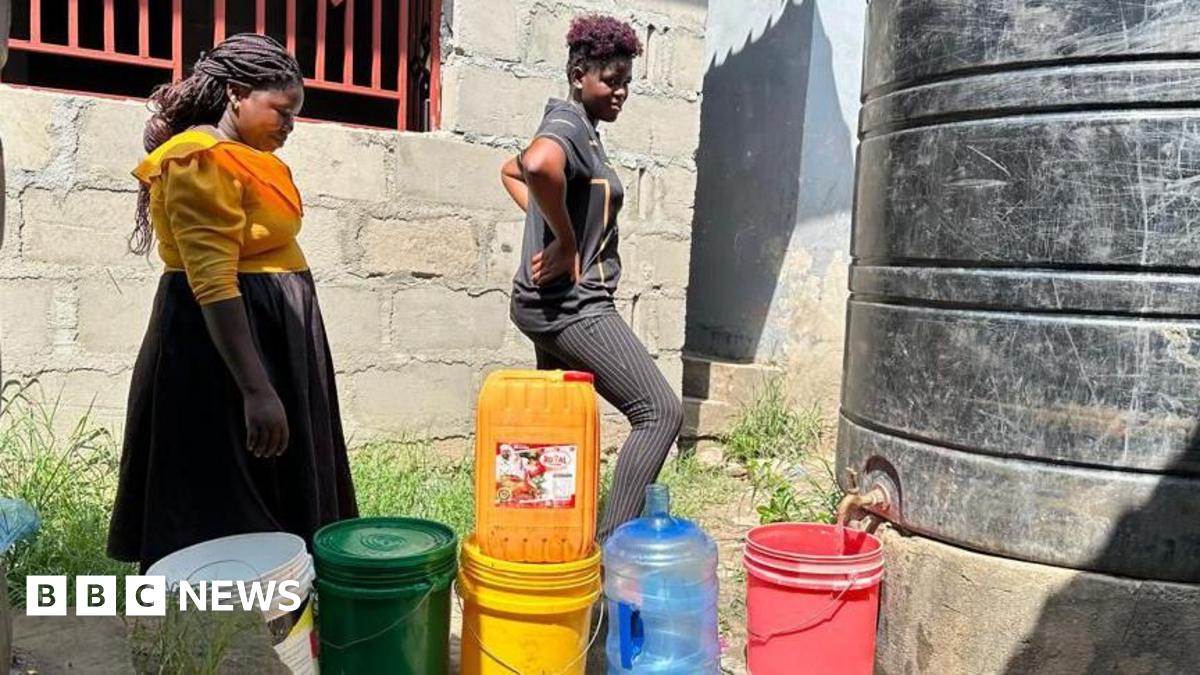
People have invariably adapted to the uncertainty: some stay awake until morning not to miss the rush of water in their pipes, others line their rooftops and courtyards with containers to store every precious drop of water from the little rain that falls.
For small business owners, the crisis has become an acute strain. Some food vendors, salon operators, and car wash businesses have cut back hours or raised prices.
Women are often seen looking for water for their homes.
“When water is scarce, everything else stops. At times hygiene suffers, stress increases, especially for us mothers, and the whole household feels the impact,” says Tegemeo Kombe, who lives in Kibamba, west of the city.
The government has acknowledged the severity of the problem. Water Minister Juma Aweso told the BBC that Dar es Salaam’s dependence on rainfall-fed rivers had left it particularly exposed.