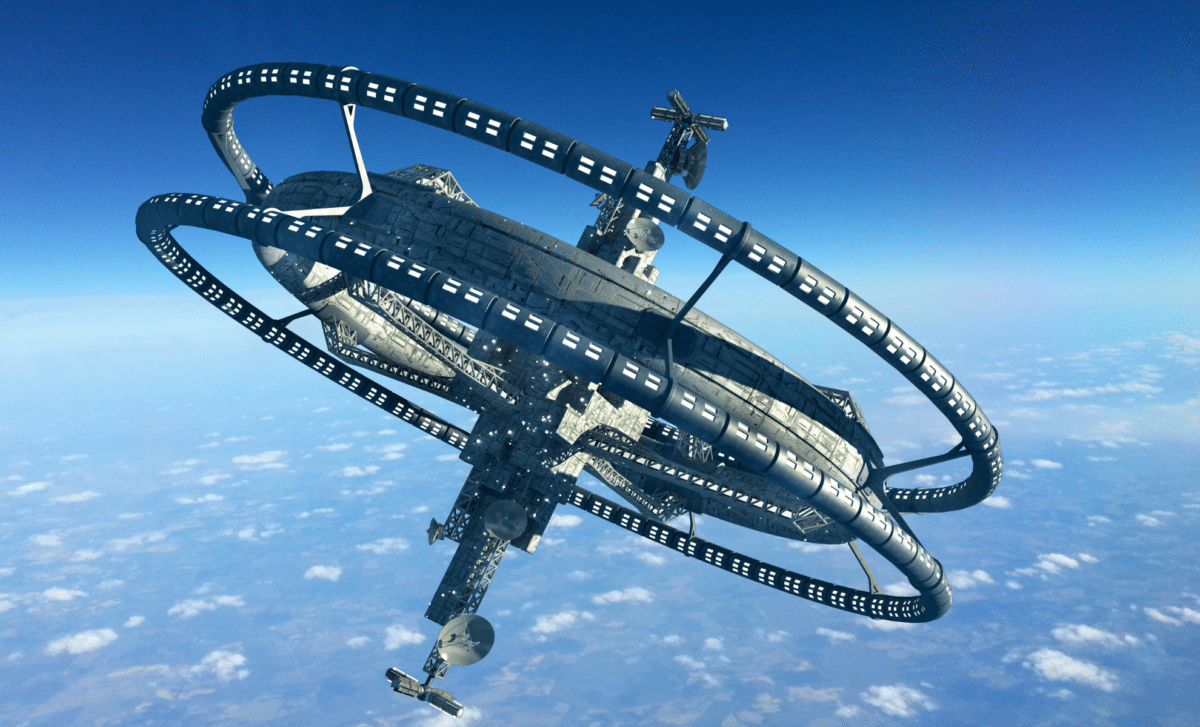
As the possibility of long-duration space exploration becomes more feasible, the issue of how to preserve astronaut health during such missions is becoming increasingly critical. Recently, Russia’s Energia rocket company has taken a step forward in addressing this challenge by securing a patent for a revolutionary space station design that could generate artificial gravity. This concept, as reported by Space.com, could dramatically improve the well-being of astronauts by countering the detrimental effects of prolonged microgravity on the human body.
The Concept of Artificial Gravity in Space Exploration
For decades, scientists have struggled with the challenges that astronauts face in microgravity environments. Prolonged exposure to microgravity causes a range of health issues, including muscle atrophy, bone density loss, and fluid redistribution within the body. To address these problems, the concept of artificial gravity has been proposed. By creating a force that mimics Earth’s gravity, astronauts could maintain their physical health, even while spending months or years aboard a spacecraft.
The core idea behind generating artificial gravity is centrifugal force. In this design, the rotating modules would simulate gravity by pushing occupants outward. Energia’s space station patent suggests creating a rotating structure where modules move around a central axial hub. This would generate a force equivalent to 0.5g — half of Earth’s gravity. Such a design could allow for better astronaut health and prevent the physical deterioration that has plagued long-duration space missions in the past.
How Russia’s Design Works
According to Space.com, the proposed space station would consist of several modules connected by flexible, hermetically sealed joints. These modules would rotate around a central axis, and the centrifugal force generated by this rotation would push the crew outward, effectively creating artificial gravity. The rotating system could provide astronauts with a more Earth-like experience in terms of gravity, which could be a game-changer for long-term missions.
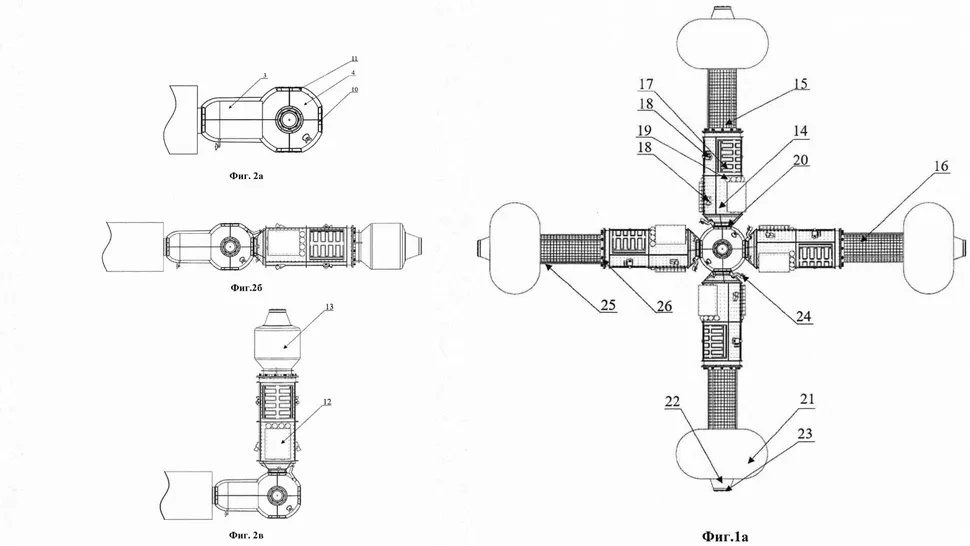 Illustrations accompanying a patent for an artificial gravity space station submitted by Russian state-owned Energia rocket company. (Image credit: RSC Energia)
However, as with any ambitious space project, this concept does come with challenges. One significant issue noted in the patent documentation is the complexity of coordinating the rotation of the space station and transport ships. To safely dock with the station, spacecraft would need to be aligned with the rotating modules, which adds a layer of complexity to the mission’s logistics. This challenge, although not insurmountable, could potentially hinder the practicality of such a design for certain types of space missions.
The Advantages of Artificial Gravity for Astronaut Health
One of the most significant benefits of artificial gravity is its potential to alleviate the harmful effects of prolonged exposure to microgravity. Astronauts on the International Space Station (ISS) have long experienced a variety of physical challenges, including muscle weakening and bone density loss. These effects are due to the lack of gravitational force acting on the body, which in turn leads to the breakdown of muscle tissue and bones.
Artificial gravity could mitigate these issues by allowing astronauts to engage in more natural movements, including walking and standing. This would help maintain muscle strength and bone density throughout long-duration missions. In addition, simulated gravity could improve astronaut comfort, as the absence of gravity often leads to disorientation, fluid shifts, and problems with blood circulation. By recreating a familiar gravity environment, astronauts might experience fewer health issues and a more comfortable living space during their time in space.
The Technological Challenges Ahead
While the concept of artificial gravity is enticing, the technology behind it is far from simple. One of the primary challenges is the need for a rotating system that can reliably and safely generate centrifugal force. To do this, the structure of the space station must be engineered to withstand the stresses and strains of continuous rotation, ensuring that both the station and its crew remain secure.
Furthermore, there are logistical issues that need to be addressed, particularly regarding docking procedures. Since the space station’s modules would be rotating, transport ships would need to match the station’s rotation to dock successfully. This coordination of movements presents a challenge for astronauts and spacecraft engineers. Ensuring that docking maneuvers are safe and efficient is a critical aspect of making such a space station viable.