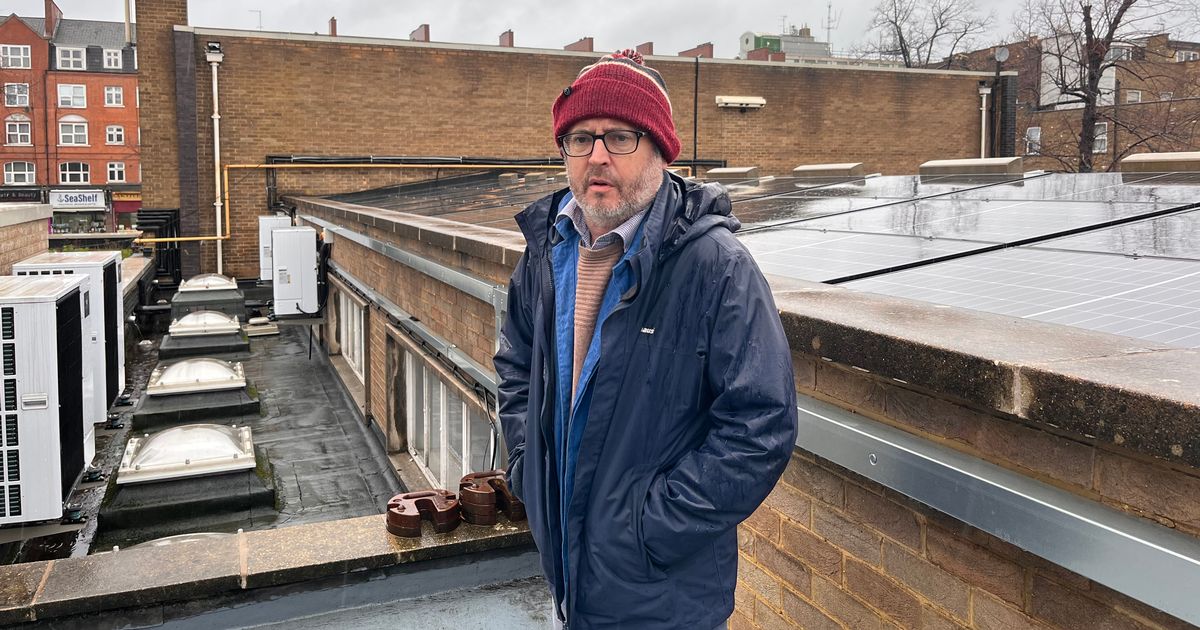
St Paul’s West Hackney has made full use of its wide, flat roof
An East London church considered to be the city’s greenest has covered its roof with over 100 solar panels and installed four heat pumps to cover its significant energy needs.
Hailed as an example of making full use of available grants to pimp up its building with green tech, St Paul’s West Hackney has funded the £170,000 cost with help from community group Stokey Energy, Hackney Council’s Community Energy Fund, and the London Olympics Legacy Fund.
The 104 solar panels and four air source heat pumps deliver roughly 70% of the building’s energy. Given churches’ size, age and notoriously draughty nature, it’s extremely difficult for any place of worship to cover 100% of their energy needs at all times.
But Father Brandon Fletcher-James, who took over as priest of the Anglican church during the summer, told the Local Democracy Reporting Service (LDRS) his church is now a green beacon for the Diocese of London.
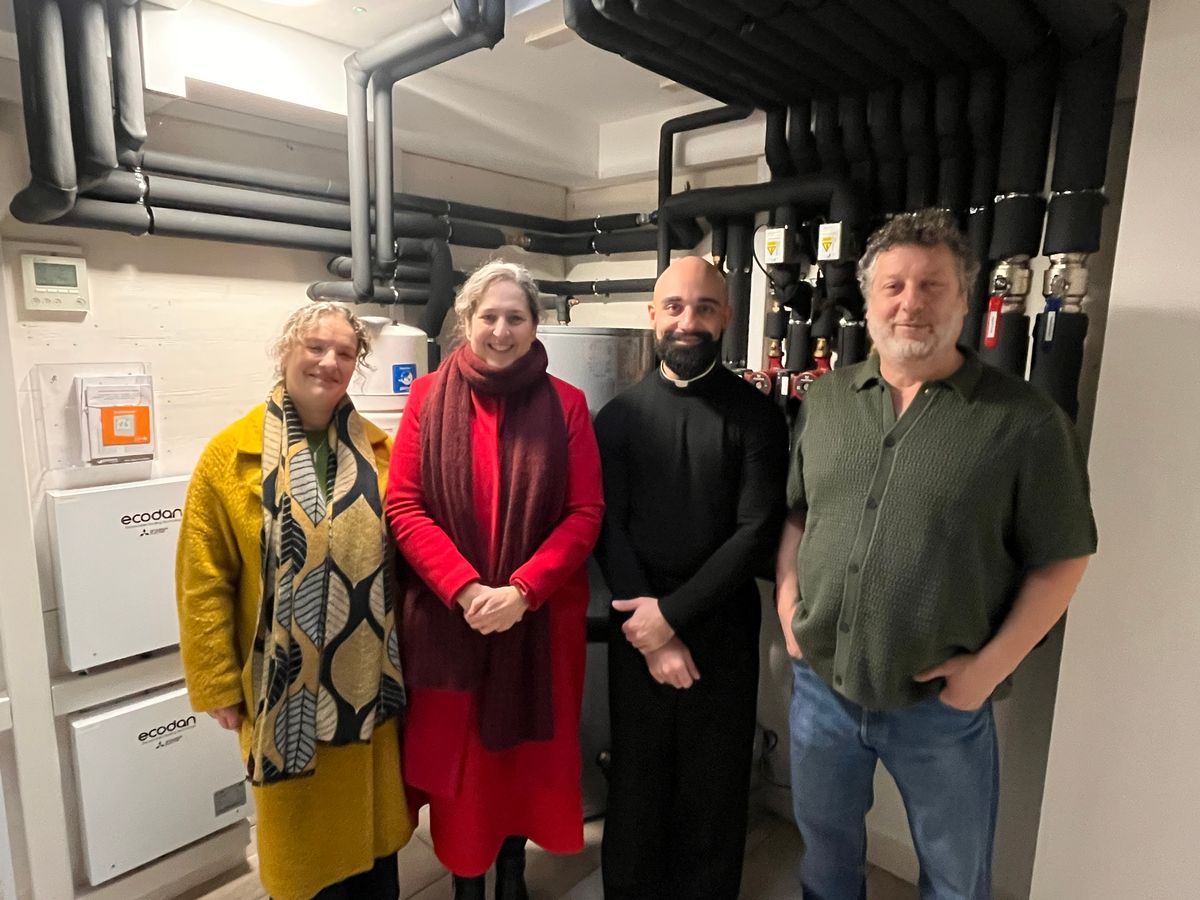 (L-R) Cabinet Member for Climate Sarah Young, Mayor of Hackney Caroline Woodley, Father Brandon Fletcher-James and Stokey Energy’s Steve Epstein(Image: LDRS)
“All churches aspire to be environmentally friendly, but we try to do it in a way that actually is practical,” he said.
“Even in the last five months of being here, I’ve been approached by various churches […] asking how it even came about in terms of solar panels, but also what that means for our environmental status.”
The decarbonisation project was led by Stokey Energy, which prides itself on turning cultural venues and local schools into “solar powerhouses”.
Co-founder Tom Campbell explained how the “transformative” system had cut the church’s energy spending by using the array of solar panels and heat pumps to generate 46 megawatts (MWh) of electricity per year.
For context, the average 2-3 person household uses 2.7 MWh of electricity every year according to Ofgem. The excess energy is stored in the church’s solar batteries to be used when needed, such as during the winter or days with limited sunshine, rather than selling it back to the National Grid at a lower price.
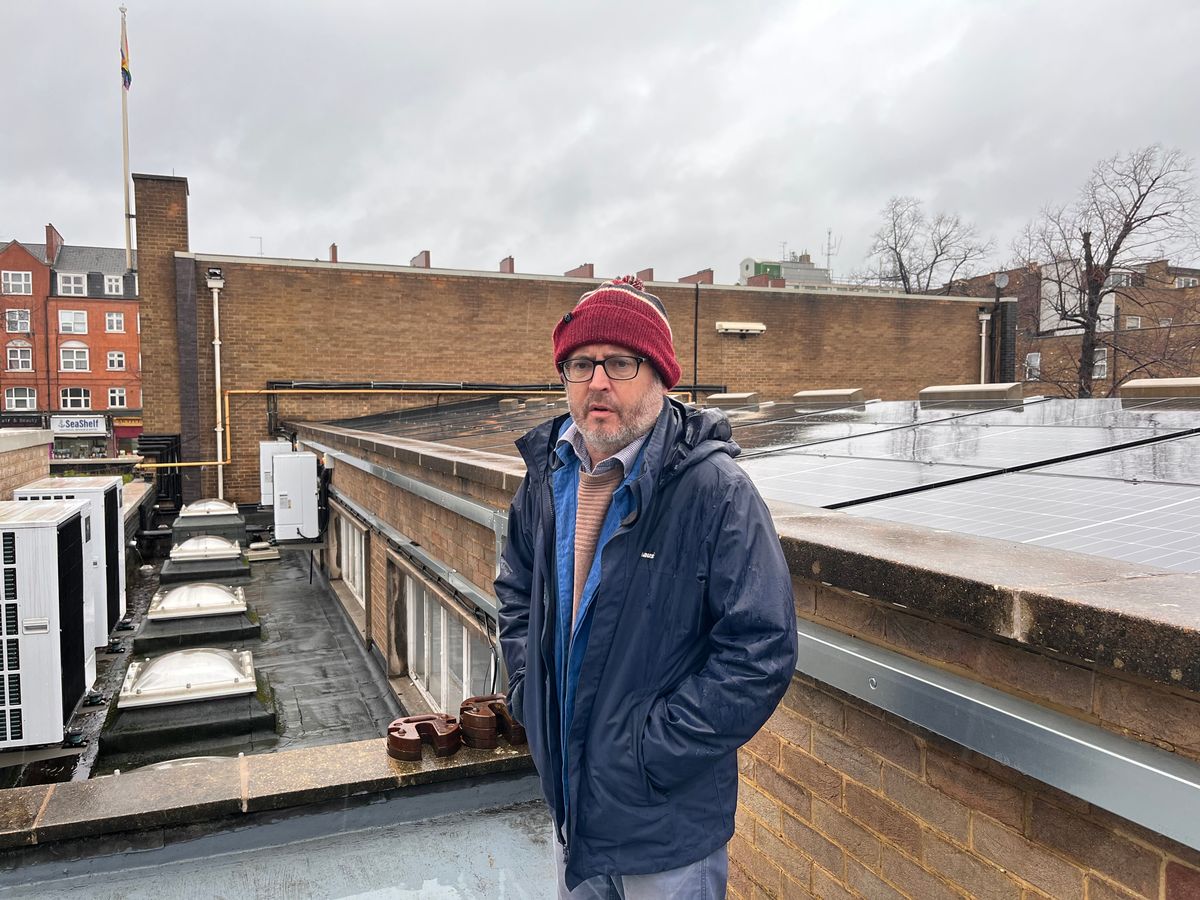 Stokey Energy Co-founder Tom Campbell(Image: LDRS)
In June this year St Paul’s West Hackney used roughly 6MWh of energy across the month and 92% of this was generated by the solar power system.
While an exact saving is hard to calculate due to fluctuating energy prices, when they first calculated it against the local parish’s £40,000 investment into the system, they expected this money could be recouped within four years, suggesting a saving of around £10,000 a year was predicted.
‘Churches are so poorly insulated’
Yet even a relatively modern church like this would be hard to make 100% renewable, Mr Campbell said.
“Most churches have phenomenal thermal leaking, which is why they have so many problems with congregations really suffering from the cold, and enormous heating bills because the [buildings] are so poorly insulated.”
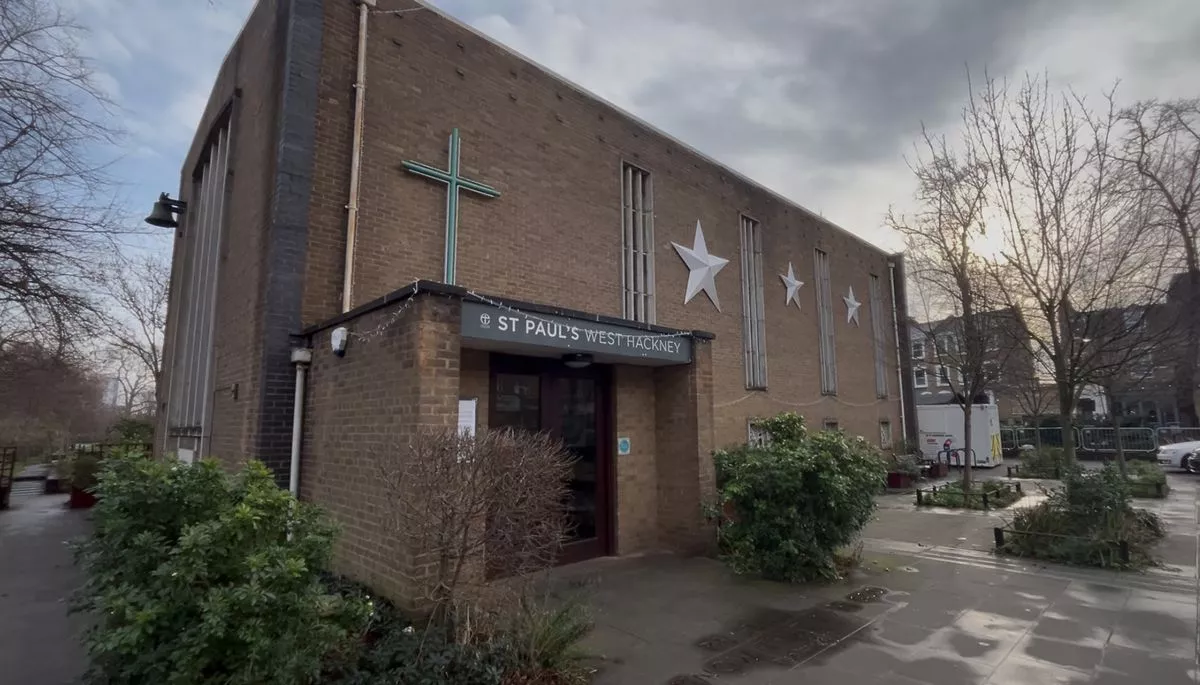 St Paul’s West Hackney in Stoke Newington(Image: LDRS)
While Hackney Council is looking to replicate this across the borough’s other churches, temples and mosques, another focus for the local authority right now is decarbonising its housing stock.
Cabinet Member for Climate, Environment and Transport, Cllr Sarah Young, highlighted that the council is installing solar panels on 27 blocks across three estates in the borough. The Labour-run council has said tenants and leaseholders “could soon see their bills slashed” as a result.
This is being funded through roughly £2million from its own climate budget, which includes money from City Hall’s Carbon Offset Fund. The council says its business model is self-funding, and that it will use the income earned by selling residents discounted solar electricity to repay the investment over 10-20 years.
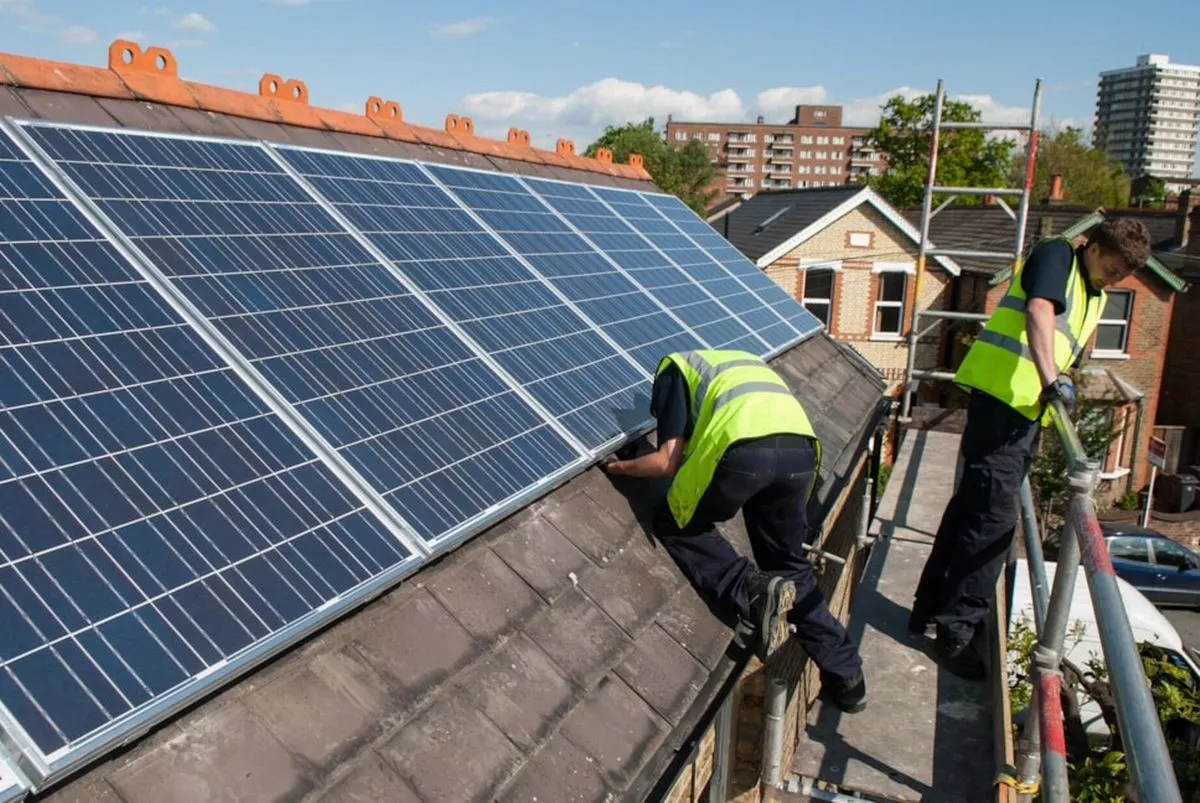 Hackney is currently piloting a residential solar installation project at a cost of roughly £2m(Image: Hackney Council)’St Paul’s stands as an example’
On Thursday (December 18) St Paul’s was paid a ministerial visit from the Department for Energy Security and Net Zero (DESNZ). Parliamentary Under-Secretary of State Martin McCluskey praised St Paul’s as a flagship example of community-led energy while “delivering massive savings to this church’s energy bills”.
“It really stands as an example for what other buildings across the country can take advantage of with this new green technology that’s readily available right now,” Mr McCluskey said.
“The great thing about it is it’s been led by the council and by community energy companies,” he said.
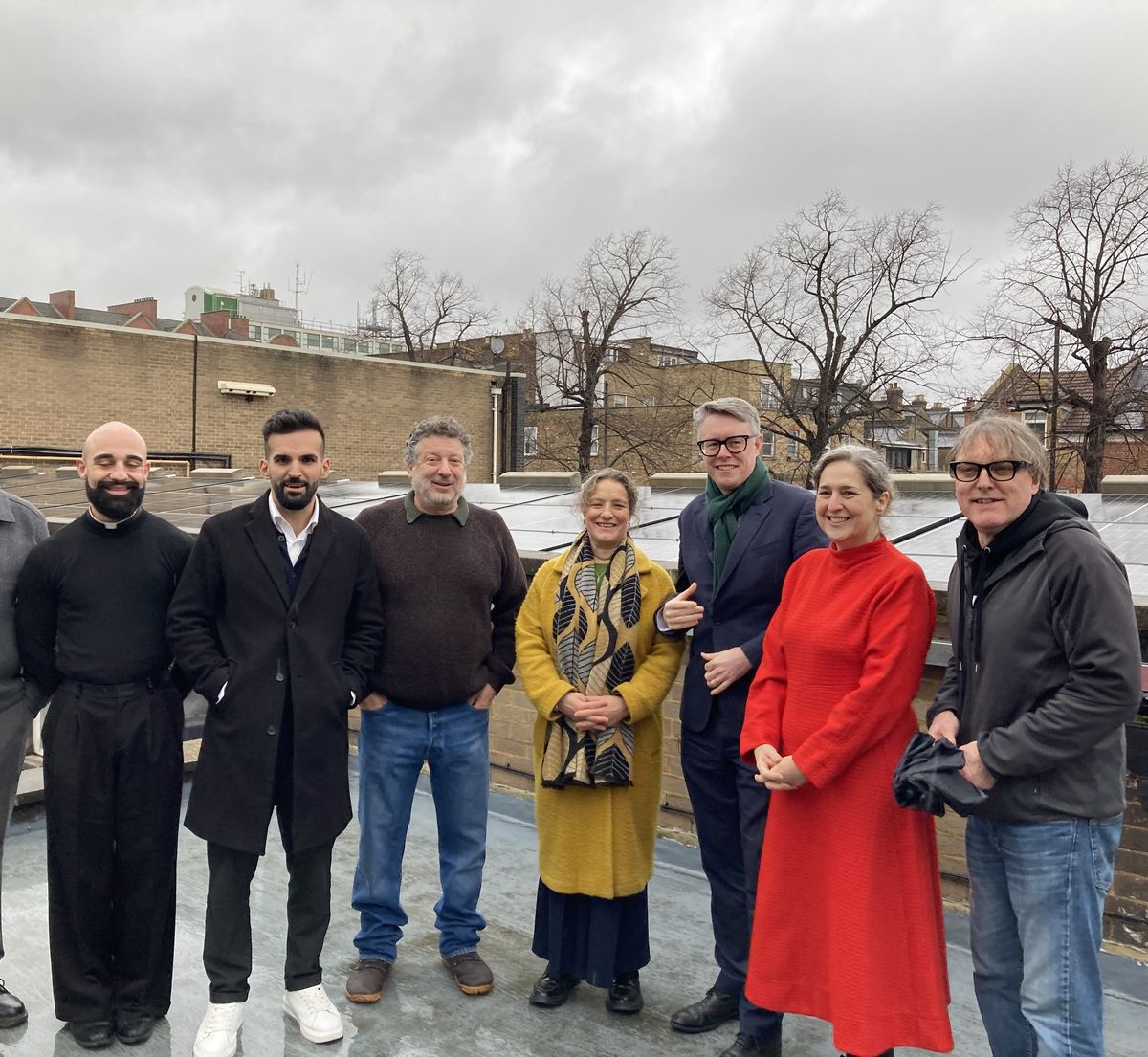 Up on the roof: (L-R) Father Brandon Fletcher-James, Deputy Mayor of London for Environment and Energy Mete Coban, Stokey Energy co-founder Steve Epstein, Cabinet Member for Climate Cllr Sarah Young, Parliamentary Under-Secretary of State Martin McCluskey, Mayor of Hackney Caroline Woodley and Cllr Gilbert Smyth(Image: Department for Energy Security and Net Zero)
The Labour government has pledged to cut £300 from energy bills at the national average by 2030. But this promise has come under scrutiny in recent months, as the expert behind Labour’s manifesto commitment said it could be “wiped out” by rising electricity costs, which the country is currently seeing.
Defending the pledge, Mr McCluskey said “significant” steps had already been taken to meet the goal, including the Budget announcement that it would take £150 on average off household energy costs by 1 April 2026.
He added: “We’re going to accelerate reductions in bills by moving away from wholesale gas, or moving away so that we are not as reliant on the wholesale gas price rising and falling.”
For now, work continues on the “wonderful green and eco” St Paul’s in Hackney.
Father Fletcher-James said: “There is so much more we can do to be environmentally friendly in terms of our day-to-day running and costs, our admin, our governance […] those are some of the things I’m hoping to try and also look at in the new year.”
Keep up with the latest East London news. Sign up to our MyEastLondon newsletter HERE for daily updates and more.