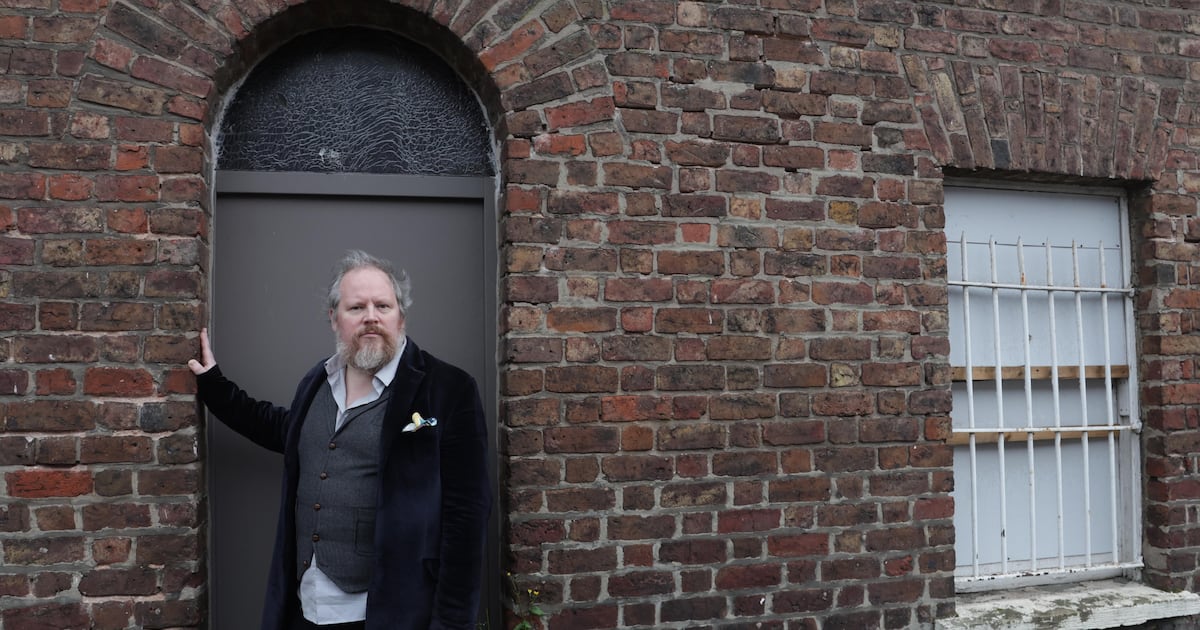
A historian has revealed that the popular origin story behind a rare feature in a row of south Belfast houses is a “myth”.
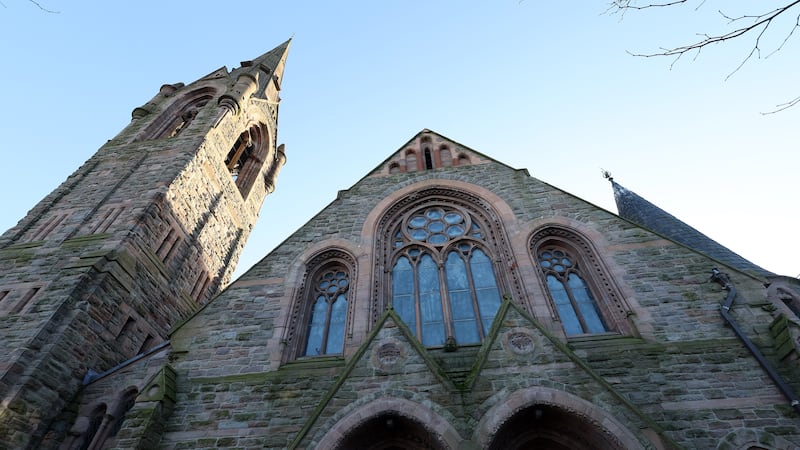
Homes at the top of University Street, located just behind Queen’s University’s Seamus Heaney Centre, uniquely feature ‘double frontage’.
While their true front entrance is located on the next street over on Mount Charles, the rear of the homes on University Street are ‘false fronts’ – designed to look like the front of homes.
Read more: World War I veteran remembered 110 years on thanks to family’s dedication

The gaps between the ‘false fronts’ and the actual rear of the houses can still be seen through some of the windows where there are no panes.
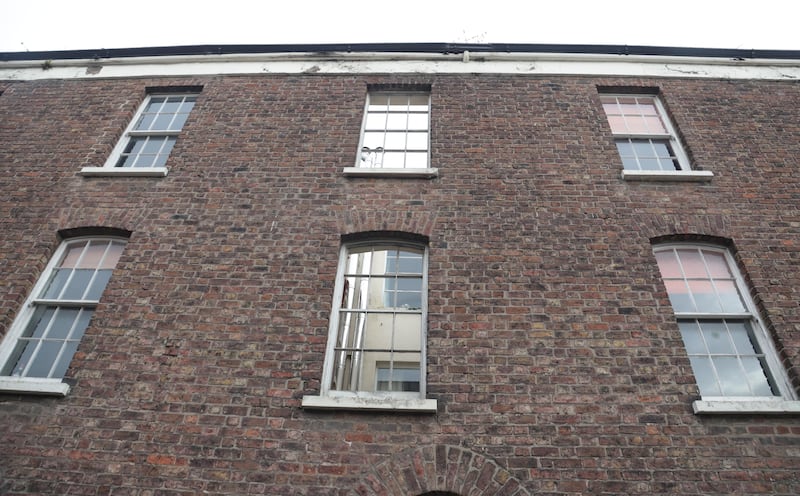 The gaps between the ‘false front’ and the rear of the homes is visible through windows without panes PICTURE: COLM LENAGHAN
A unique example of such a feature within Belfast, the widely accepted story is that the false fronts were built ahead of the visit of Queen Victoria in 1849.
However, historian Robert J.E. Simpson told The Irish News that this version of events is “absolutely nonsense”.
“The reason it was done was not in order to hide slum locations from Queen Victoria,” he said.
“She visited in August 1849. And yes, there was an awful lot of work done around the city to make improvements, to make sure that it was as ‘appealing’ to her as possible.
“But at that point, this bit of Belfast was still very much open, green space. There were certain quite high-profile, quite fancy houses, but this area hadn’t yet been done up.”
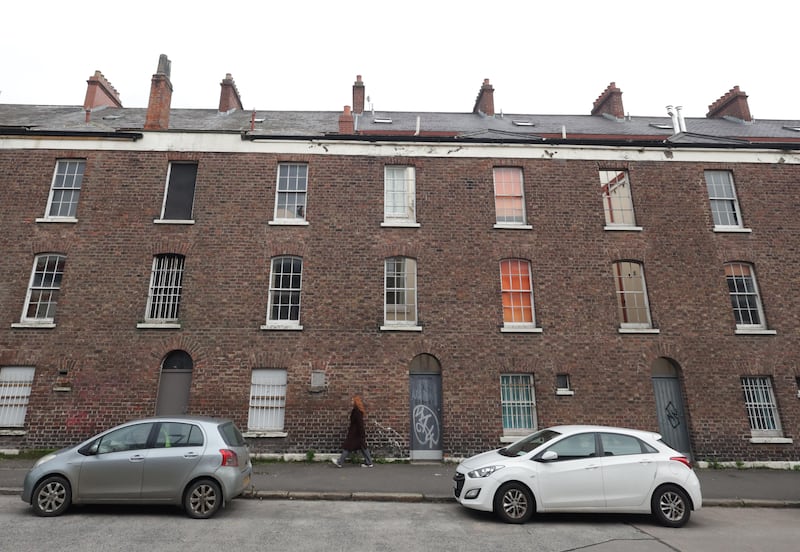 The row of false fronts on Belfast’s University Street PICTURE: COLM LENAGHAN
While he said that Victoria did pass the street to go to the university, the buildings “weren’t actually erected until ten years after” her visit, and the area wasn’t a “slum” as popularly cited.
“A man called Mr Hughes had these built up,” he said.
“The whole attraction of them was that although they were quite small for the time, as sort of townhouses went, they had this double frontage with that wall at the back looking like a front that would have concealed the yard space from the public and actually would have made it quite private.
“These were quite nice houses as things went. The rent at the time was about £40, £50 a year. It’s about five and a half grand in today’s money, which for the Queen’s area of Belfast is very good.”
Mr Simpson added of the popular explanation: “That’s a story that the tour guides will tell you, and it’s absolutely nonsense.”
Queen Victoria’s visit to the city in 1849 came as her popularity in Ireland was at a low in the wake of the famine.
She would later be nicknamed the ‘Famine Queen’ for her lack of support for the Irish people during the famine years.
Her donation of £2,000 at the time is thought to be around £210,000 in today’s money, however royal protocol meant that nobody was allowed to donate more than the monarch.
The Sultan of Turkey attempted to donate the equivalent of more than £1m but had to reduce his donation to below that of Victoria’s.
Around one million people died as a result of the famine, with a further two million forced to emigrate.