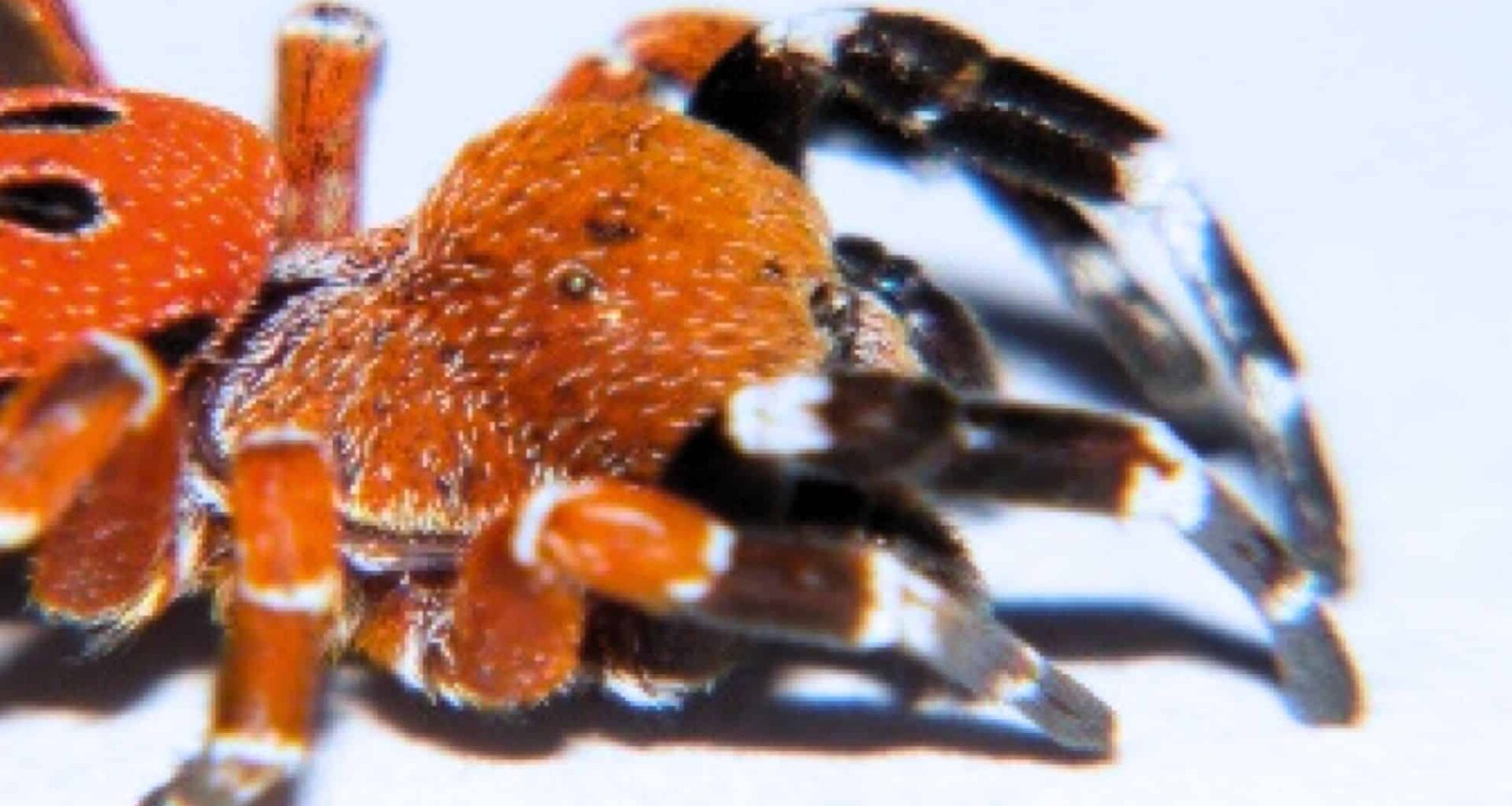
A spider with a fiery red body, found just outside Rabat, Morocco, has officially been declared a species new to science. Named Eresus rubrocephalus, this striking arachnid adds a fresh entry to the growing catalog of North African wildlife diversity, according to researchers from the University of Veterinary Medicine Budapest.
The discovery stands out not only for its vivid coloring but also for its scientific precision. Two male specimens, collected in a cork oak grove near Sidi Allal El Bahraoui, underwent meticulous anatomical and genetic examinations. These analyses confirmed that the spider was unlike any known relative within the Eresus genus, which includes the so-called “ladybird spiders.”
Researchers note that the find highlights Morocco’s role as a hotspot of evolutionary diversity. In recent years, several related Eresus species have been recorded in the region, strengthening the country’s position as a key center for North African arachnology.
Where the Discovery Began
The fieldwork was led by János Gál, an associate professor at the University of Veterinary Medicine Budapest, who has long studied North African fauna. According to the team’s report, the specimens were found in June, when the males reach maturity and briefly wander in search of mates. These brief appearances explain why the spiders often escape notice, even in well-surveyed habitats.
The researchers stored the holotype, the specimen that defines the species, in the Hungarian Natural History Museum, and a paratype in their Budapest department. Both will serve as permanent references for future taxonomic work. The spider’s front body section measures roughly 0.29 inches long, a compact size that contrasts sharply with its dazzling carmine-red coloring.
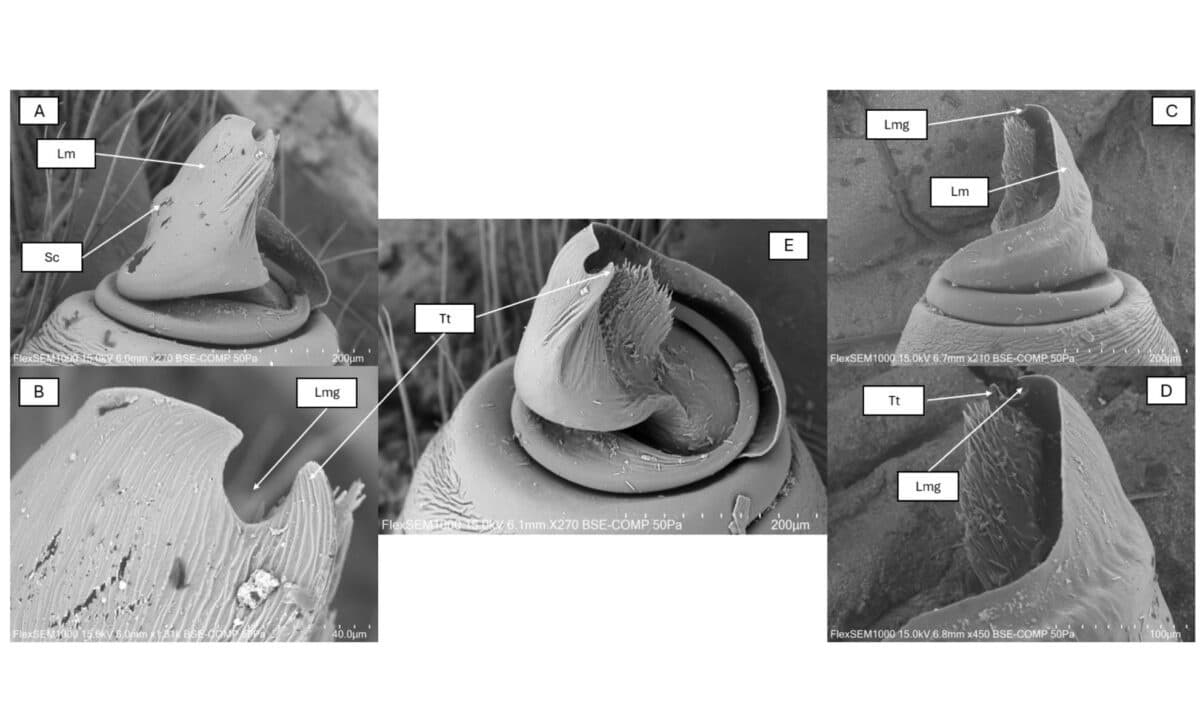 Electron microscopic image of palpus of Eresus rubrocephalus sp. ©Animals
Identifying Eresus Rubrocephalus
Determining that this was indeed a new species required more than color comparison. According to the Animals journal report, coloration in spiders can vary with age, season, or habitat, making structural features more reliable. The scientists focused on the male’s palp, a small reproductive appendage near the mouth. Under scanning electron microscopy, they observed a unique U-shaped groove on the conductor plate that extended nearly three-quarters of a circle, a pattern unseen in related species.
Other species in the genus, such as Eresus sandaliatus or Eresus moravicus, display a shallower or differently shaped groove, confirming the morphological distinctiveness of the Moroccan specimen. Detailed photographs and line drawings were published to ensure that future researchers can verify these findings independently.
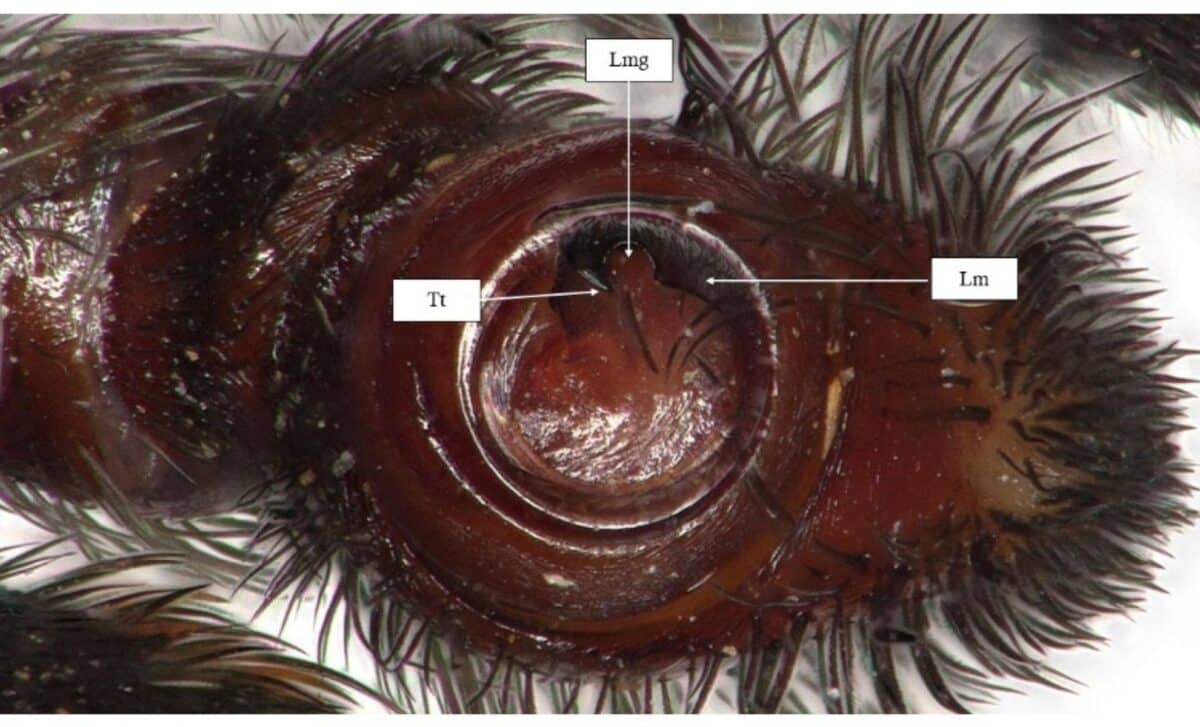 Palpus photo of Eresus rubrocephalus sp. © Animals
What the DNA Revealed
Beyond anatomy, the researchers conducted a DNA barcoding analysis using a segment of the mitochondrial COI gene, a common genetic marker for identifying species. The genetic sequence of Eresus rubrocephalus differed by at least eight percent from all other recorded Eresus species. According to the same study, the phylogenetic analysis placed it on a completely separate branch, supporting its classification as a new species.
The DNA extraction process involved sequencing leg tissue with Illumina technology, and the resulting data were cross-checked against GenBank records. Each test and method consistently separated Eresus rubrocephalus from its nearest relatives, including Eresus agrinus from Iran and Eresus cf. cinnaberinus from Italy.
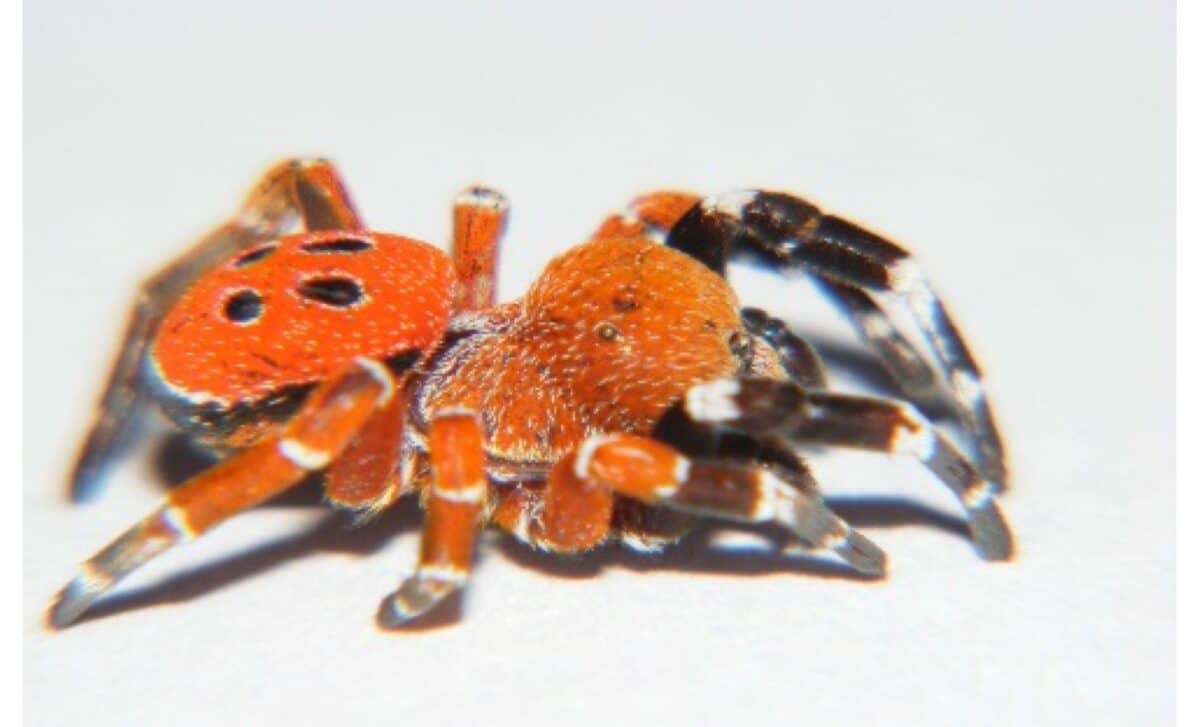 Eresus Rubrocephalus Spider © Animals
A Glimpse Into Morocco’s Hidden Diversity
The authors emphasize that Eresus rubrocephalus is not an isolated discovery but part of a broader pattern. Several new Eresus species, Eresus gharbi, Eresus almaghrib, and Eresus elhennawyi, have also been described recently from Morocco. Together, they suggest the existence of a regional center of speciation shaped by the country’s varied landscapes, from coastal plains to dry interior plateaus.
While only the male of Eresus rubrocephalus has been found so far, researchers plan to continue surveying nearby habitats for females and juvenile forms. According to the study, formal descriptions like this one play a crucial role in conservation, since many species remain invisible to policymakers until they are scientifically named. As museum records and genetic data converge, Morocco’s cork oak forests, where the red-headed spider first appeared, emerge as more than quiet woodlands: they are living archives of evolution still being written, one discovery at a time.