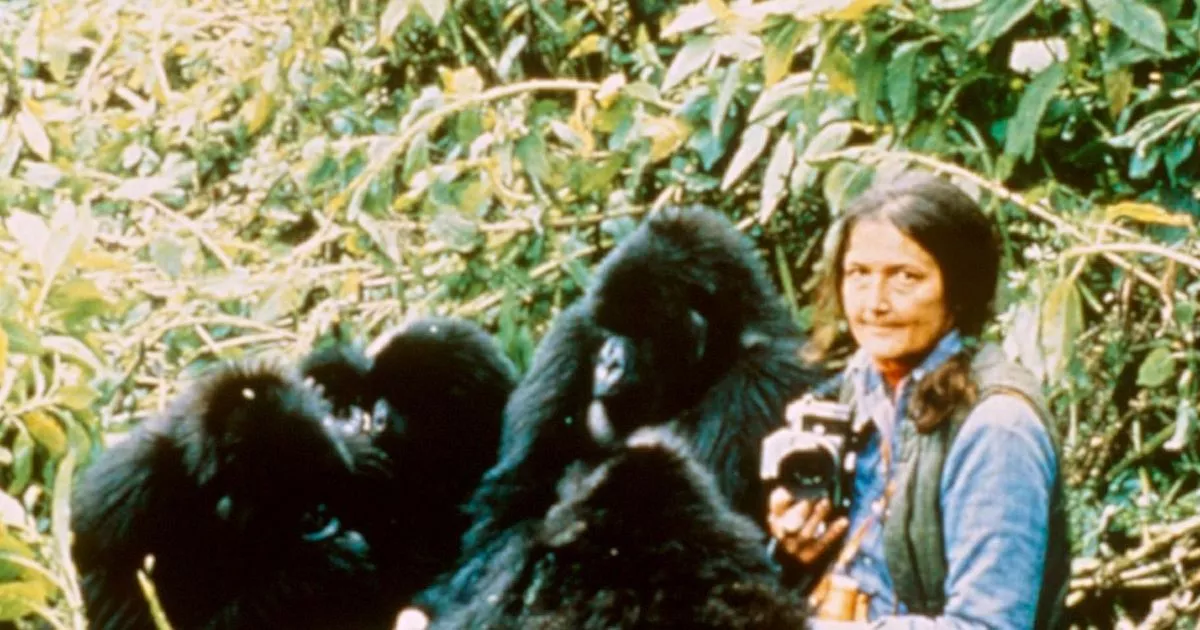
Number of mountain gorillas in the world is growing – the incredible legacy of Dian Fossey who was murdered 40 years ago on Boxing Day 1985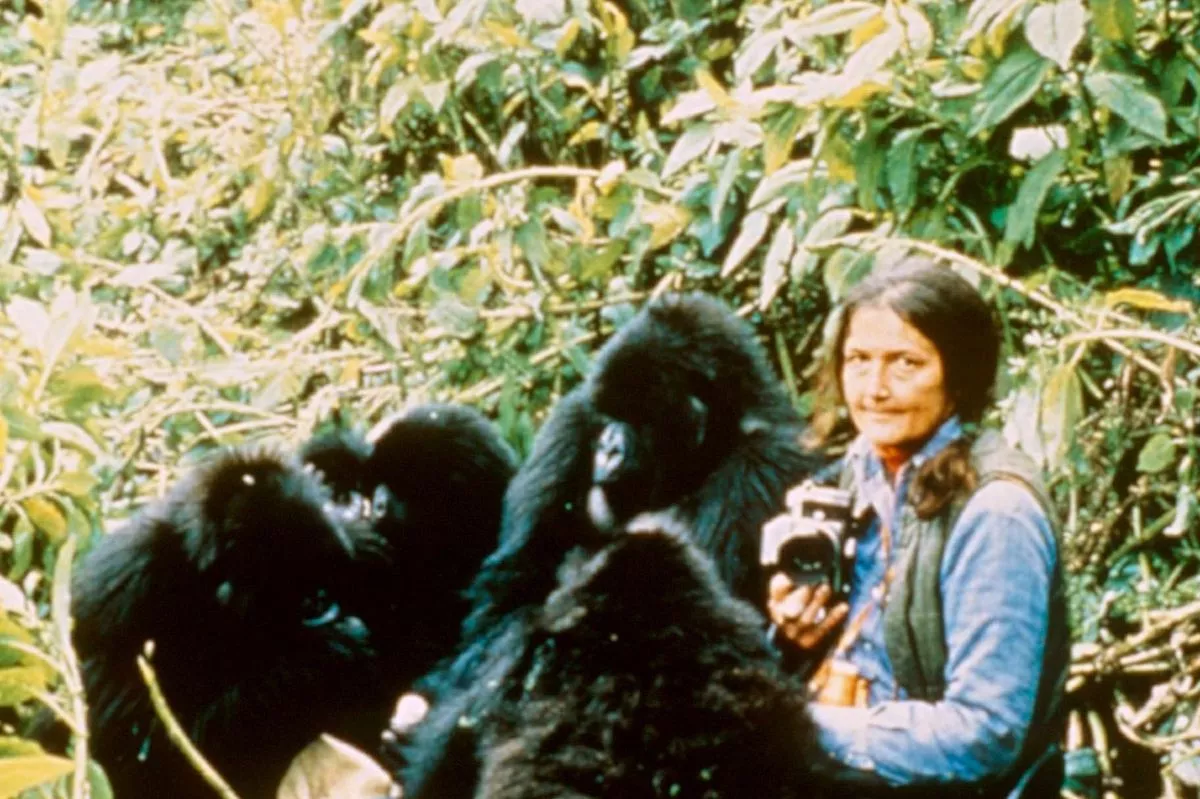 Dian Fossey with her beloved gorillas in Rwanda(Image: Sipa/REX/Shutterstock)
The number of rare mountain gorillas in the world is steadily increasing – that’s the extraordinary legacy of Dian Fossey who was murdered exactly 40 years ago.
Dian became famous across the globe when she was later played by Sigourney Weaver in the hit film Gorillas in the Mist.
The Oscar nominated movie told the story of her incredible conservation work for mountain gorillas and how she was horrifically murdered in Rwanda on Boxing Day 1985. And now the charity set up in her name has revealed that the work that Foley started all those years ago is reaping huge benefits with the numbers of mountain gorillas continuing to grow.
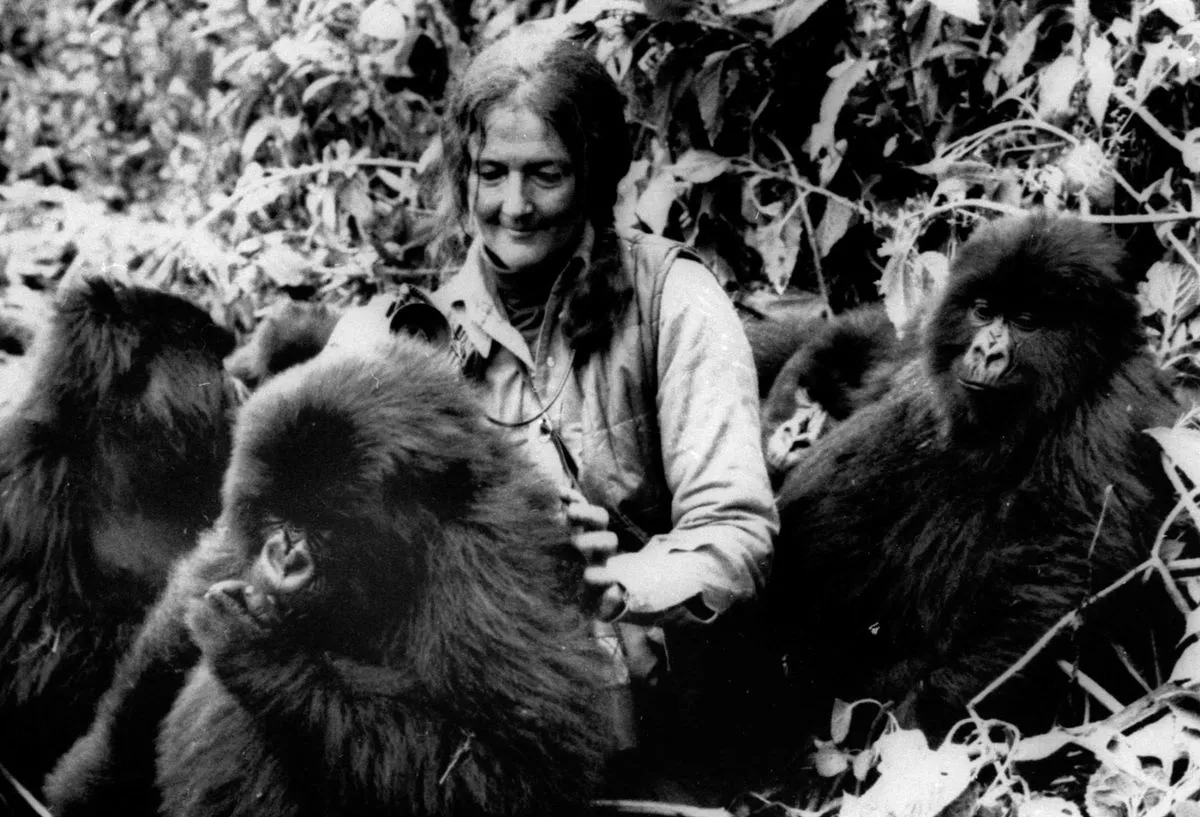 Dian Fossey with her beloved gorillas in Rwanda(Image: AP)
There are now an estimated 1000 mountain gorillas in the world when Dian was alive there were just 400.cFelix Ndagijimana, the Dian Fossey Gorilla Fund’s Country Director in Rwanda said: “She would also be amazed to see that the mountain gorilla is the only non-human great ape population in the world whose numbers in the wild are increasing.
“I think that Dian Fossey would be surprised to see how the research centre she started with in 1967 is now a world-famous research institution with more than 200 Rwandan staff members.” Dian, 53, was murdered in her cabin at the Karisoke Research Centre where she had spent 18 years studying gorillas. She was found hacked to death with a machete.
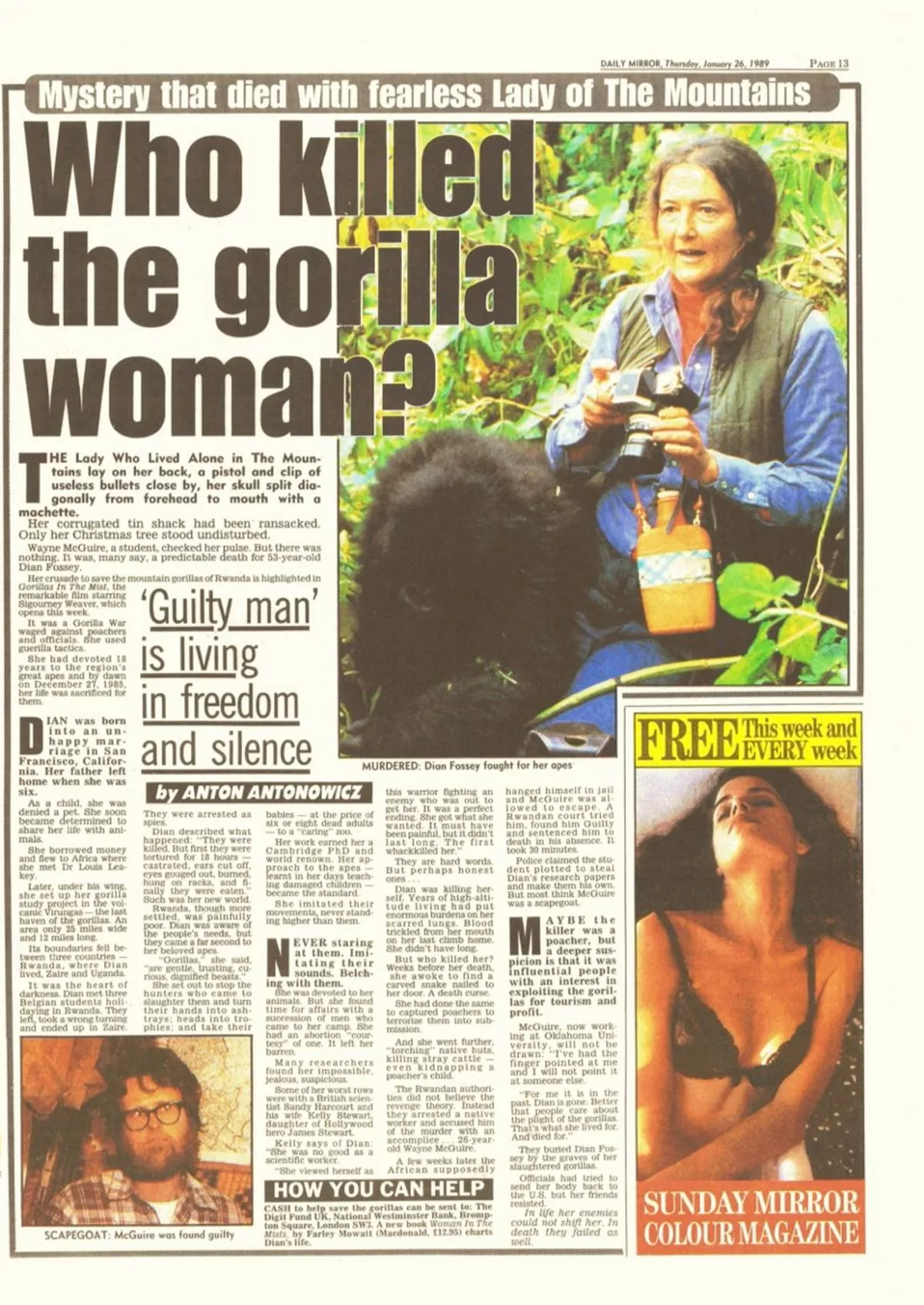 Daily Mirror coverage of hunt for Dian Fossey killer
While he research assistant was convicted by a local court it’s always been widely believed she was killed by anti poachers angry at her conservation work. After her death she was buried in the same cemetery as some of her beloved gorillas slain by poachers.
The film Gorillas in the Mist was released four years later and was nominated for five Oscars. Dian’s work being so successful 40 years later would have given her huge pleasure.
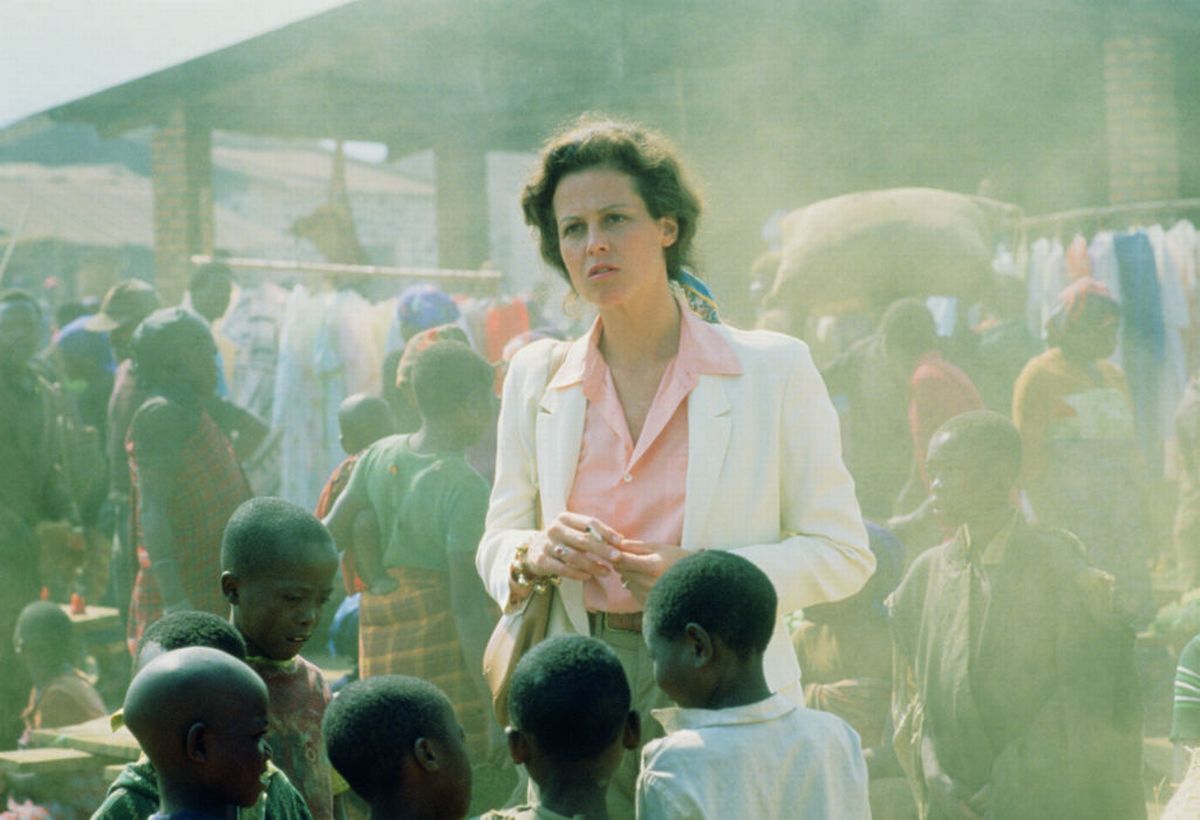 American actress Sigourney Weaver as conservationist Dian Fossey,(Image: Getty Images)
Dr Tara Stoinski, the Fossey Fund President said: “Dian devoted her life to saving gorillas, and we are honoured to carry on and expand this important work, never forgetting her legacy.
“We are profoundly grateful for her most enduring legacy: showing the world that it is possible to save a species from the brink of extinction. Her life’s work is a reminder that conservation demands courage, persistence and all of us.
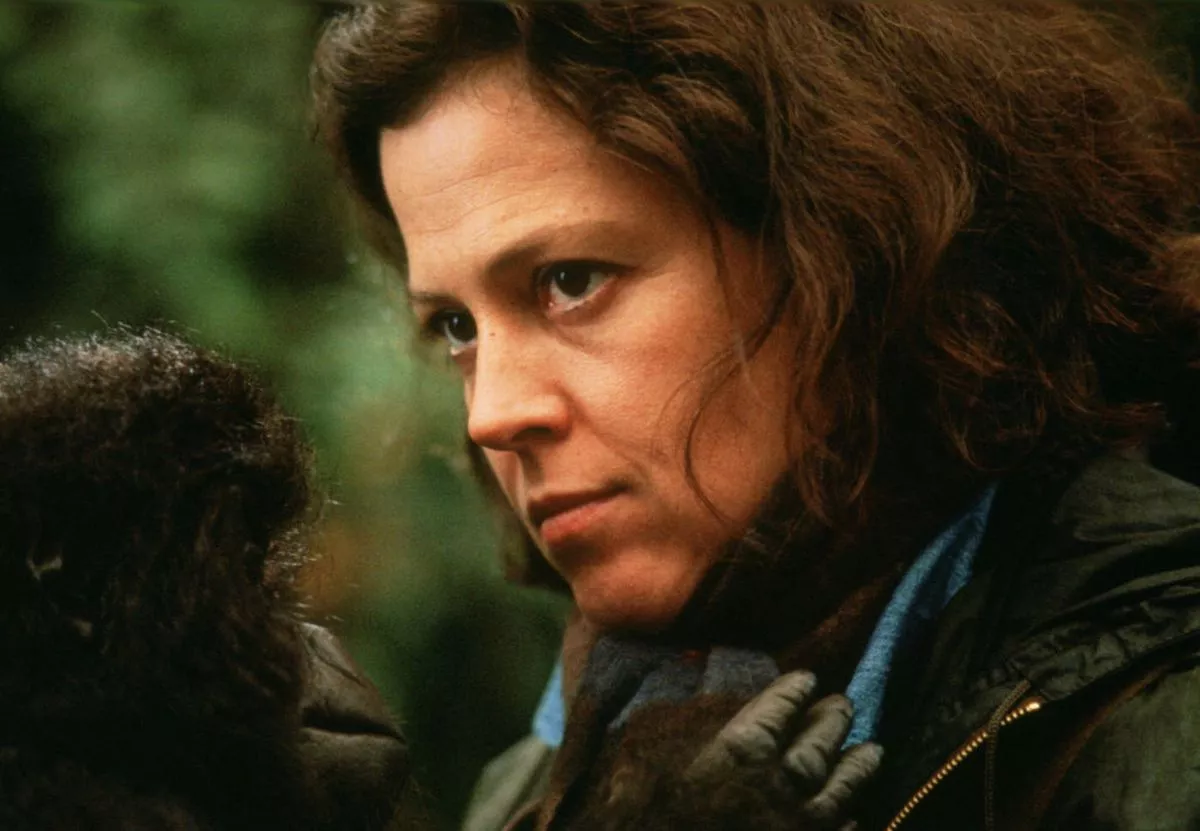 American actress Sigourney Weaver as naturalist Dian Fossey.(Image: Getty Images)
“As we look back on the 40 years since her death, we celebrate her courage and perseverance. And we are especially proud of her work – because of decades of the intensive, daily, on-the-ground protection measures Dian pioneered, the mountain gorilla success story is a remarkable outlier at a moment when more than a million species are in danger of being lost forever.”
Dian’s revealed that her early research demanded patience. To gain the gorillas’ trust, she began to mimic their behaviour. Back in 1984 she told the BBC’s Woman’s Hour: “I’m an inhibited person, and I felt that the gorillas were somewhat inhibited as well. So I imitated their natural, normal behaviour like feeding, munching on celery stalks or scratching myself.”
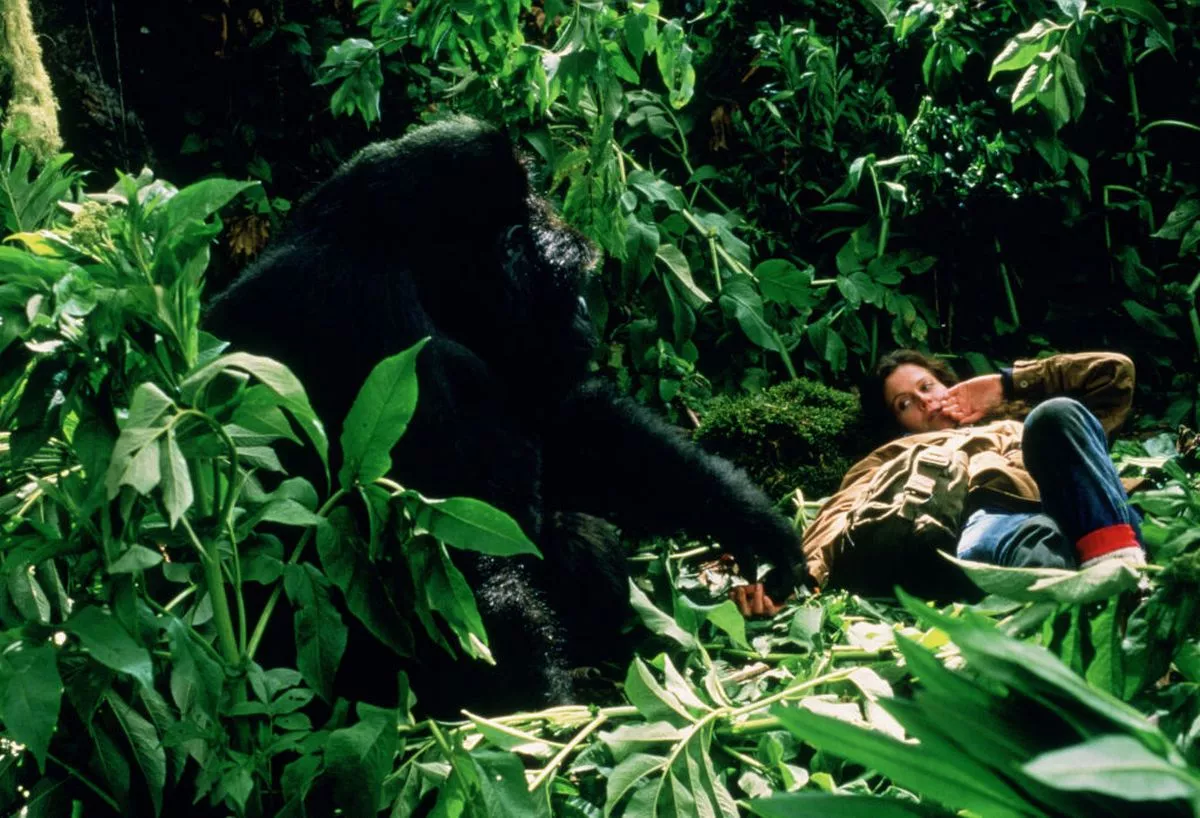 American actress Sigourney Weaver as naturalist Dian Fossey.(Image: Getty Images)
She said she had to learn her lessons quickly. “I made a mistake chest-beating in the beginning… because by chest-beating I was telling the gorillas I was alarmed, as they were telling me they were alarmed when they chest-beat.”
A spokesman for the charity said: “Thanks to the work she began, the mountain gorilla population she studied and so passionately defended is not only surviving but thriving. Her vision has grown into a powerful movement, one that continues to drive forward conservation science and protection efforts.
“At the Dian Fossey Gorilla Fund, we still value the principles Dian outlined decades ago. She once wrote: ‘One of the basic steps in saving a threatened species is to learn more about it: its diet, its mating and reproductive processes, its range patterns, its social behaviour.’
“Today, we’ve done just that, and much more. We have now studied six generations of mountain gorilla families, including the descendants of the very individuals Fossey knew so well – Digit, Pablo, Titus, Effie, Poppy, Cantsbee and many others.
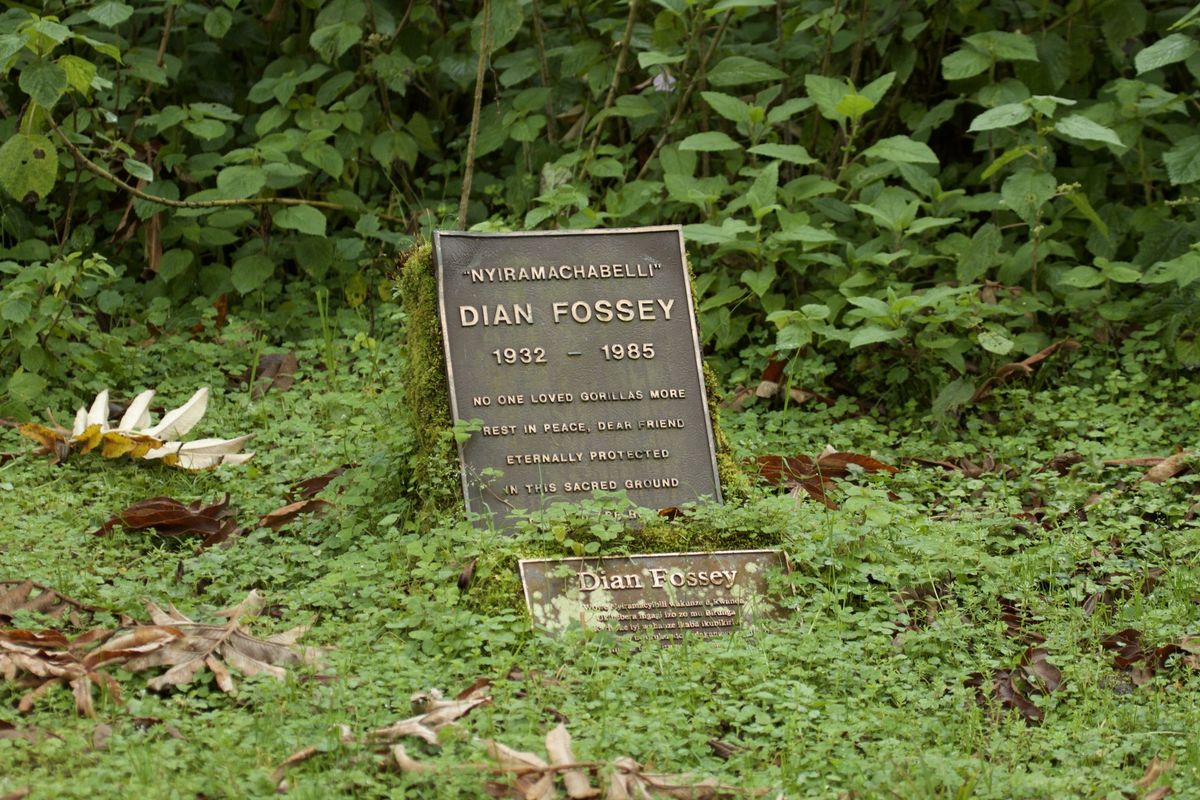 Dian Fossey’s gravestone in Rwanda
“From them, we’ve gained deep insights into their behaviour, ecology and relationships – knowledge that has enriched both conservation and our understanding of our own species. Indeed, much of what is scientifically known about mountain gorillas is built on the long-term research database Fossey began nearly 60 years ago.”
Her final diary entry expressed her understanding about the importance of looking forward: She wrote: “’When you realise the value of all life, you dwell less on what is past and concentrate more on the preservation of the future.’