We remember some of Manchester’s dark and gruesome festive crimes
16:27, 25 Dec 2025Updated 16:28, 25 Dec 2025
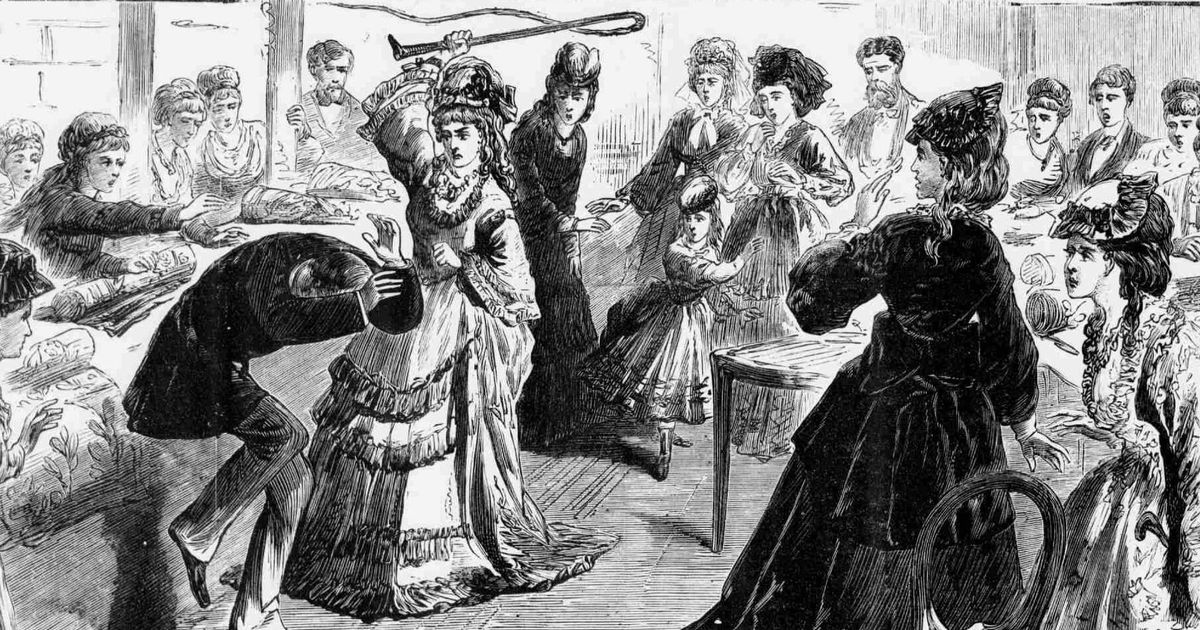
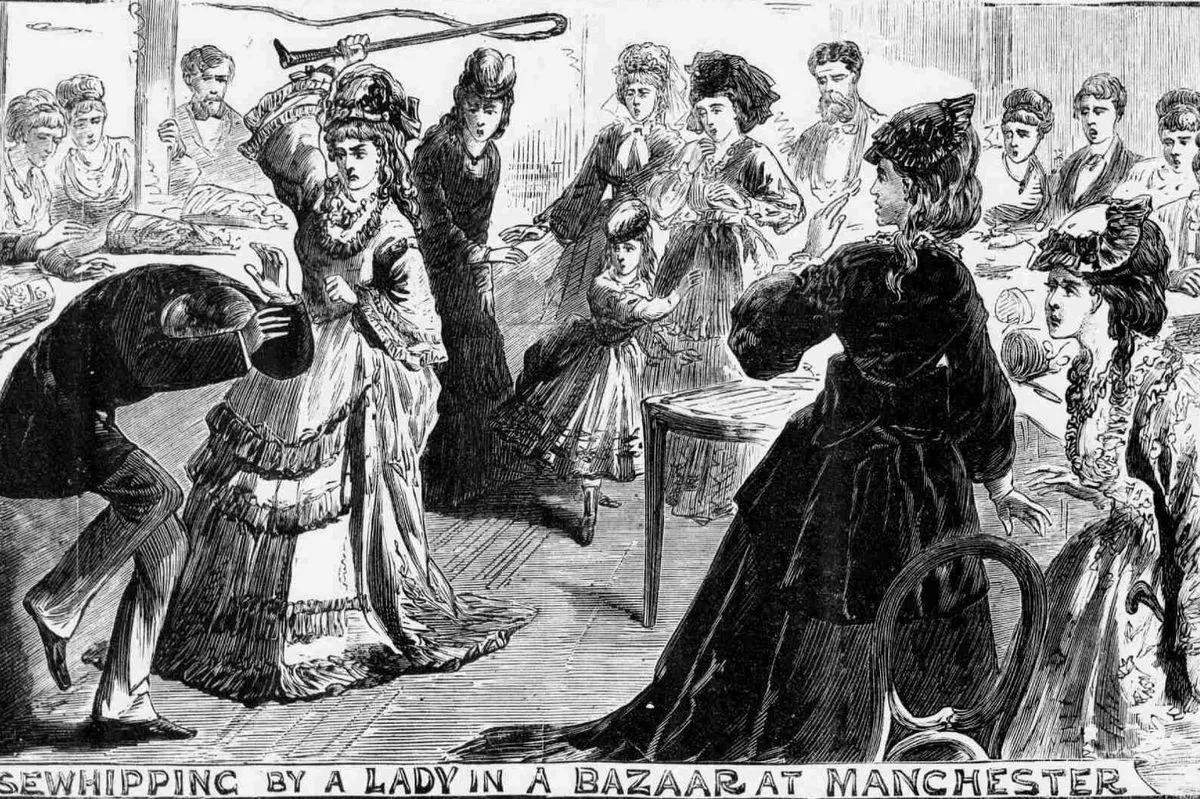 Ellen Edwards horsewhipping her fiance James Wishart in Kendals in 1871(Image: London Illustrated News)
It’s the season of peace and goodwill to all men. Or at least it’s supposed to be.
Here in Manchester it’s hasn’t always worked out that way. The city’s Christmas history is steeped in terrible tales of murder, lust and revenge.
Here, with the help of historian Michala Hulme, we take a look back at some of the darker Christmas episodes in Manchester’s past.
Killed with a kettle on Christmas Eve
After a night of heavy drinking on Christmas Eve 1855 Joseph Brewen returned home to his wife Ellen at the lodging house they shared in Piccadilly. The 37-year-old waiter had not been back long when another lodger, named Annie Pearson, heard an argument between the couple taking place in the kitchen.
Annie walked into the room and witnessed both Joseph and Ellen near the fireplace, then after a brief discussion, she left and headed back to her bedroom. But Annie had not got far when she heard Ellen shouting for her to return.
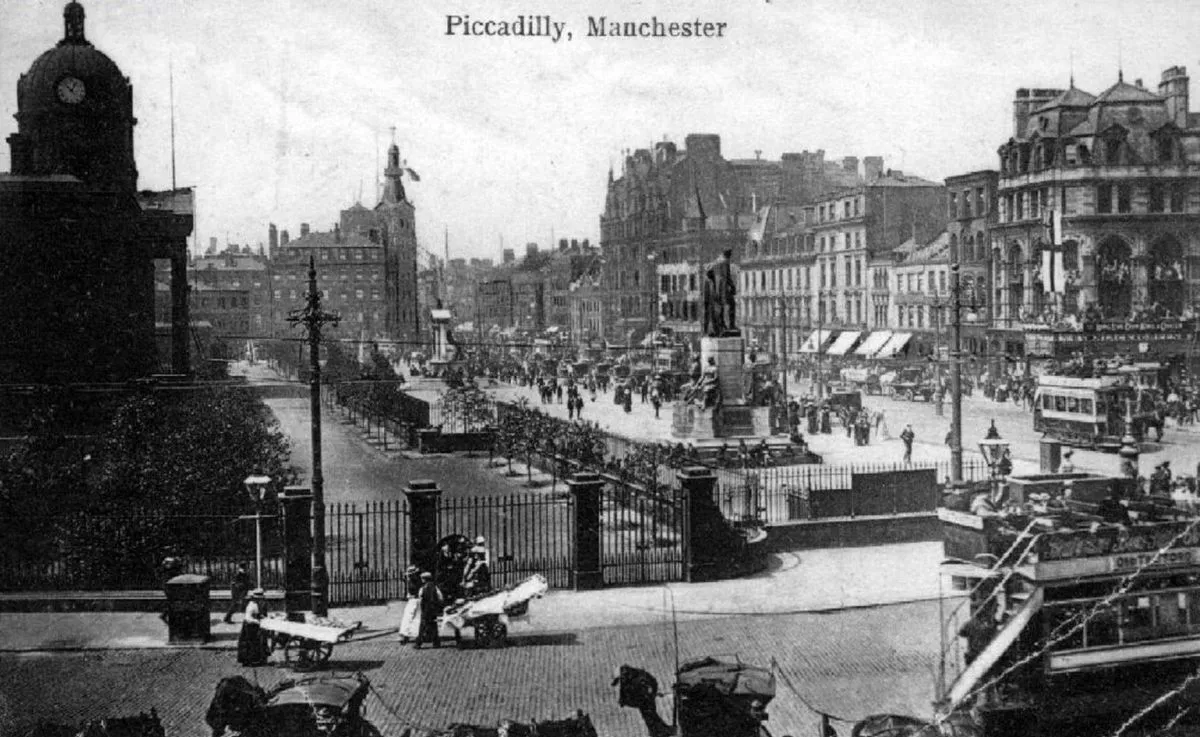 Ellen Brewen died after her husband Joseph attacked her with a kettle in a lodging house in Piccadilly(Image: Copyright unknown)
When she went back in the kitchen she saw Ellen was bleeding badly from a cut off her left temple. She immediately went to her neighbours to get help, and when they returned, Annie told them Joseph had thrown a kettle at her head.
She was taken to the Royal Infirmary, where it was discovered that the cut was so deep, the artery had been slit. Over the next few days surgeons battled to save her life, but tragically she slipped into a coma and died.
Brewer was later found guilty of manslaughter but was sentenced to just four months hard labour.
A woman scorned, a horsewhipping in Kendals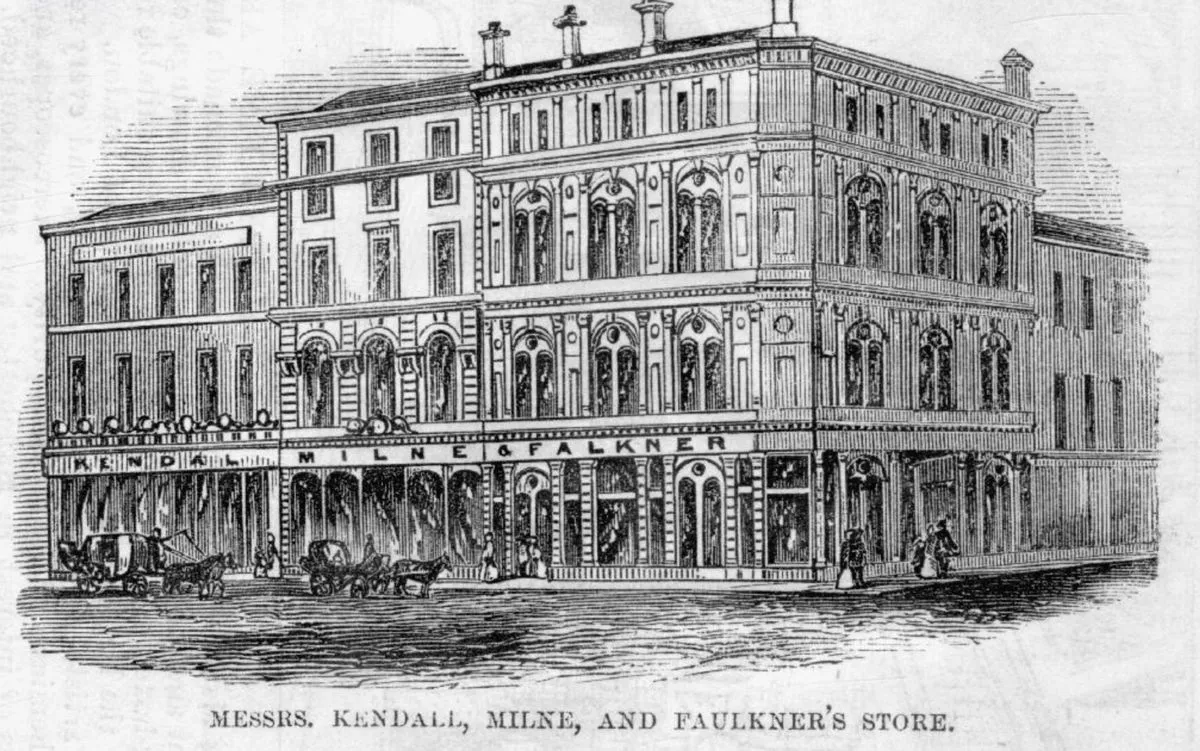 Kendals department store, Deansgate, Manchester in the 1860s
Manchester Horrible Christmas Histories
Ellen Edwards and James Wishart’s ill-fated whirlwind relationship began over Christmas in 1871. They both worked together in the dress department of Kendals and friendship quickly turned to romance before the pair were engaged in January the following year.
But enduring the summer of 1872, Edwards returned home to Oswestry in Shropshire to visit her uncle. While there, Wishart initially wrote letters declaring his love for her.
But at some point his mood changed, and he began accusing Edwards of cheating on him with someone who also worked at Kendals. Edwards denied the accusation and took great offence at the attack on her character and virtue.
She was so enraged she travelled from Oswestry to Manchester, and armed with a horsewhip, entered the bustling department store and began lashing Wishart across the back of the neck and shoulder while also hurling expletives at him.
She was later arrested and the case went to trial, where she was found guilty of assault. But, the magistrates stressed that she had received the ‘most gross provocation’ and Wishart’s intentions ‘could hardly have been honourable’.
She was ordered to enter a bond of £10 to keep the peace. Edwards asked the magistrates if she left the court with a clear character and they replied that there was ‘nothing against’ her.
A young woman ‘tempted to sin’, a baby abandoned in a box
Elizabeth Porter was celebrating Christmas Day with her new-born son at their home in Ardwick. The baby’s father John Fenton was nowhere to be seen.
Fenton, a 27-year-old painter, had met Porter in Gainsborough earlier that year in 1888 where he ‘disgraced her’ by getting her pregnant and then sending her to Manchester to get rid of the child. But Porter saw the pregnancy through and cared for the baby for several weeks after his birth.
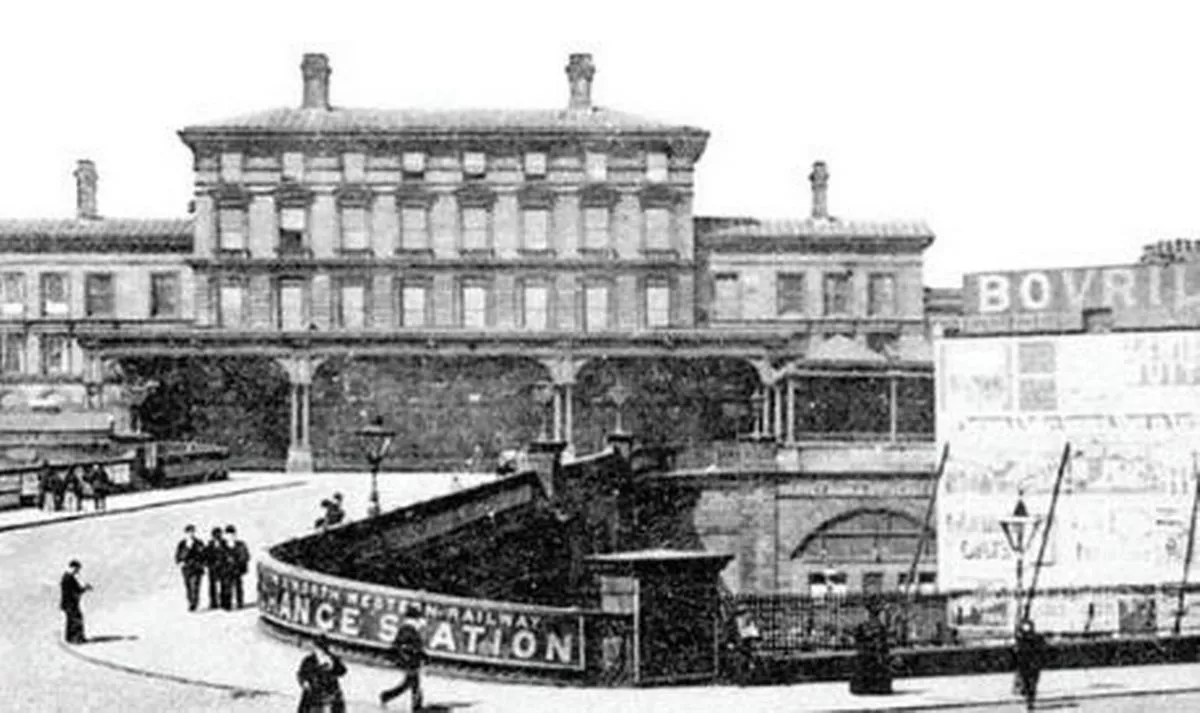 The Exchange Railway Station, Salford.(Image: MANCHESTER EVENING NEWS)
However by the end of January, knowing that she could not keep the child without a husband, Porter gave him a spoonful of Godfrey’s Cordial to help him sleep. She then placed him inside a tin box addressed to a ‘Mrs Cranworth’ and left him on the platform at Exchange Station in Salford.
A porter later picked the box up and put it on a train to Liverpool. On the morning of January 27, 1889, the box arrived at the goods department of Lime Street Station. A clerk named Evans heard a noise coming from inside.
He managed to open the box and found a nine-week-old baby boy fast asleep. The child was then sent to the workhouse where he sadly died.
For some time, the identity of the baby remained a mystery. Eventually, it was discovered that the young boy was the son of John and Elizabeth.
The pair were found guilty of manslaughter. At the trial, the judge stated that he regretted sentencing Elizabeth Porter to eight months imprisonment with hard labour.
But in sentencing Fenton he said: “You tempted this respectable young woman first of all to sin, then you brought her to Manchester, deserted her and tempted her into crime. I order you to be sentenced to penal servitude for five years.”
‘Give my respects to the green fields and the shamrock’
After spending Christmas Day drinking, Timothy Faherty decided he was going to reveal his true feelings. At around 4pm on December 25, 1867, he went to his former lodging house on Moorcroft Street, Droylsden, to speak to 36-year-old mill worker Mary Hanmer.
But Mary refused to speak to Faherty because he was drunk. Enraged, he told her that he was going back to Ireland and she replied with ‘Give my respects to the green fields and the shamrock’ before she walked into the kitchen.
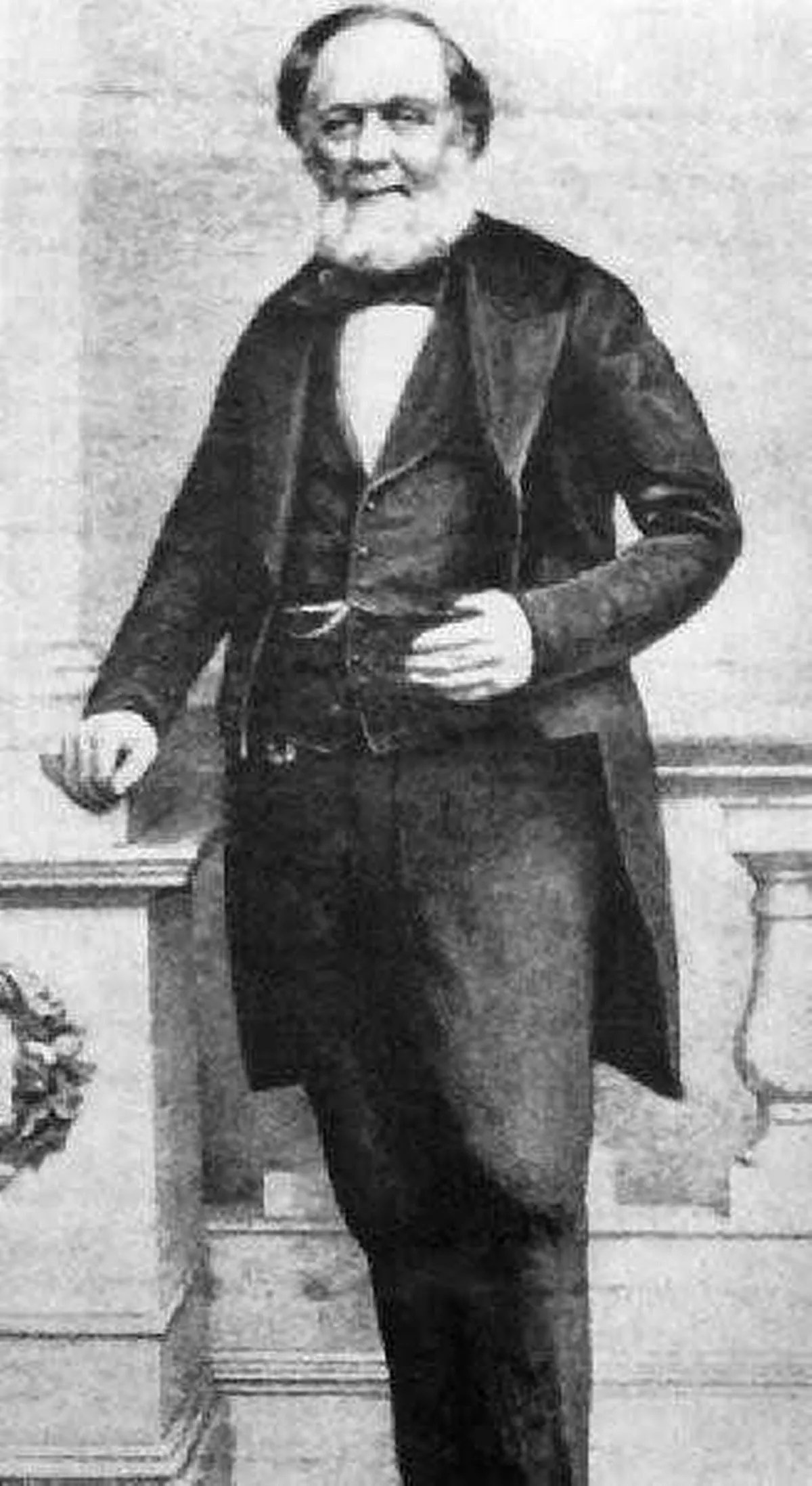 Hangman William Calcraft(Image: Dumfries and Galloway Standard)
Faherty followed her and whilst her back was turned he picked up a poker and hit her across the face. Mary managed to stagger to her bedroom, which she shared with another lodger called Bridget Broderick.
Bridget witnessed Faherty shut the bedroom door behind Mary and then, with the poker in his hand, he began to hit her over the head five times whilst shouting ‘I’ll kill you’. Mary slumped to the floor, she was bleeding heavily but was still alive. She managed to mutter ‘Bridget, I am killed’ and then lost consciousness.
A neighbour, who heard the screams, rushed to the house and found Faherty sat at the side of Mary, cradling her head in his hands. He claimed that he loved Mary and would die for her.
Mary’s lifeless body was removed from the house and her inquest was held at the local pub. Faherty was apprehended by the police and sent for trial, where he was found guilty of murder and sentenced to death.
His execution took place at 8am on April 4, 1868 at the New Bailey Prison, Salford. The day before the execution he was visited by his mother, two aunts and an uncle. This was the first time that Faherty had seen his mother for 13 years and upon seeing her he broke down sobbing in her arms.
After his family left, Faherty managed to get a few hours sleep. In the morning he awoke and read a prayer. At 7.45am, Faherty met infamous executioner William Calcraft before he headed to the gallows.
Upon seeing the scaffold, he looked up to observe the drop. He then walked up the stairs and got into position. Calcraft walked behind him and placed a white cap over his head and tightened the noose around his neck.
He then shook Faherty’s hand and released the drop. For a few seconds the killer struggled before all signs of life had vanished. His body was then removed and buried within the grounds of the New Bailey Prison.
Sailor’s evil acid attack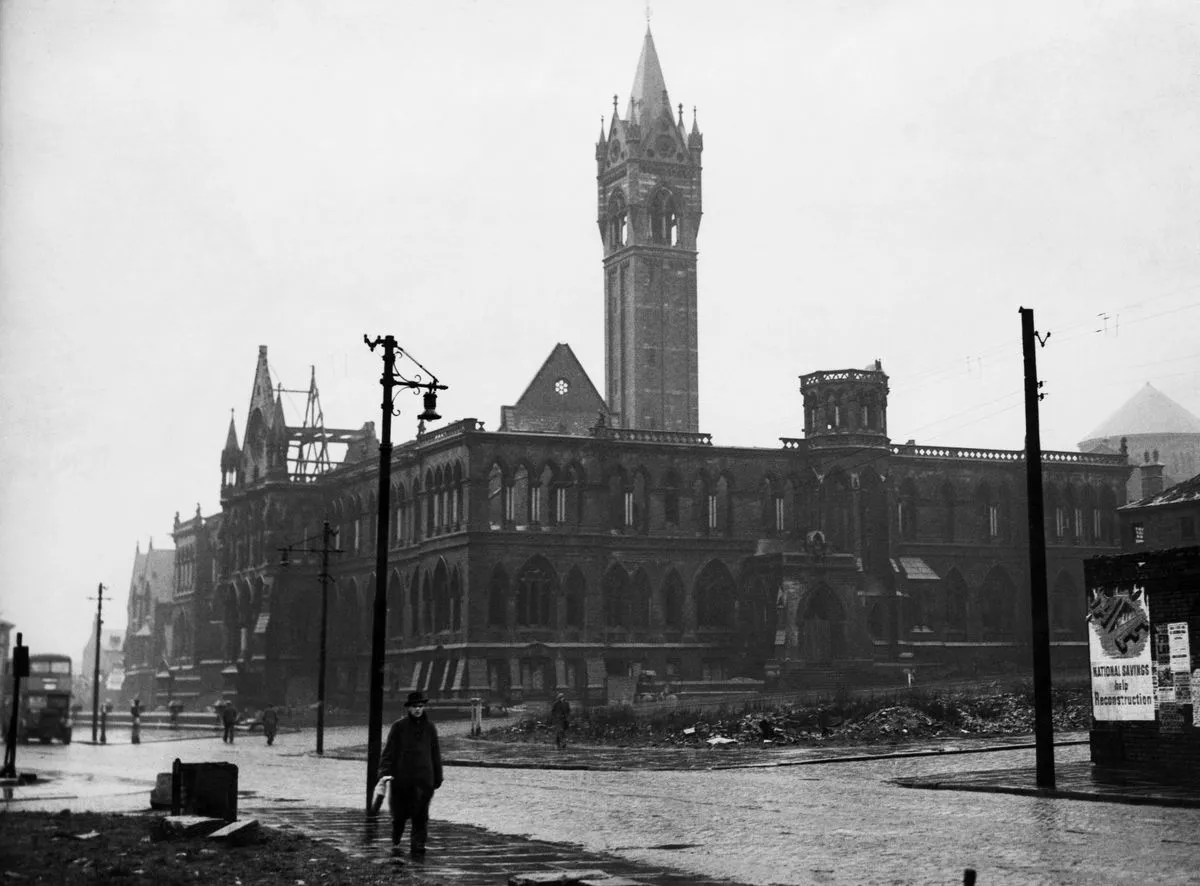 The Manchester Assize Courts(Image: Mirrorpix)
As Amy Parker walked to work along Rochdale Road she bumped into her former partner, a sailor named Alfred Walton. The pair had been in a brief relationship, but Amy had called it off a few weeks earlier after a series of arguments.
Desperate to win her back, Walton asked her if her feelings remained the same and when Amy confirmed they did asked if they could meet again that night. When Amy refused Walton launched a cruel and callous attack.
He told her there was something on her face, placed his hand in his pocket and began to wipe at it with a cloth. Immediately Amy’s face began to sting and upon seeing her reaction Walton started laughing and asked her ‘If it burned’.
While Amy was screaming in pain, Walton fled the scene. Amy survived the attack but was left with a permanent scar on the left side of her face from her eye to her jaw.
Walton was found guilty at the City Police Court and sent for trial at the Assize on January 28, 1882. He later confessed to wiping vitriol (acid) on his victim’s face and was sentenced to 18 months hard labour.