For hundreds of years Antarctica has proved a bewildering and enticing place for adventurers, explorers, and scientists. Every year experts head to the frozen region in an attempt to learn more about how its changing, and what that means for people in the rest of the world.
This has become particularly pertinent thanks to climate change, global warming, and rising sea levels that have seen the ice in the frozen south whittled away. However, these trips to explore the great ice are not without their danger, and every so often things go wrong. Earlier this decade, one submarine went 10 miles down and never returned.
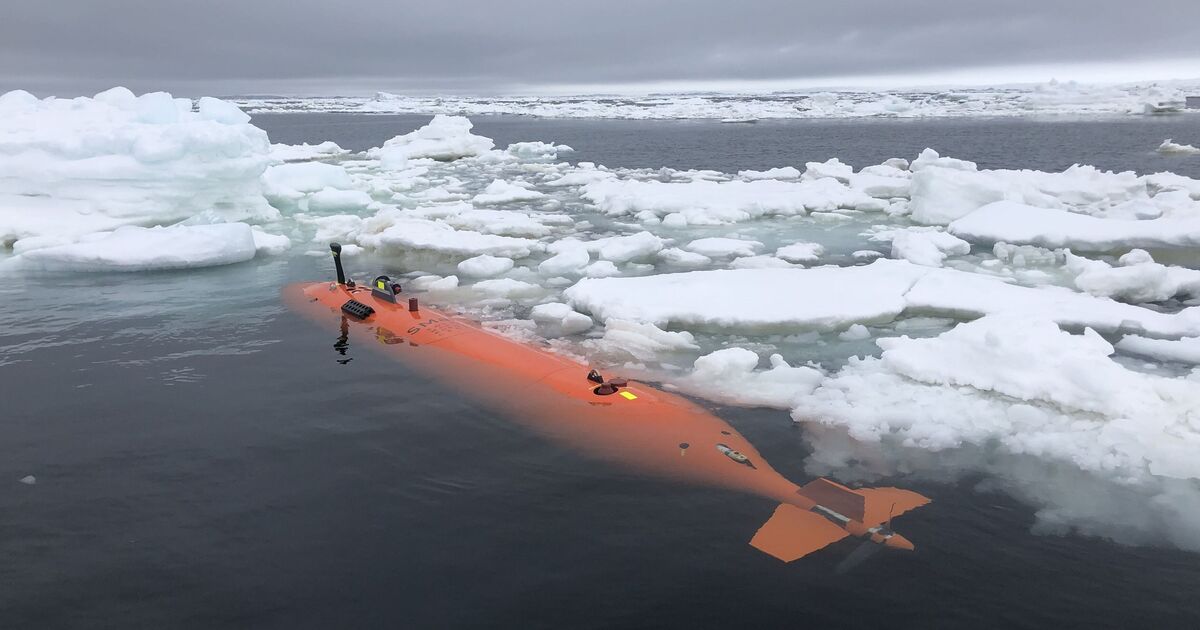
The submarine in question was an unmanned vessel called Ran and it was used by professor Anna Wahlin of the University of Gothenburg to map West Antarctica’s Dotson Ice Shelf.
Professor Wahlin’s research focused on the erosion of ice shelves by ocean currents melting them away from below.
On one mission in 2022, Ran spent 27 days under the Dotson Ice Shelf with the aim of discovering why its east side was melting slowly and the west side was melting quickly.
After mapping 54 square miles of ice, Ran showed the researchers flat plateaus, pits, and terraced steps all caused by basal melt, where the ice melts from below the surface.
All in, Ran completed 14 successful under the ice missions in 2022, but when they came back and Ran went under, it didn’t return.
Describing her attachment to the machine, Professor Wahlin said: “To see Ran disappear into the dark, unknown depths below the ice, executing her tasks for over 24 hours without communication, is of course daunting.”
However, when Ran did not return to her pick-up point at the designated time after being sent to extend measurements and maps, the scientists began to worry.
They made attempts to contact Ran and searches found no signs of debris or signals. As there was no feed, earth.com reports that the team could only speculate about what had caused the disappearance, whether it was a breakdown or a collision.
While Ran was lost in action, her work was not in vain as it helped the scientists to understand how the ice and ocean interacted in that particular part of the world.
The Dotson Ice Shelf isn’t the only area of interest for scientists with the Antarctic Circumpolar Current (ACC) also of interest.
According to studies by the University of Bonn the ACC, which influences weather systems and the climate around the world, is slowing down in speed and power.
The Express previously reported that the University of Melbourne’s associate professor Dr Bishakhdatta Gayen warned about the impact this could have on the world.
They said: “If this current ‘engine’ breaks down, there could be severe consequences, including more climate variability, with greater extremes in certain regions, and accelerated global warming due to a reduction in the ocean’s capacity to act as a carbon sink.”