The Athletic has launched a Cricket WhatsApp Channel. Click here to join.
Even in the context of a wildly breathless series, Boxing Day in Melbourne was remarkable. Surreal even.
How else to explain 20 wickets falling and Australia starting the third innings of the match before the close? Or Harry Brook coming in with his team 8-3 and dancing down the track first ball attempting to hit Mitchell Starc out of the ground? Or Scott Boland, the hosts’ No 11, opening the batting second time round?
The pitch undoubtedly played a part in the frenzy of it all in front of the biggest crowd ever to attend a day of Test match cricket, but everything about this felt fraught, writes Dominic Fifield.
Australia were dismissed in a little over 45 overs, but their total of 152 took on a more ominous feel as soon as their bowlers made use of the surface. By the close they were batting again having dismissed the visitors for only 110. On a frenzied Boxing Day’s play:
- Australia were dismissed before tea, with Josh Tongue claiming Test-best figures of 5-45.
- Tongue maintained his record of dismissing Steve Smith in every game he has bowled at him.
- The tourists slumped to 16-4 in reply, their worst start in an innings against Australia since 1904, and did not see out the evening session.
-
It was only the ninth time in almost 149 years of Test cricket that the third innings has started on the first day.
Tim Spiers and James Wallace attempt to dissect the key talking points on a mystifying day at the MCG.
Does Tongue have Smith’s number?
Smith is not bowled out a lot in Test cricket.
The Aussie run machine might often look twitchy at the crease with his body popping routine of ‘spectacles, testicles, wallet and watch’ — but it works. Smith rarely misses. His nosebleed inducing stats speak for themselves.
Smith’s stumps have been splattered 34 times in 217 innings across 122 Tests. Coming into this Test he had only been bowled out 13 times in Tests in Australia.
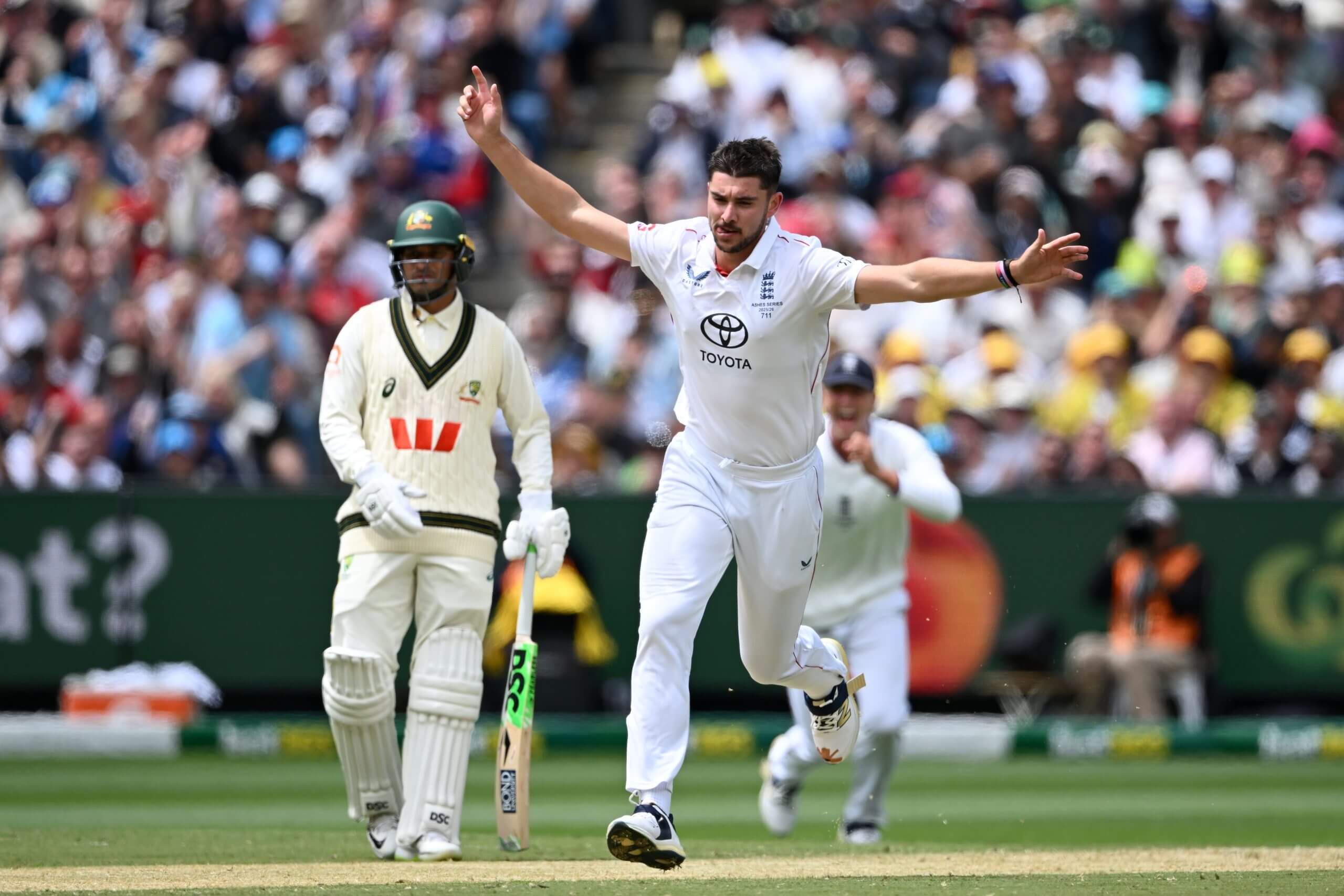
Josh Tongue celebrates bowling Steve Smith (Gareth Copley/Getty Images)
If anyone was going to tickle Smith’s timbers for a 14th time in Tests then the smart money would have been on the Nottinghamshire fast bowler.
Tongue has bowled to Smith five times in his career and got him out on each occasion. In a 2023 Championship match for Worcestershire against Sussex, for Manchester Originals against Welsh Fire in last summer’s Hundred and, most memorably, twice in the 2023 Ashes Test at Lord’s.
An 86mph in-ducker did the job on the first morning of the Boxing Day Test. Smith looked back at his splayed stumps in disbelief.
In Test matches Tongue has sent down 69 deliveries to Smith and dismissed him three times for the cost of 35 runs. Before the Melbourne Test, Smith could be heard crowing about his impeccable Test record against Jofra Archer — a bowler to whom he has yet to be out — but when it comes to Tongue, his record is significantly more blemished.
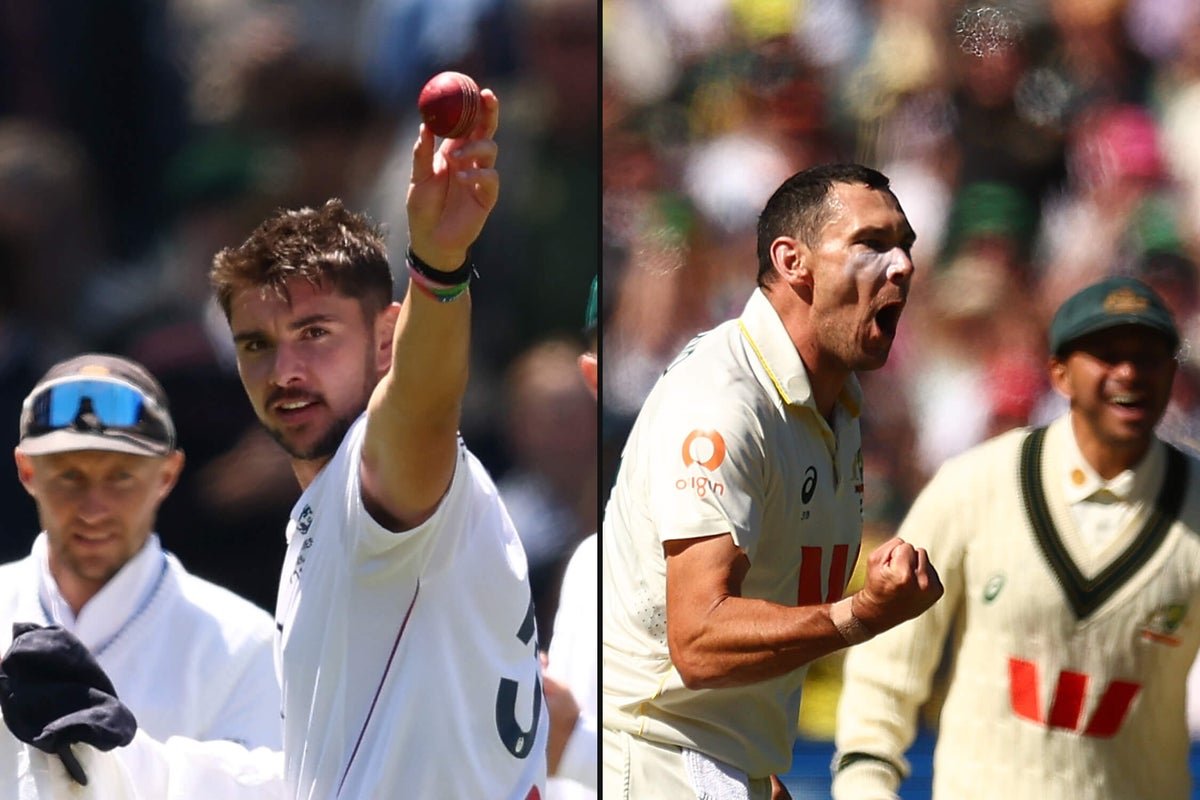
A few hours later, Tongue was holding the ball aloft to the England fans after picking up his third five-wicket haul in Tests. After pouching Michael Neser and Scott Boland with consecutive balls, he will be on a hat-trick in Australia’s second innings.
“When Josh gets on one of his hot streaks, beware,” the Nottinghamshire head coach Peter Moores told The Athletic at the end of the English summer. His man had just taken 15 wickets in two matches against Surrey and Worcestershire at the business end of the County Championship season to see Notts win the title for the first time since 2010.
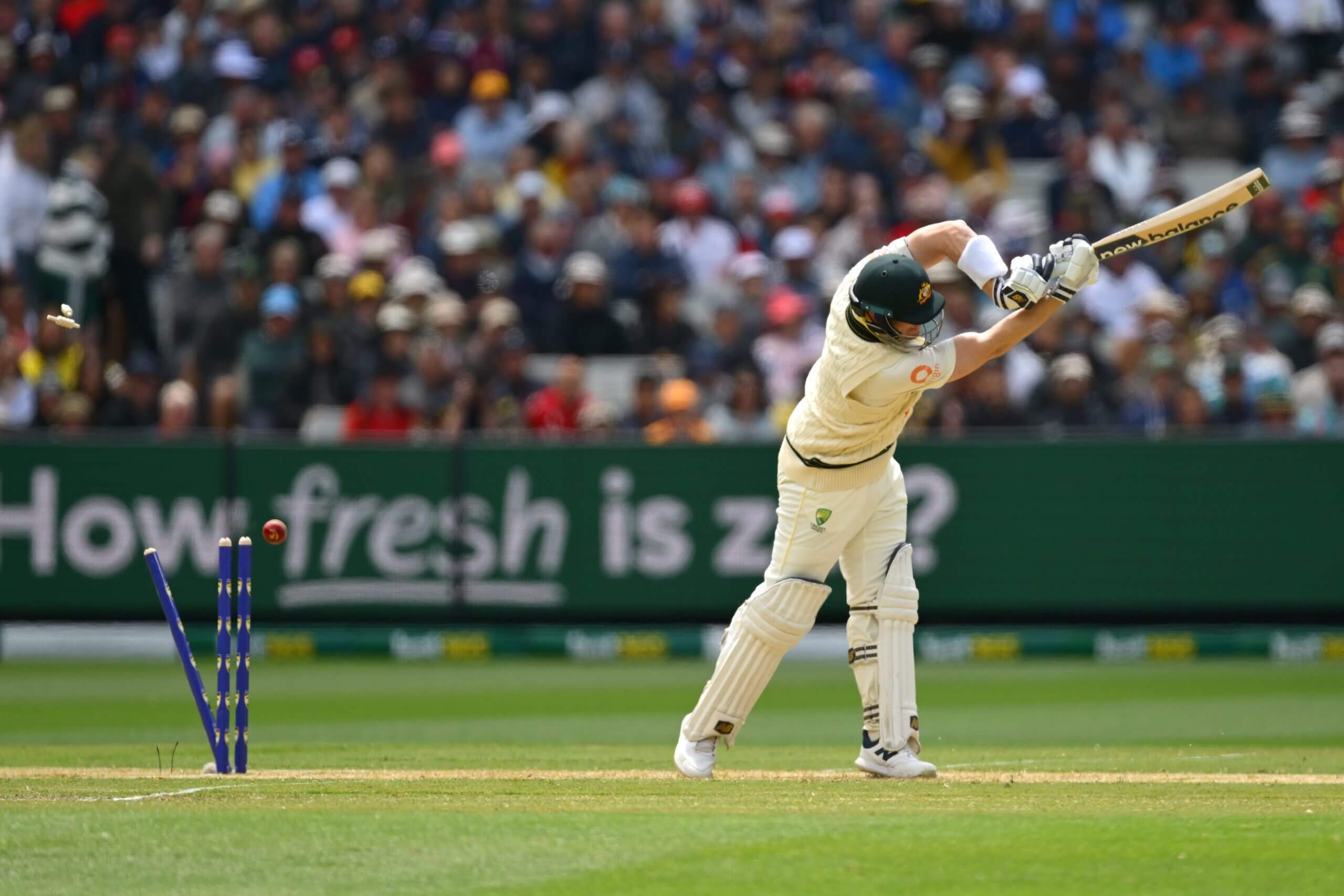
Steve Smith is castled by Josh Tongue for nine (Quinn Rooney/Getty Images)
Moores was confident Tongue had the skills to deliver Down Under. “He’s played the enforcer role a little bit for England and he can do that because he’s got the pace, but he can also do the thing that those Aussie greats like Pat Cummins and Josh Hazlewood do which is to sit in at off stump,” he said. “He cuts it in and he can also move it away, very late sometimes, and at high pace.”
Tongue bowled noticeably fuller than any other English bowler has in the Ashes, all of his wickets coming from pitched up balls that were nicked behind or hit the stumps.
“He’s got everything you want,” added Moores. “You need that extra bit of X factor to open up the game in Australia. You’d hate to face him as a batsman — he’s always at you.”
Smith might well agree.
James Wallace
Was the rush of wickets down to the pitch?
As so often throughout this series, you could barely take your eye off the day’s play.
However, with 20 wickets falling and the genuine possibility of a second two-day Test in the space of four Ashes matches, questions have to be asked about the state of the playing surface. “The pitch is doing too much if I’m brutally honest,” former England fast bowler Stuart Broad said on SEN. “Test match bowlers don’t need this amount of movement to look threatening.”
That movement included Neser pretty much bowling quick leg-breaks to a beguiled Joe Root, who registered the longest duck (15 balls) of his Test career as he struggled to get to grips with the conditions.
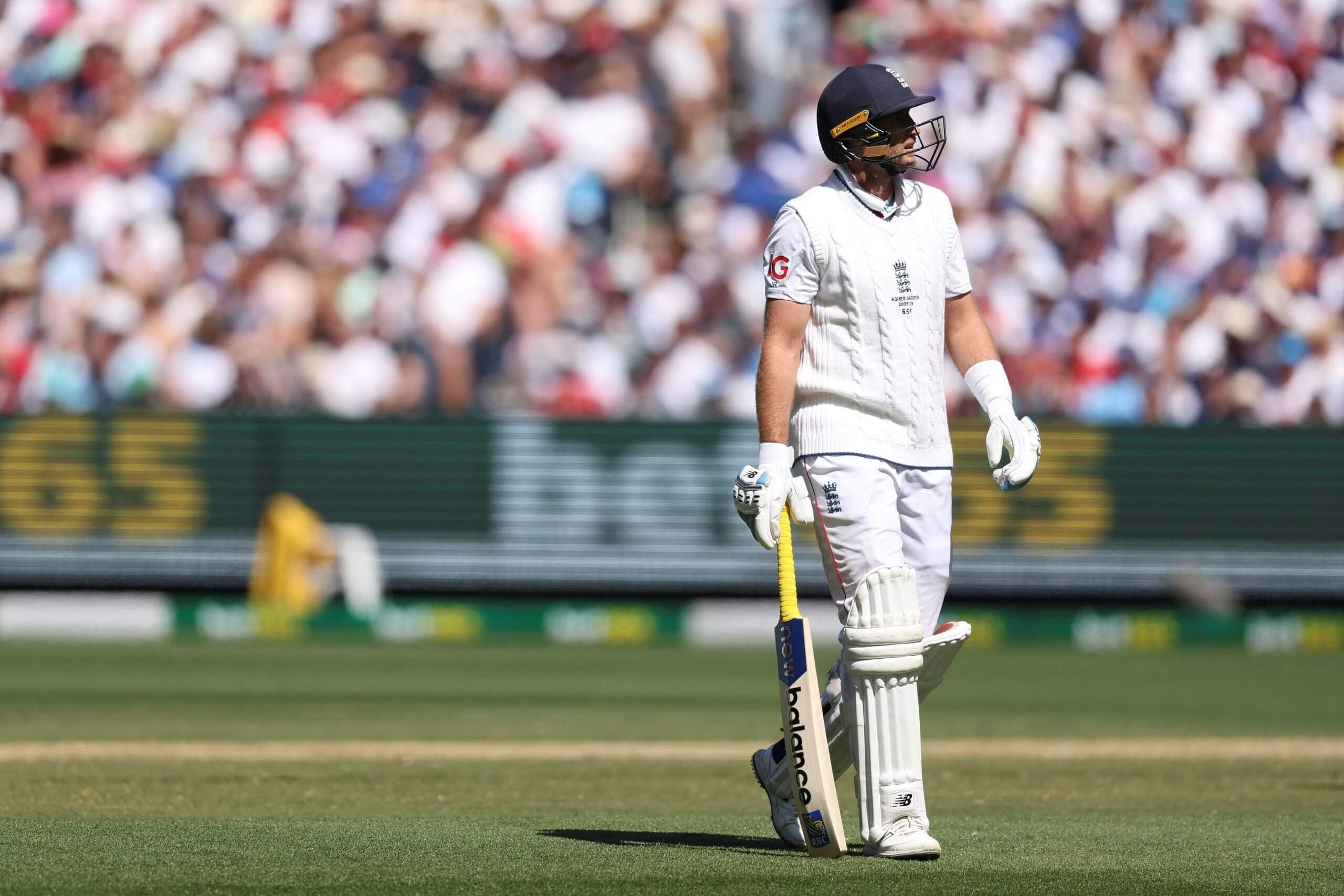
Joe Root wanders off after his 15-ball duck (Martin Keep/AFP via Getty Images)
MCG curator Matt Page had said in the build-up that he wanted to replicate the pitch from last year’s epic contest between Australia and India, which went deep into day five. But with a changeable weather forecast in Melbourne, he had left up to 10mm of grass (up from 7mm or 8mm last year) on the pitch, presumably fearing that it would crack up later in the match when temperatures are forecast to shoot up to 33C.
On the morning of day one, in jumper weather at a chilly MCG amid breezy temperatures of 14C, England were made to feel right at home — and, on this occasion, they exploited the conditions to dismiss Australia by 3pm. While Tongue took half the wickets, their attack was expertly led by Gus Atkinson, who set the tone with a fine first over against an unusually apprehensive Travis Head and kept a disciplined line throughout.
In what was a genuine contest between bat and ball with a bit of nip and assistance on offer, England mostly kept the pressure on Australia’s batters who, it must be said, handled it badly. Yet England deserved credit for doing new (if not revelatory) things — like bowling in partnerships, building pressure and not dropping short and wide as they had so often in this series.
Atkinson, Tongue and Ben Stokes cramped them for room and all bowled a full length.
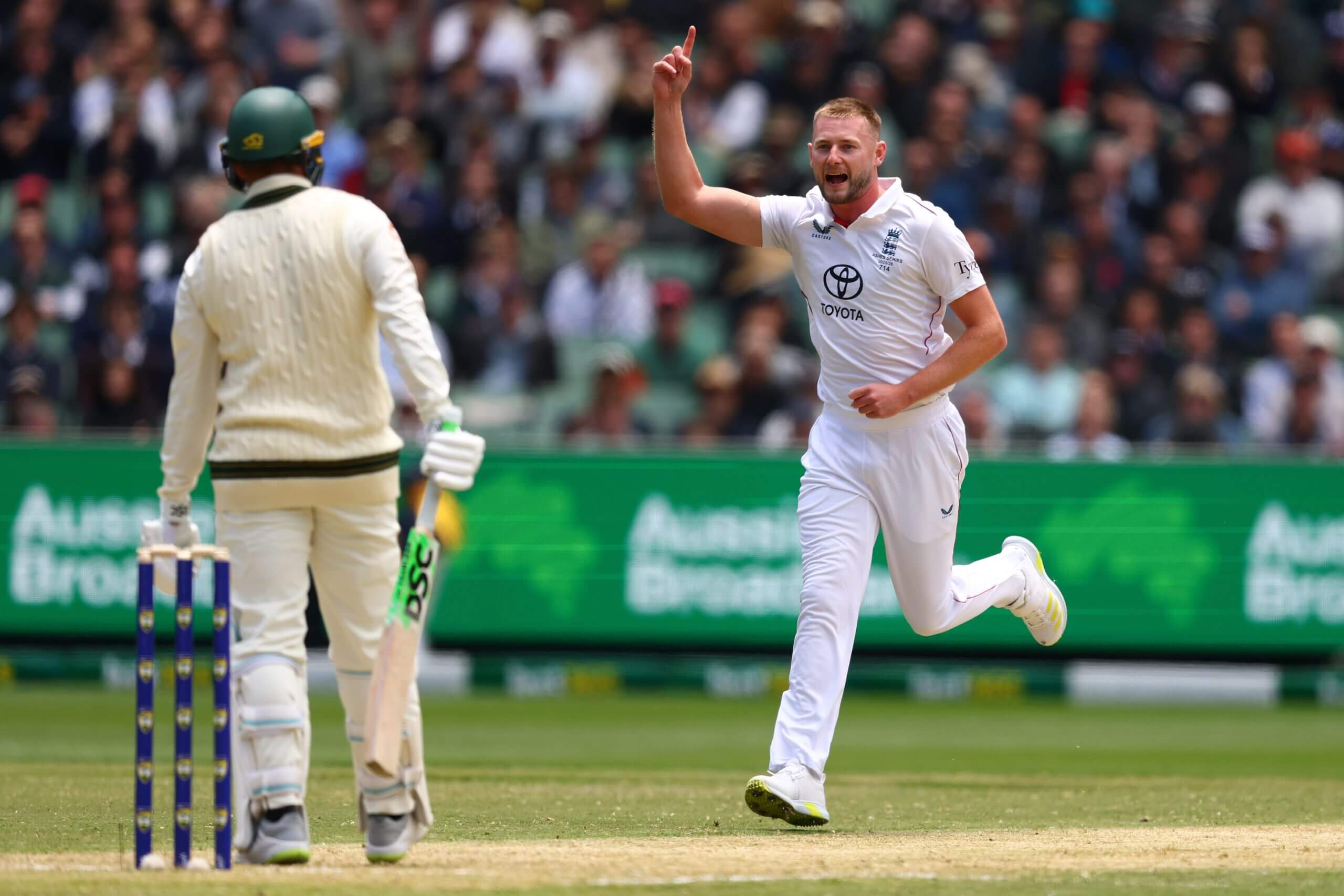
Gus Atkinson has Usman Khawaja caught behind (Robert Cianflone/Getty Images)
Atkinson was by far the most miserly, bowling three consecutive maidens at one point. When he was dropped in Adelaide, you wondered if Stokes’ “my team can’t have weak men” comments may have been aimed at someone like Atkinson, who stunk the place out in Brisbane with inconsistent bowling and daft batting.
He was patient and probing throughout, starting with 1-7 off seven overs (including 38 dot balls) and then returning after lunch to dismiss Usman Khawaja. “The execution was outstanding,” the ex-Australia captain Ricky Ponting said of England’s attack on Channel Seven. “Atkinson bowled himself out of the team in Brisbane in conditions we thought suited him. After a week off, he didn’t put a foot wrong.”
The problem was, Australia’s bowlers picked up where England’s had left off.
They had the air of a team satisfied to have only made 152 as their bowlers conducted their warm-up on the outfield between innings. The sense was this pitch had plenty in it. And so it proved.
The outstanding Mitchell Starc and Neser produced an almost unplayable opening spell. The No 6, Stokes, was in after eight overs with this the worst start England had ever made against Australia. Neser was just as incisive when he returned for his second spell and ended with four wickets.
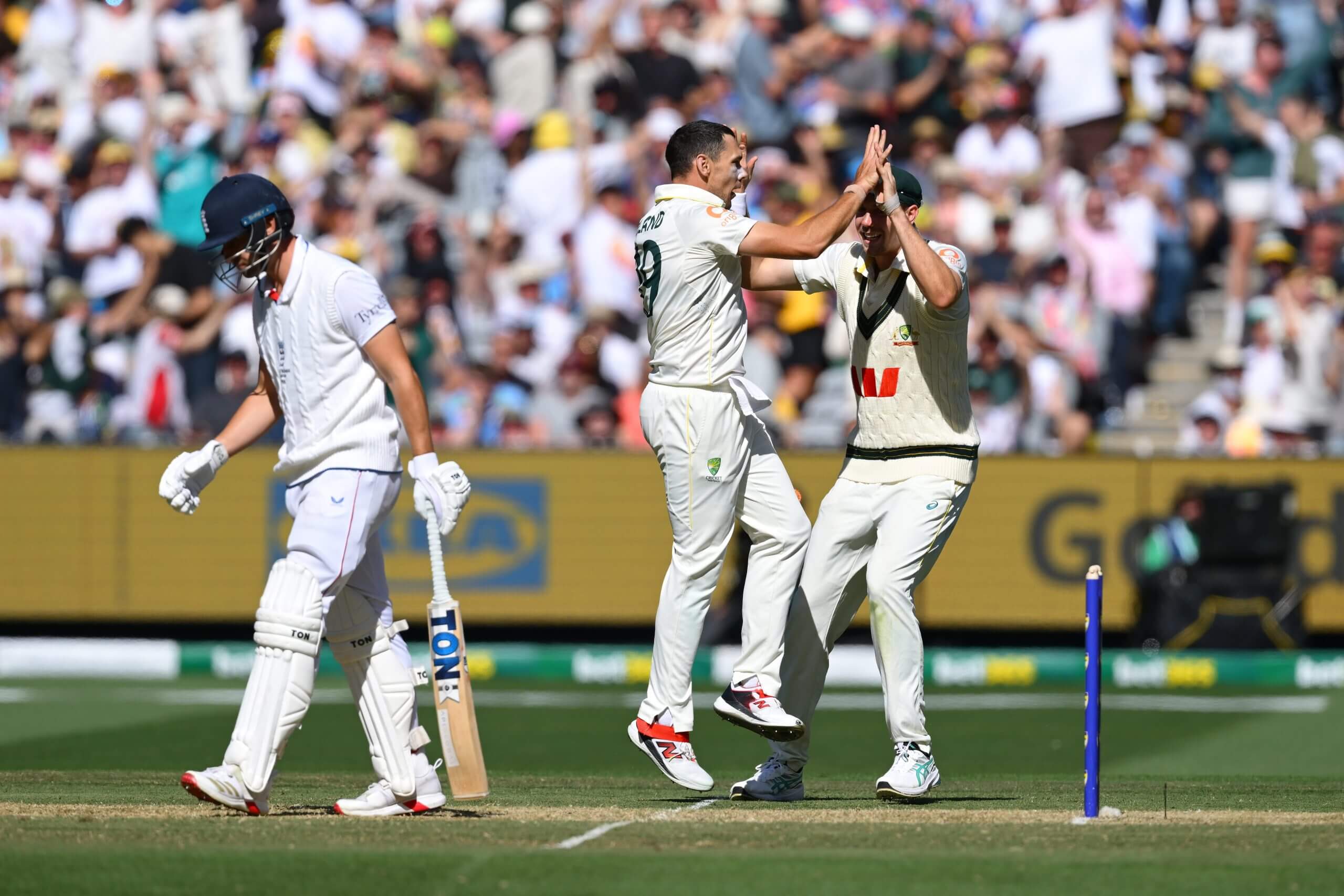
Scott Boland celebrates as Will Jacks departs (Quinn Rooney/Getty Images)
Predictably enough, hometown hero Boland, who took 6-7 here on debut four years ago, enjoyed this bowler’s paradise.
He did for Brook, Jamie Smith — with a cavernous gap between bat and pad — and Will Jacks, his metronomic execution never disturbed. The ball seemed to nip around quicker, admittedly exploiting dubious techniques en route, as the visitors folded. England’s jitters probably made the surface look like more of a minefield, but it seemed suboptimal for the first day of such a showpiece event.
As the analysts at CricViz pointed out, 48 per cent of the deliveries sent down seamed more than 0.75 degrees. In the last 10 years in Australia, only four Tests have seen a larger amount of ‘high seaming’ deliveries on day one. “That pitch has too much life in it for day one in Test cricket,” said the former Australia fast bowler Glenn McGrath on the BBC’s Test Match Special.
People with tickets for day three will have wished it had been more ‘sedate Friday afternoon rom-com’ rather than ‘blockbuster thriller’.
Tim Spiers
Yes, no, wait, sorry
On an extraordinary day, something remarkable — or at least extremely rare — happened at 2.34pm AEDT (Australian Eastern Daylight Time) at the MCG.
Had Brydon Carse bowled a maiden over, stringing together six deliveries of consistent line and length? Had the Barmy Army stopped singing “We are the army…”? No on both counts.
For the first time since the Adelaide Test of 2021-22, when David Warner was dismissed in the second innings for 13, England ran out an Australian batter, ending a run — which, of course, is exactly what Carse did — of 11 Ashes Tests without that happening.
It came at a crucial juncture, too, with Australia having briefly wrested momentum back from England for pretty much the first time in their innings. Neser had just struck three boundaries in three balls off Tongue in an over that cost England 16 runs, with his counter-attack alongside Cameron Green amounting to a brisk 52-run partnership from just under 11 overs.
With Tongue and Carse proving expensive as Stokes and Atkinson took a rest, the game was threatening to turn.
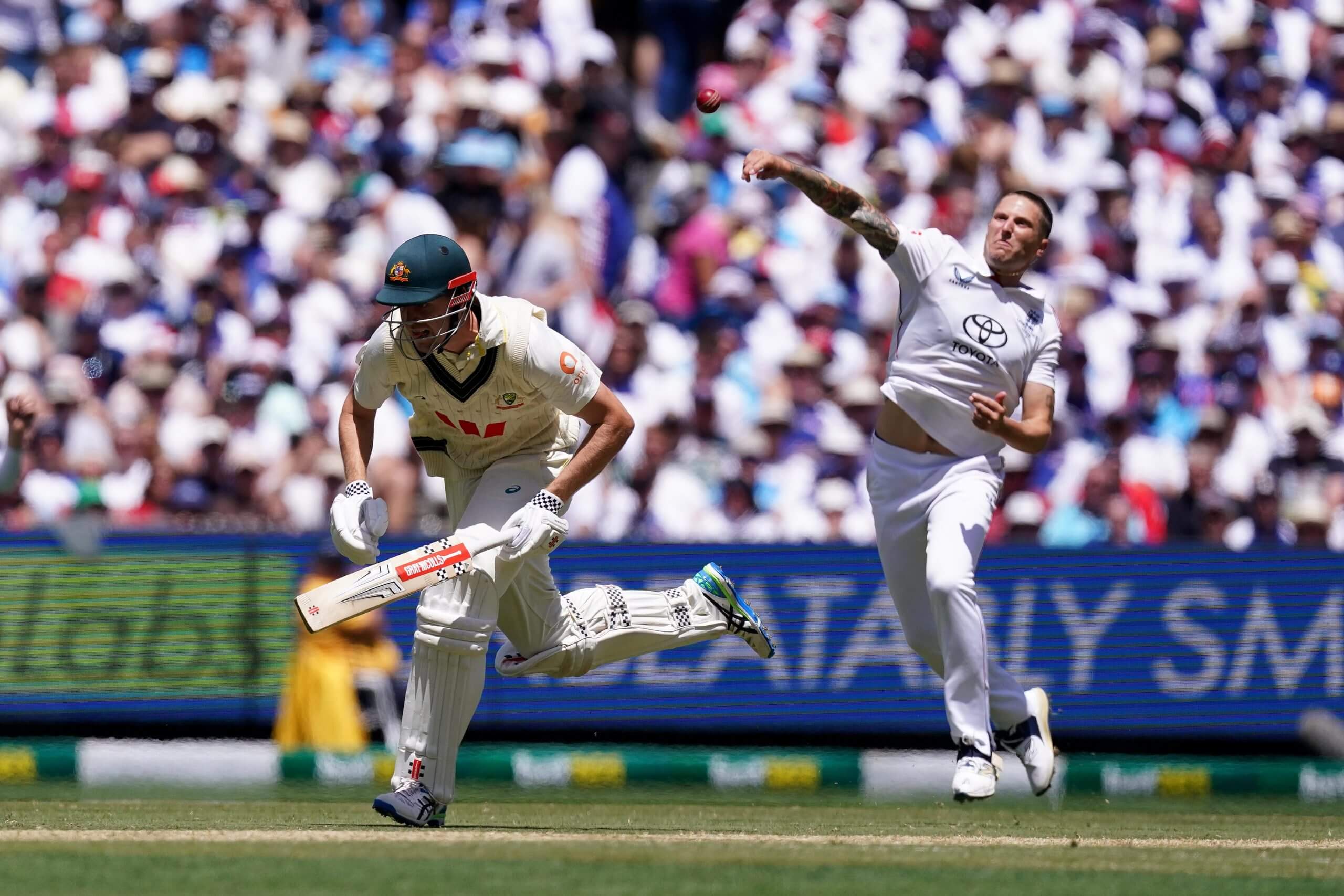
Brydon Carse flings the ball towards the stumps at the bowler’s end as Cameron Green fears the worst (Robbie Stephenson/PA Images via Getty Images)
And then it happened.
There was never a run on offer as Green defended a short Carse delivery. It was Green’s call to make but, as Neser raced down from the non-striker’s end, Green crucially hesitated, arms partly outstretched as if seeking further reassurance from his partner.
Carse, who showed good bend for a big man, took a clean pick-up and throw, turned and flung down the stumps. Green did not even wait for the replay.
GREEN RUN OUT!
Carse pulls off a superb direct hit at the non-striker’s end 💥
📺 Watch #TheAshes LIVE on TNT Sports and discovery+ pic.twitter.com/ttyybE2ECK
— Cricket on TNT Sports (@cricketontnt) December 26, 2025
For Carse, who had been frustratingly expensive earlier in the day, it was the moment that brought him to England’s party. For Green, under real pressure having been pushed down the order to No 7 over a quiet series, it was a dopey moment to rival his stepping-away brain fade in Brisbane.
For England, in Australia without a fielding coach, it was a seldom-seen run out to savour.
Tim Spiers
Bethell’s hiding to nothing
Uber to the nets? How about scrambling a jet to bring them home? Is there a surge charge on a chopper? Actually, press the button, let’s get ’em out of there.
England’s initial response with the bat after bowling Australia out was a familiar tale for the series, albeit this Boxing Day ‘special’ was given an extra bit of gruesome Christmas gravy. After eight overs of their reply England were 16-4 and had suffered their joint second-worst start to a Test innings in a quarter of a century.
Ben Duckett had been applauded to the nets by his team-mates on Christmas Eve in sarcasm and solidarity. His stint with the bat at practice came in the hours after a social media video showed the pint-sized opener doing his best impression of a school leaver in Faliraki on England’s between Test holiday / stag-do / mini-break-under-investigation in Noosa.
It was always going to be hard for Duckett to shake off events of the last few days and so it was that, after plinking a dolly of a catch to Neser off Starc to gift his wicket away, he was heading back to the hutch looking just as confused and lonely as he did in the incriminating video.
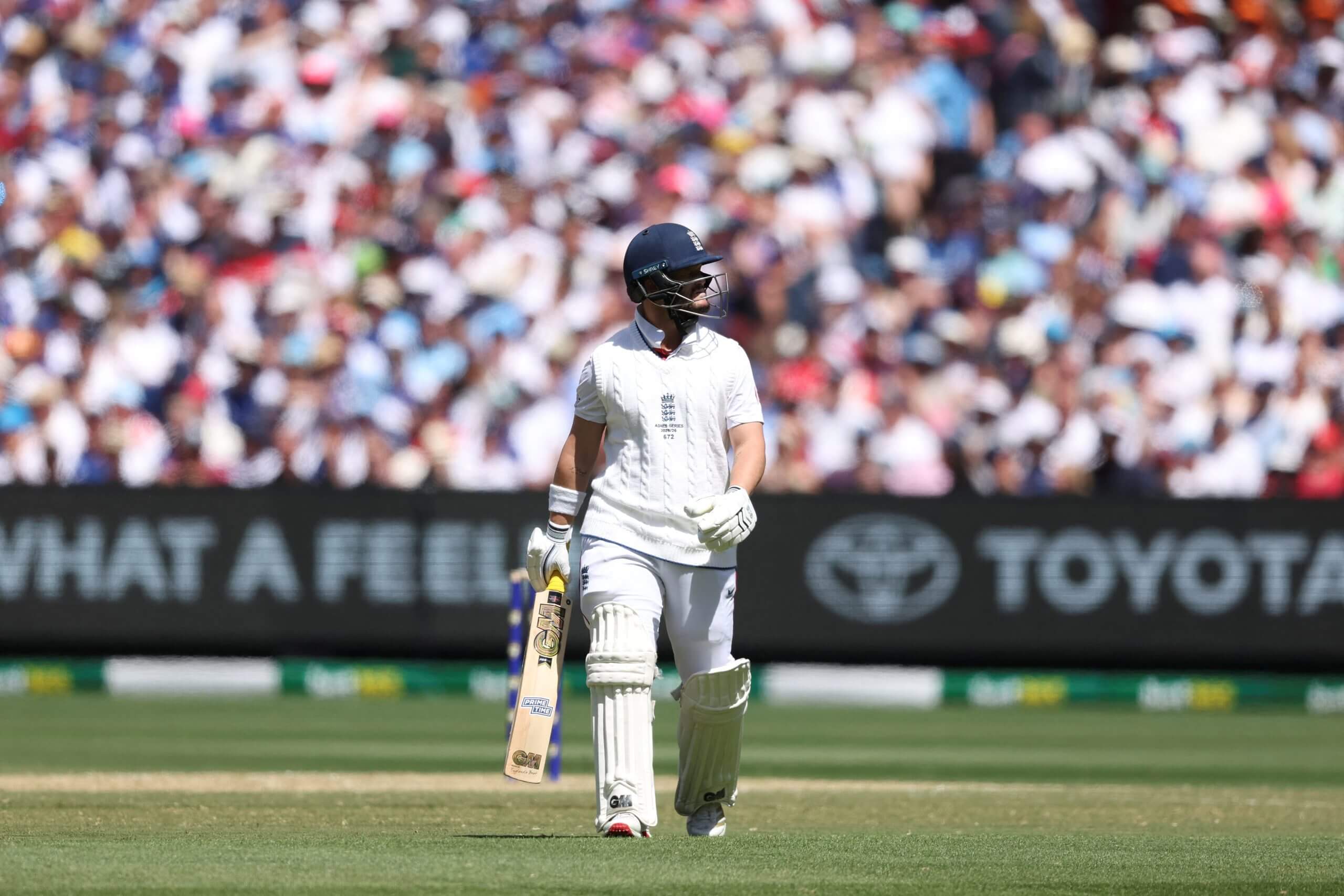
A lonely Ben Duckett departs the scene (Martin Keep/AFP via Getty Images)
The circumstances preceding might have been different, but the situation was all too familiar.
At Perth, England were 0-1, 33-2, 39-3 in their first innings and 0-1 in their second. At Brisbane they were 5-1 and 5-2 in their first innings. At Adelaide they were 37-1, 41-2 and 42-3, then 4-1 and 31-2 in the second. Their first innings at the MCG read 7-1, 8-2, 8-3, 16-4.
After having success as a little and large combination over the past couple of years, the Crawley and Duckett opening partnership has imploded.
Ollie Pope arriving at No 3 did not help either so Jacob Bethell was given the task on Boxing Day after a year in which he’s had his feet up more than his pads on, his last competitive bat coming for the Lions against Australia A on December 7.
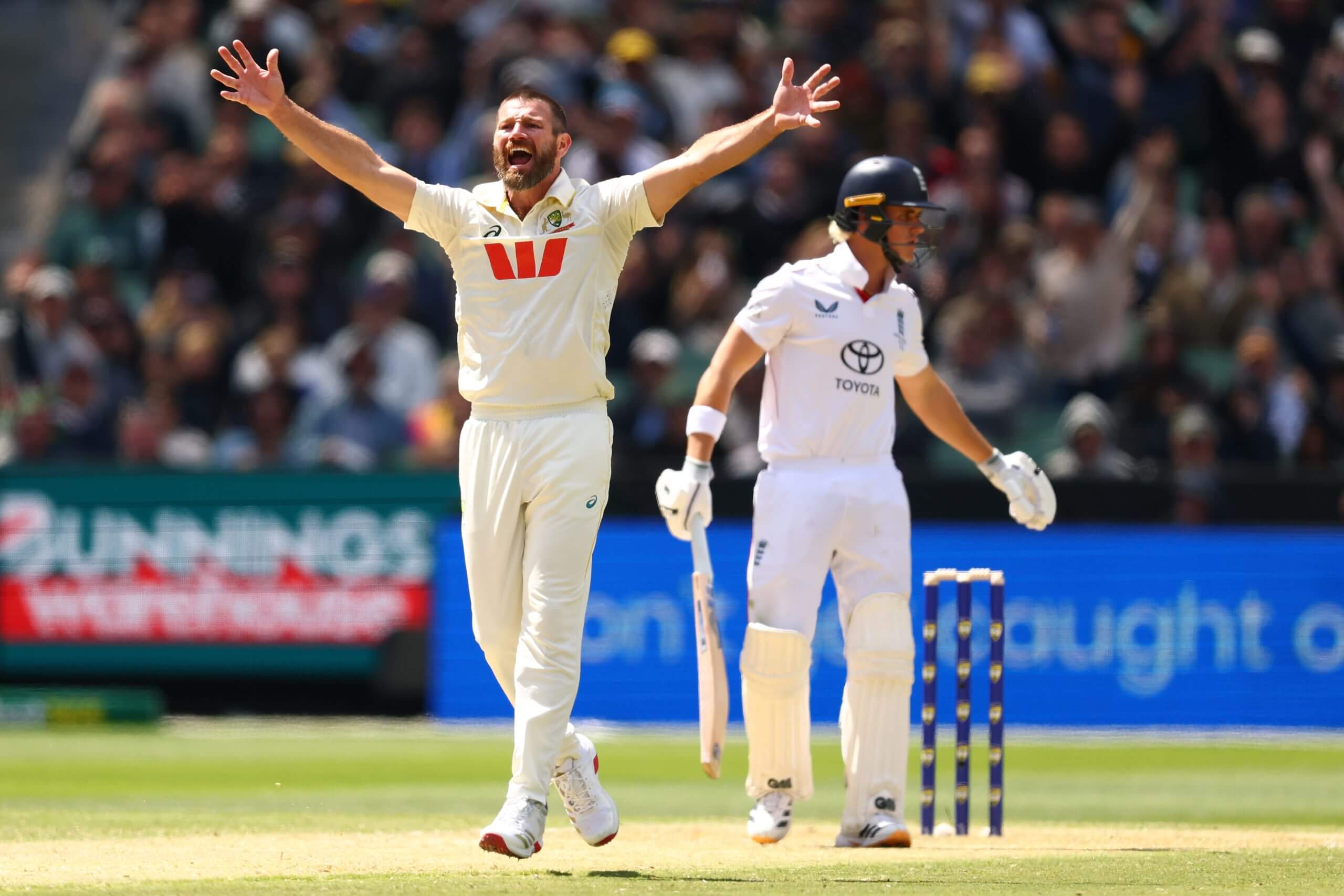
Michael Neser appeals successfully against Jacob Bethell (Robert Cianflone/Getty Images)
Bethell, a player without a first-class century, walked out in front of a record crowd and… survived four balls before nicking his fifth, a beauty from Neser, to Alex Carey.
England have mismanaged Bethell’s development horribly over the last year but, on this tour, whoever has been asked to bat at No 3 has been on a hiding to nothing. “You’re giving the young lad no chance,” offered former England captain Michael Vaughan on Test Match Special.
James Wallace
England run towards the danger
As Brook walked out to bat from the dark of the MCG dungeon, it felt hard to conjure up a more intimidating scenario in world cricket.
England were falling apart at 8-3. Starc had the ball in his left hand and the majority of the 94,199 crowd — a record for any cricket match staged at the MCG and the largest attendance for a single day of Test cricket anywhere, ever, were baying for Brook’s demise.
They clapped Starc in, slowly at first, then faster, building as he sprinted in to unleash an 85mph in-swinger at Brook’s body.
What did Brook do? Play it with a solid, straight bat? Get the hell out of the way?
No, he charged down the pitch and attempted to heave Starc out the ground… and completely missed the ball. Cue sarcastic cheers, boos and laughter, from the crowd and Starc.
It was sporting theatre, especially if the theatre was staging a pantomime.
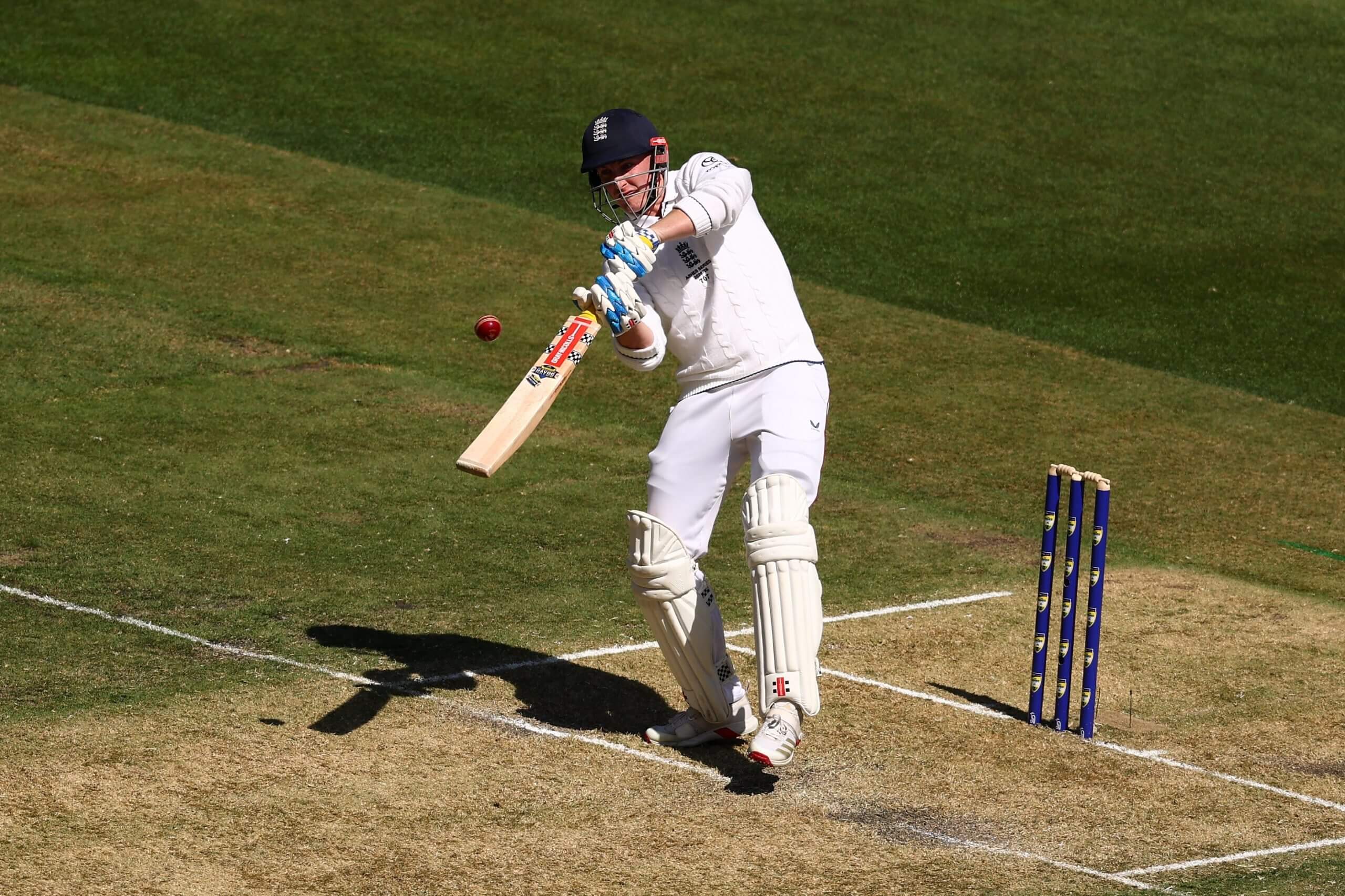
Harry Brook decided attack was the best form of defence (Daniel Pockett/Getty Images)
Brook stated he probably had to “rein it in” before Adelaide, which he did with some success, showing patience to score 45 (off 63) and 30 (56). Yep, here not so much.
After watching Root endure one of his most unconvincing innings in recent memory, Brook confronted Starc again the ball after Root’s departure and shellacked him over mid-off for a jaw-dropping six. It was the ultimate show of aggression. He may as well have shouted “BAZBALL IS ALIVE” as he did it.
“What to say,” former Australia coach Justin Langer remarked, proceeding to say nothing else at all on Channel Seven until the next delivery.
Brook’s wild innings continued in that vein as he counter-attacked with a 300-style approach (as in the film, very much not England’s batting total) that, yes, got Australia thinking. But predictably, they didn’t have to think for too long as, with the pitch continuing to offer a helping hand, Boland jagged one sharply back into Brook’s pad and, after 41 from 34 balls, that was that.
To be fair to Brook, most batters in the world would have struggled to play that particular delivery.
Brook’s assault would have been great if those around him had offered support but, other than Stokes attempting to drop anchor for 16 off 38, no one could hang around. Having dispensed with Bazball at Adelaide, where batting conditions were by some distance the best of the series with a dead, flat pitch and short square boundaries, here England decided this pitch demanded its return while Boland and Neser were jagging it at all angles.
The sight of Jacks — who took 137 balls to reach 47 in a defiant, stout defence at Adelaide — charging and missing his first ball from Boland, felt reflective of a frazzled mind.
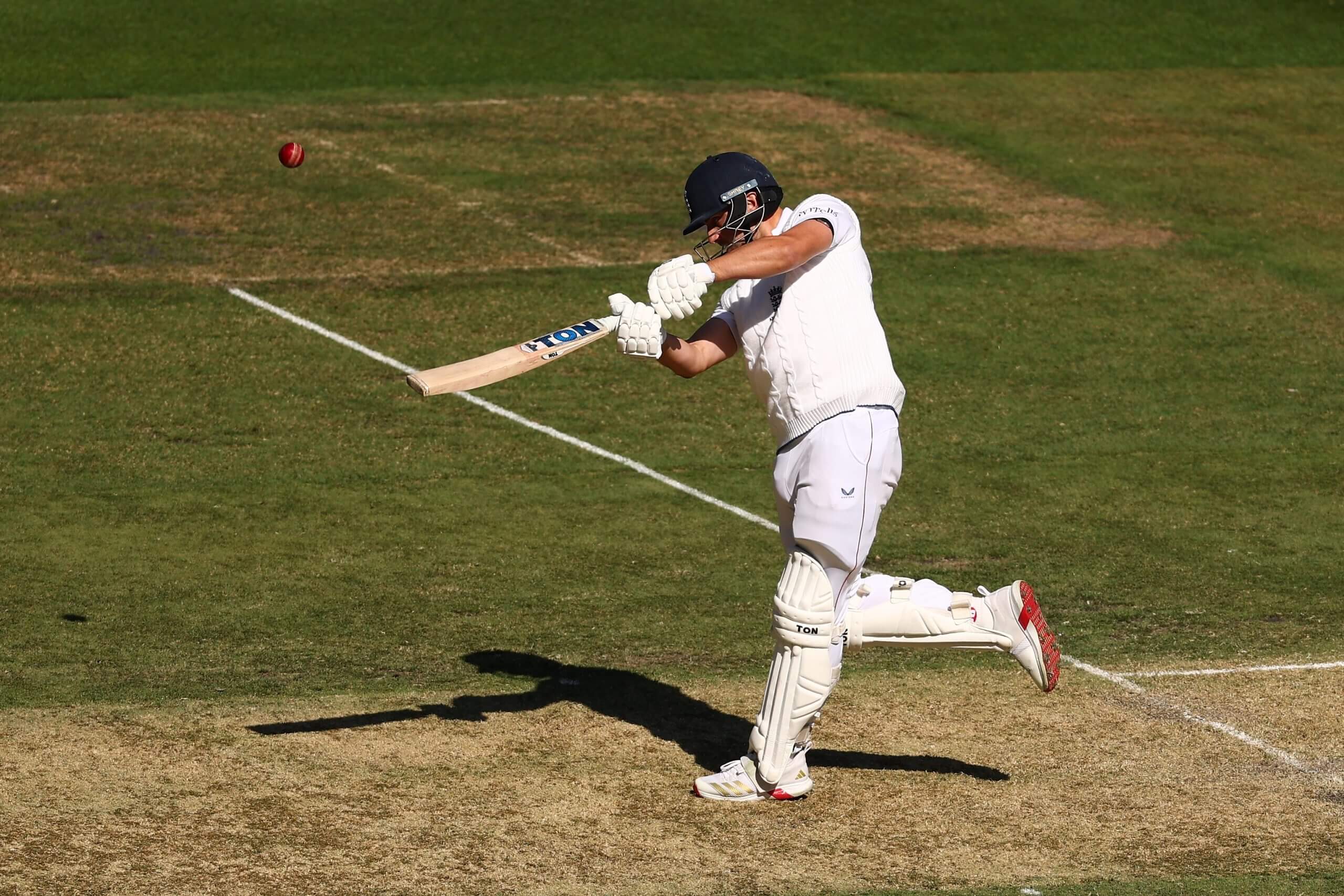
Will Jacks dances down the pitch (Daniel Pockett/Getty Images)
Jacks and Stokes had been so resolute in Brisbane but, here, it appeared as if the captain was encouraging the aggression from the non-striker’s end. Perhaps he had determined that all-out aggression was the only way England would come close to matching Australia’s first-innings score. Or, at the very least, might knock their bowlers off their line and length.
Jacks charged his fourth ball too with a flailing shot that was loaded with risk and he was lucky to see it bounce in-between fielders. He ended up lasting 10 balls before edging Boland behind to Carey — Boland’s third wicket in 10 balls — and, while they were pretty much all at it (Carse was caught hooking), Jacks’ change in tack from the diligence he had shown in Brisbane and Adelaide represented the starkest contrast in England’s application with the bat.
There was resistance from Atkinson, just the third batter to reach double figures, to take England to three figures with a few thwacks, but their bowling heroics from earlier in the day went wasted.
Ponting, on Channel Seven, did not disagree with England showing aggression with the bat, but he added: “You’ve still got to go through phases of the game where you trust your defence.”
Bazball was back with a vengeance. And, in truth, England looked all the worse off for it.
Tim Spiers