Your support helps us to tell the story
From reproductive rights to climate change to Big Tech, The Independent is on the ground when the story is developing. Whether it’s investigating the financials of Elon Musk’s pro-Trump PAC or producing our latest documentary, ‘The A Word’, which shines a light on the American women fighting for reproductive rights, we know how important it is to parse out the facts from the messaging.
At such a critical moment in US history, we need reporters on the ground. Your donation allows us to keep sending journalists to speak to both sides of the story.
The Independent is trusted by Americans across the entire political spectrum. And unlike many other quality news outlets, we choose not to lock Americans out of our reporting and analysis with paywalls. We believe quality journalism should be available to everyone, paid for by those who can afford it.
Your support makes all the difference.Read more
A manumea, the closest living relative of the extinct dodo bird, has been sighted for the first time since 2013, raising hope that the critically endangered species can be saved from extinction.
The Samoa Conservation Society’s latest field survey, conducted from 17 October to 13 November, recorded at least five sightings of Didunculus strigirostris in the South Pacific nation’s rainforest.
“It remains unclear whether these sightings involve the same individual or different birds. All individuals observed appeared to be adults, so we cannot confirm whether the species is nesting in the area or simply foraging,” Moeumu Uili, project coordinator at the Samoa Conservation Society, told local media.
Wildlife experts say the rainforest valleys near Uafato village, where the sightings occurred, may be playing a role in protecting the bird and its habitat from cyclonic damage.
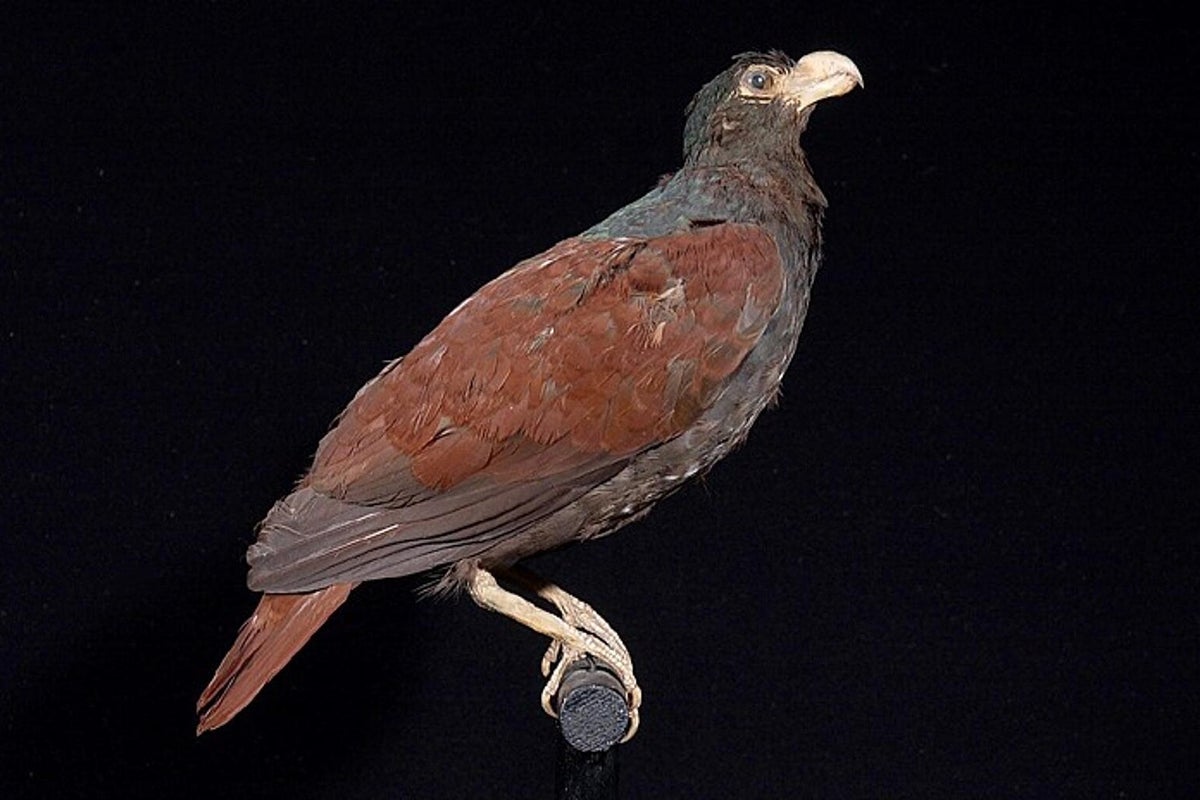
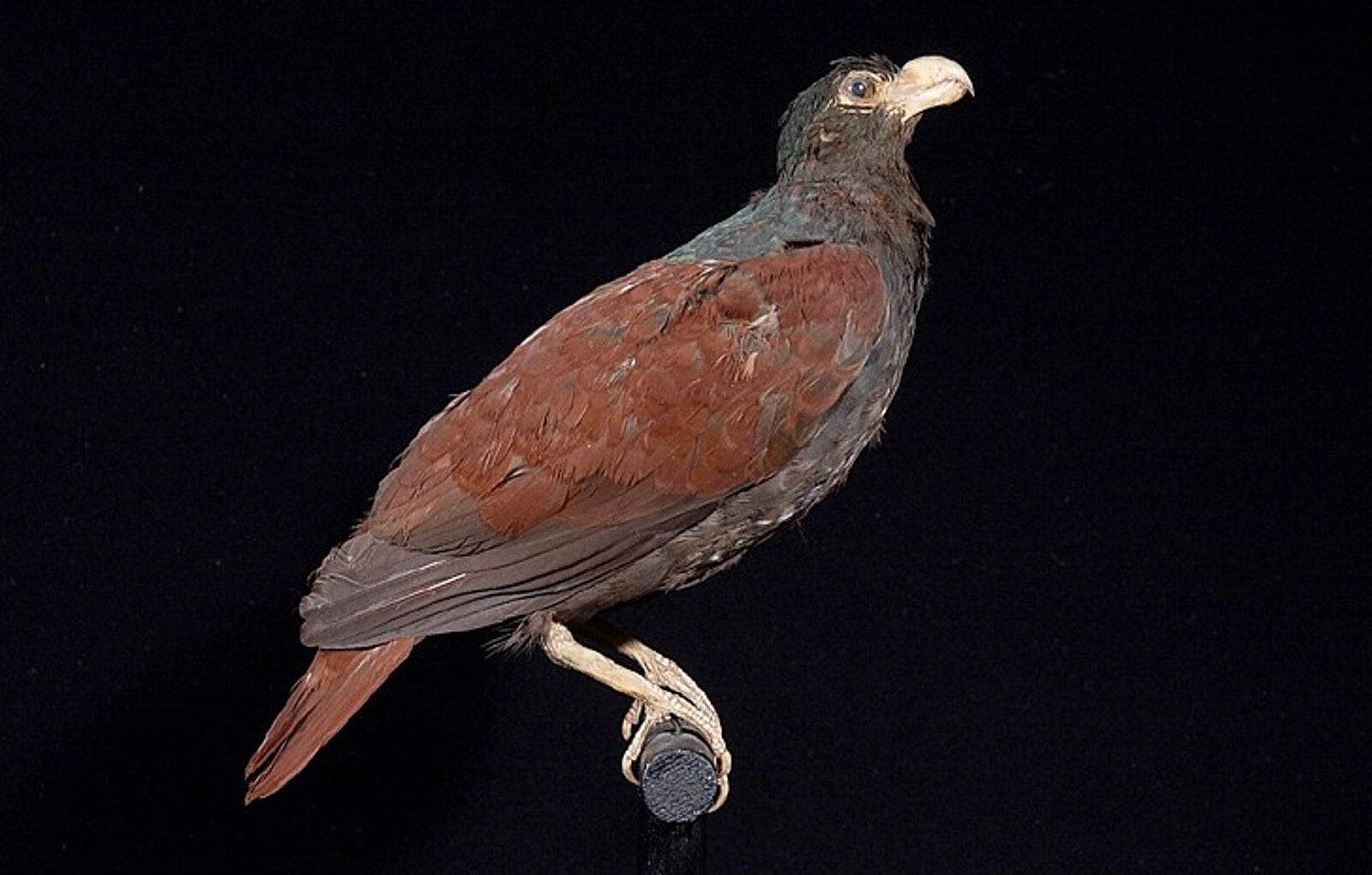 Manumea (Wikimedia Commons/Naturalis Biodiversity Center)
Manumea’s reliance on the large native seeds that other birds cannot consume has made it a national symbol in Samoa, though many people in the country don’t know what it looks like, experts say.
The bird is known to play a key role in dispersing these large seeds, thereby helping maintain Samoa’s forest ecosystems.
The dodo-like bird was known to exist in the Samoan rainforest but had proved difficult to photograph due to its quick movement and rainy conditions.
The chicken-sized bird with an unusually thick, curved beak that bears tooth-like serrations is the only living species of the genus Didunculus, meaning “little dodo”.
Surveys in the early 1990s indicated there were some 7,000 manumeas in Samoa. But rampant habitat destruction decimated the species, with only 50-150 thought to exist as of 2024.
Efforts to spot and track the bird highlight the challenges in protecting wildlife species from extinction, particularly in fragile island ecosystems, where they are vulnerable to invasive predators like feral cats and rats.
“It seems very likely that feral cats are a major cause of decline. There has to be some kind of control programme,” Joe Wood, who works on manumea conservation efforts at the International Union for Conservation of Nature, told Live Science.
Researchers are working to deploy advanced AI sound monitoring tools to locate the bird in the future and understand its behaviour.