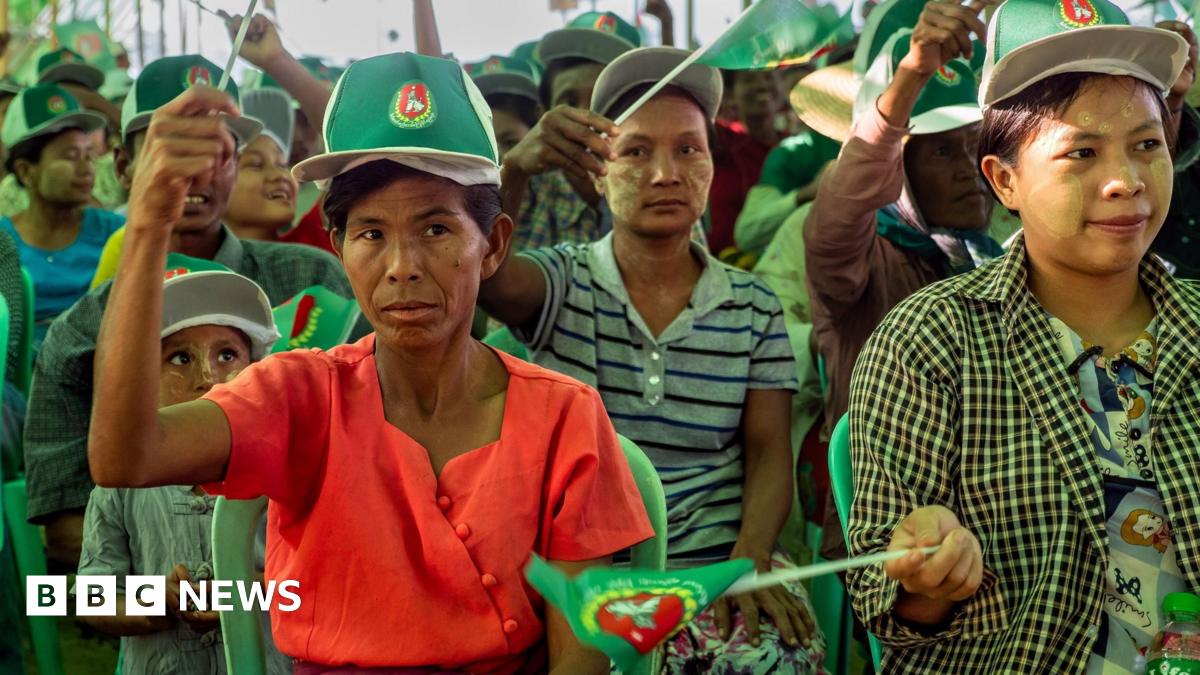
When the BBC tried asking people at the rally in Mandalay what they thought of the election, we were told not to by party officials. They might say the wrong thing, one man explained – they don’t know how to speak to journalists.
The number of plain-clothes military intelligence officers present there helps explain their nervousness. In a dictatorship which has criminalised liking Facebook pages criticising the election, or using the word revolution, even these staunchly pro-military party activists feared the consequences of allowing a foreign journalist the chance to ask uncensored questions.
The same fear lingers on the streets of Mandalay. At a market stall selling fresh river fish the customers all refused to answer what they thought of the election. We have no choice, so we have to vote, one said. The fish seller shooed us away. “You will bring me trouble,” she said.
Only one woman was brave enough to speak frankly, but we needed to find a private place to meet, and to conceal her identity, just to hear her view of the election.
“This election is a lie,” she said. “Everyone is afraid. Everyone has lost their humanity and their freedom. So many people have died, been tortured or fled to other countries. If the military keeps running the country, how can things change?”
She would not vote, she said, but she knew that decision carried risks.