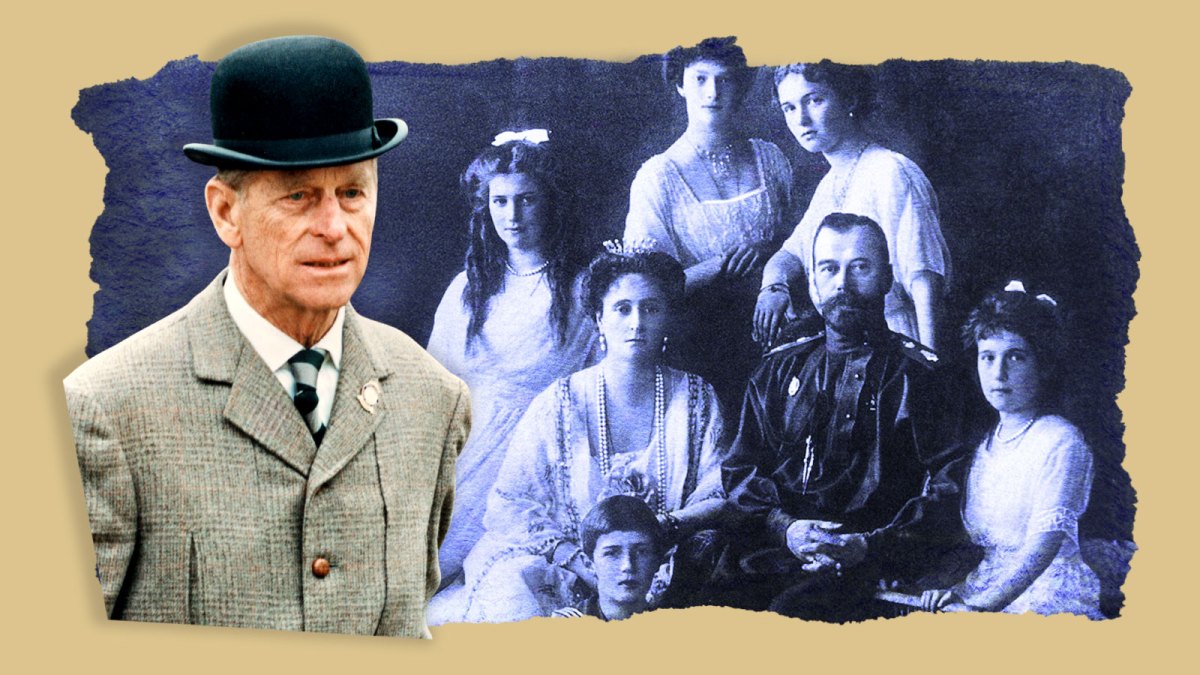
British ministers were urged to send the remains of the Tsar Nicholas II back to Russia on a Royal Navy vessel after they were formally identified through Prince Philip’s DNA, newly released files have revealed.
The monarch, Tsarina Alexandra and their five children — Olga, Tatiana, Maria, Anastasia and Alexei — were executed by the Bolsheviks in July 1918 after they were overthrown in the October revolution.
However, for decades there were rumours that some members of the imperial dynasty managed to avoid the massacre and start new lives overseas.
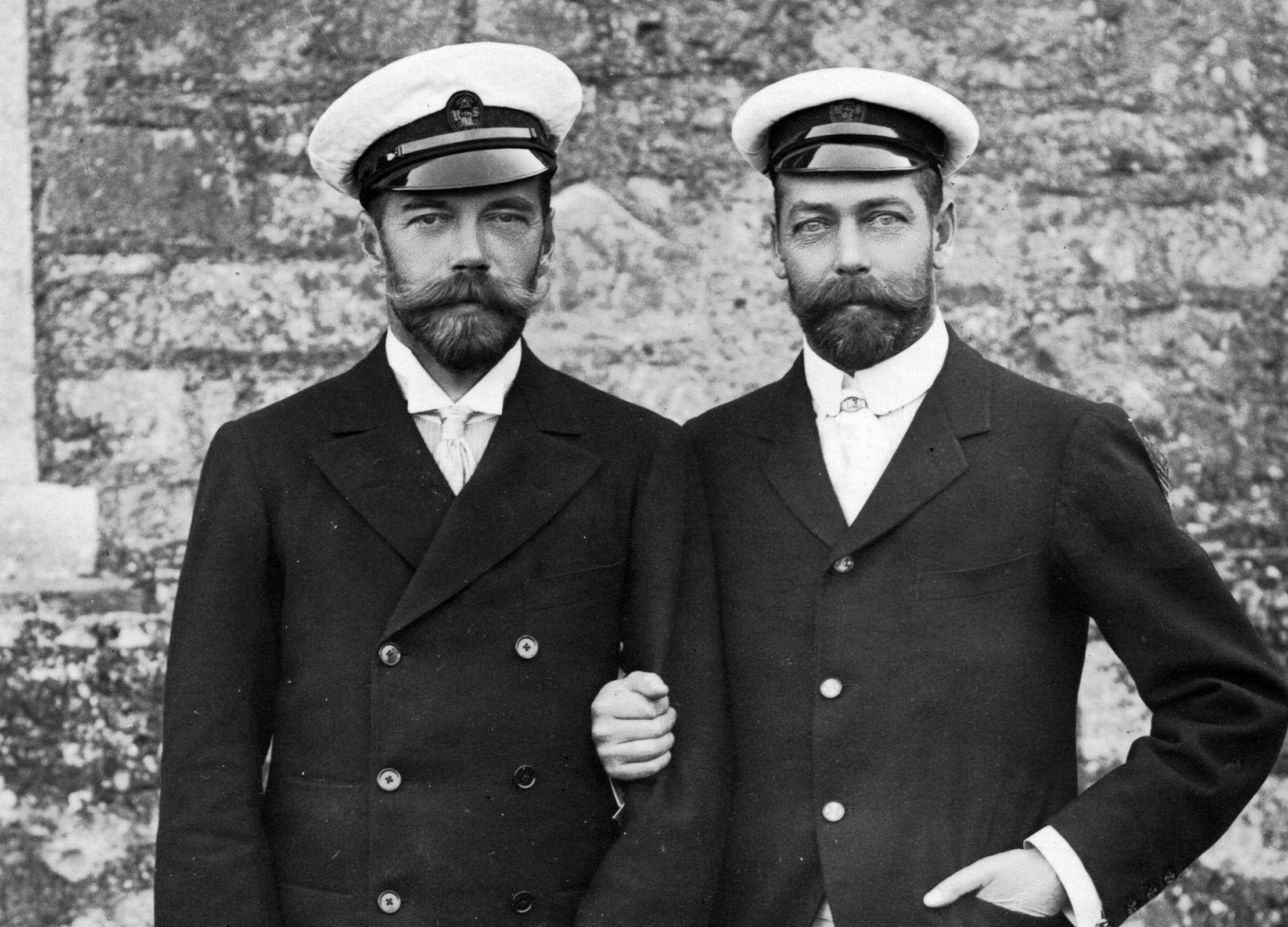
Tsar Nicholas II, left, with his cousin King George V. Both were grandsons of Queen Victoria
ANN RONAN PICTURES/PRINT COLLECTOR/GETTY IMAGES
In 1993 the Duke of Edinburgh offered a blood sample to experts attempting to identify bodies in unmarked graves in Siberia.
His DNA provided a match with Alexandra and her daughters, proving their fate and ending the mystery once and for all.
Philip was the grand-nephew of the tsarina, while her older sister Victoria Mountbatten was his maternal grandmother.
Dr Peter Gill, a British forensic scientist, and his team used mitochondrial DNA to prove “virtually beyond doubt” that bones found in a grave in Yekaterinburg in 1991 were those of the Romanovs.
Just before the discovery was confirmed, The Monarchist League, headed by Count Nikolai Tolstoy, the author and nominal head of the Russian noble family, wrote to Douglas Hurd, the foreign secretary, in February 1993.
• Fabergé egg made for Russian tsar sells for record £22.9m
“Some months ago remains believed to be those of the Russian imperial family were brought to Britain for DNA testing,” a representative of the group wrote. “They arrived in this country, somewhat ignominiously, in a suitcase.
“Should they indeed prove to be the remains of the Tsar and other members of the imperial family would it be possible for their return to Russia to be conducted with greater dignity?”
The letter, which has been opened and placed in the National Archives at Kew, added: “Tsar Nicholas was an honorary admiral in the Royal Navy, so a naval escort would seem appropriate.
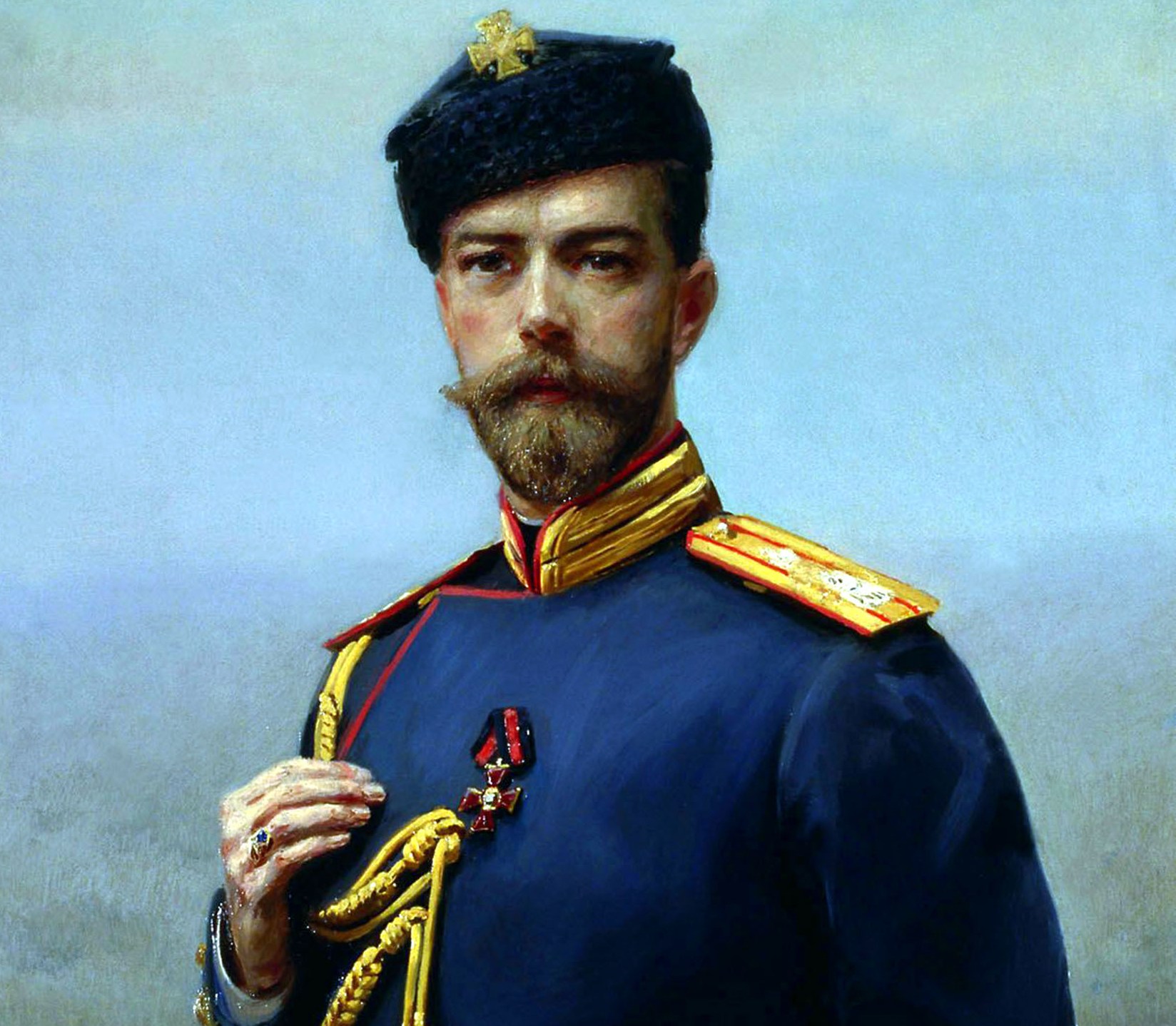
Tsar Nicholas II in a 1905 portrait
ALAMY
“Perhaps a senior member of Her Majesty’s household could be present as they leave the United Kingdom, with the Russian ambassador also invited to attend.
• Prince Harry’s secret tribute to Prince Philip on VJ Day
“I have written to Her Majesty’s private secretary who recommended I pursue it with the appropriate government department.”
However, the plea was dismissed by the Foreign Office.
Susan Speller, a representative of the office’s Eastern Department, responded: “The remains which were brought to this country and are currently being examined at the forensic science central research establishment at Aldermaston by an Anglo-Russian team are only a very small sample of those found near Ekaterinburg [Yekaterinburg] in 1991. The rest of the remains are still in Russia.
“In light of this, we feel that it would not be right to make special ceremonial arrangements for the return of these small samples to Russia.”
Speller added: “Should the remains prove to be those of the Tsar and his family, I am sure that steps will be taken in Russia to ensure they are buried with appropriate dignity and ceremony.”
Five years later the Romanovs were interred in the former imperial capital of St Petersburg, with the family members being canonised by the Russian Orthodox Church in 2000.
In March 1917, after war with Germany, worsening food shortages and political crisis led to a spontaneous insurrection in St Petersburg and Nicholas abdicated the Russian throne.
His brother Michael — “Misha” — became monarch for a day before he too abdicated, ending the 304 years of rule by the Romanov dynasty.
Four months after the abdication, the new provisional government dispatched the family with members of their household to Tobolsk in Siberia, a journey of nearly a week by train and steamer.
They took with them a treasure trove of jewellery hidden in trunks full of letters and diaries.
Alexander Kerensky, the prime minister and a moderate socialist, had become the family’s unlikely protector, telling Nicholas the exile in Siberia was for their own protection.
“The Bolsheviks are after me,” he explained. “And then will be after you.”
After Lenin seized power in a coup, the royal family’s fate was sealed.