Europe Meal Kit Market Outlook (2025–2033)
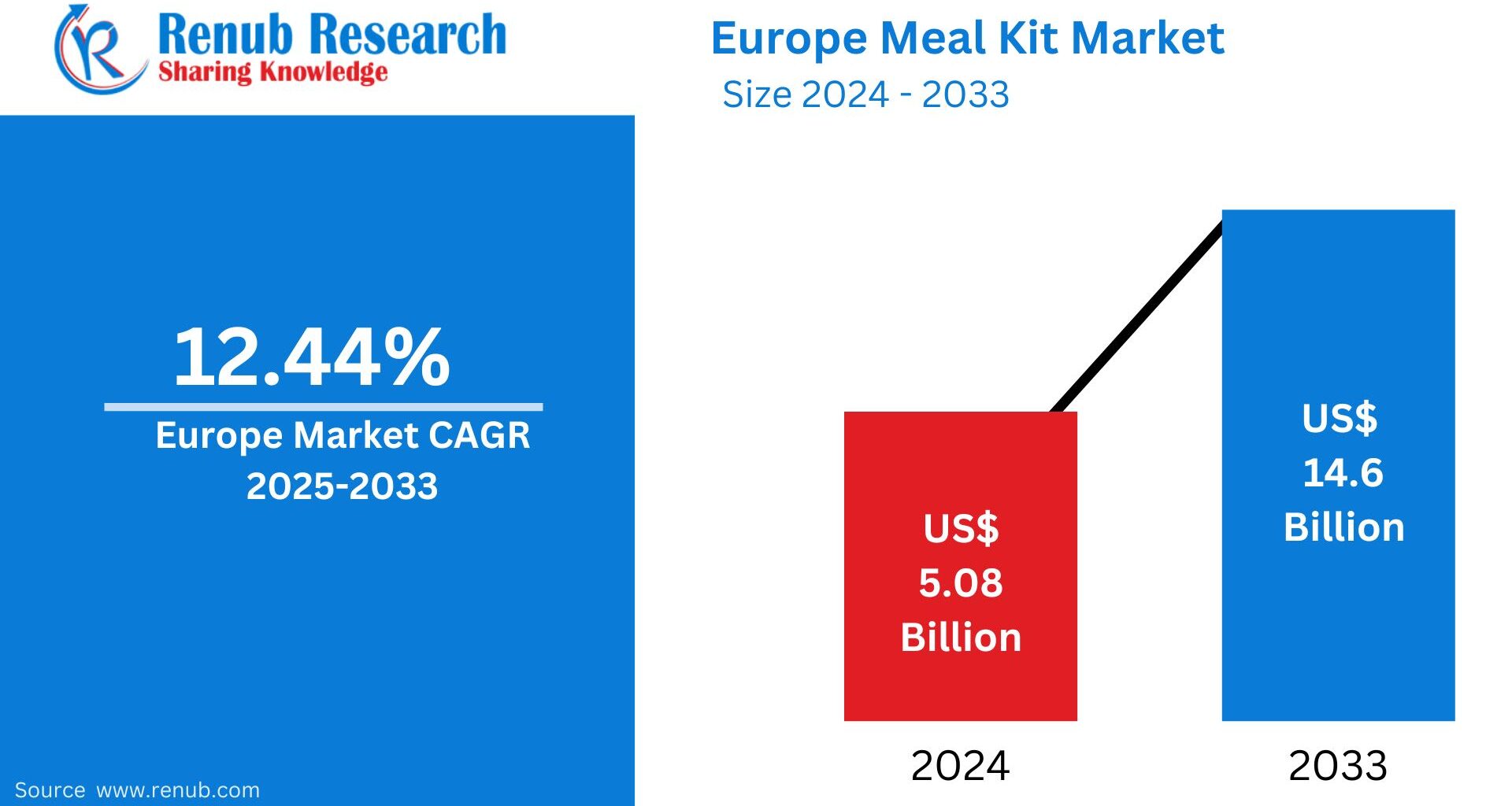
The Europe Meal Kit Market is undergoing a strong transformation, driven by changing consumer lifestyles, increasing health awareness, and rapid digital adoption. According to Renub Research, the market is expected to grow from US$ 5.08 billion in 2024 to US$ 14.6 billion by 2033, registering a robust CAGR of 12.44% from 2025 to 2033.
Europe Meal Kit Market Overview
The European meal kit market has expanded rapidly in recent years due to evolving dietary preferences, urban lifestyles, and the desire for time-saving cooking solutions. Meal kits simplify meal planning while maintaining the emotional and nutritional benefits of home-cooked food.
Major economies such as Germany, the United Kingdom, France, Italy, and the Netherlands are leading adoption. Urbanization, dual-income households, and limited time for grocery shopping have significantly boosted demand. The COVID-19 pandemic further accelerated this trend by normalizing home dining and doorstep delivery models.
Sustainability, personalization, and menu diversity have emerged as three defining pillars of market differentiation. Companies are investing heavily in organic ingredients, recyclable packaging, and transparent sourcing, responding to Europe’s environmentally conscious consumer base. Subscription flexibility—vegan, vegetarian, keto, allergen-free—has also become a decisive factor in customer acquisition and retention.
Despite challenges such as pricing sensitivity and logistics complexity, the long-term outlook remains positive. As supply chains become more efficient and digital engagement deepens, meal kits are expected to become a permanent fixture in Europe’s evolving food ecosystem.
Key Factors Driving the Europe Meal Kit Market Growth
Busy Lifestyles and Urbanization
European cities are becoming faster-paced, with longer working hours and a growing number of dual-income households. Consumers increasingly seek convenient cooking solutions that eliminate the need for grocery planning and reduce preparation time.
Meal kits cater perfectly to this demand by offering pre-measured ingredients and easy recipes, making them particularly appealing to millennials, professionals, and small households living in urban apartments with limited storage space.
Growing Health and Nutrition Awareness
Health and wellness trends strongly influence food choices across Europe. Consumers are shifting away from ultra-processed foods toward balanced, portion-controlled meals with transparent nutritional information.
Meal kit providers frequently collaborate with chefs and nutritionists to design meals using fresh vegetables, lean proteins, and seasonal produce. This alignment with mindful eating habits has expanded adoption among health-conscious individuals and those managing dietary restrictions.
Expansion of Digital and E-Commerce Platforms
Europe’s mature digital infrastructure plays a vital role in market expansion. Meal kits are primarily sold through online subscription platforms, allowing users to customize menus, pause deliveries, or change preferences effortlessly.
The pandemic accelerated trust in online food purchasing, and mobile apps now enhance customer engagement through personalization, reminders, and loyalty programs—driving repeat purchases and long-term subscriptions.
Challenges in the Europe Meal Kit Market
Customer Retention and Subscription Fatigue
While initial adoption rates are high, retaining subscribers remains a challenge. Many consumers cancel after a few months due to pricing concerns, menu repetition, or lifestyle changes.
To counter subscription fatigue, companies are expanding recipe variety, offering flexible plans, and introducing one-time purchase options. However, maintaining long-term engagement in a competitive environment continues to test market players.
High Pricing and Limited Affordability
Meal kits are often perceived as premium products compared to traditional grocery shopping. During periods of inflation or economic uncertainty, price sensitivity increases, limiting adoption among budget-conscious households.
To expand reach, companies are experimenting with tiered pricing, family bundles, and promotional discounts while optimizing logistics to control costs without sacrificing quality.
Europe Meal Kit Market Overview by Regions
Germany Meal Kit Market
Germany represents one of Europe’s largest meal kit markets, supported by strong demand for convenient, high-quality home meals. Consumers value efficiency, sustainability, and digital ease, encouraging providers to innovate across menu diversity and eco-friendly packaging.
The market features chilled, frozen, and ambient kits, catering to diverse lifestyles. Continuous innovation and consumer trust position Germany for steady long-term growth.
France Meal Kit Market
France’s strong culinary heritage combined with modern convenience needs has fueled consistent growth. Meal kits allow French consumers to maintain culinary quality while saving time, particularly in urban areas.
Providers focus on seasonal ingredients, flexible subscriptions, and partnerships with local suppliers, extending adoption beyond major cities and appealing to diverse demographics.
Italy Meal Kit Market
Italy’s meal kit market is still emerging but growing steadily. While traditional cooking remains deeply rooted, demand is rising for convenient solutions that respect regional flavors.
Meal kits featuring pasta, risotto, and Mediterranean ingredients resonate with local tastes. Collaboration with regional producers ensures authenticity, enabling gradual but promising market expansion.
United Kingdom Meal Kit Market
The UK market shows strong momentum driven by busy lifestyles and openness to global cuisines. Consumers appreciate meal kits for offering variety, flexibility, and balanced nutrition without extensive preparation.
Sustainability, customization, and reliable delivery networks are key competitive factors, supporting continued growth across urban and suburban regions.
Market Segmentation
By Meal Type
Vegetarian
Non-Vegetarian
Vegan
By Offering Type
Heat and Eat
Cook and Eat
Ready to Eat
By End User
Individuals
Families
By Distribution Channel
Online
Hypermarket/Supermarket
Convenience Store
Others
By Country
France, Germany, Italy, Spain, United Kingdom, Belgium, Netherlands, Russia, Poland, Greece, Norway, Romania, Portugal, Rest of Europe.
Competitive Landscape and Company Analysis
The Europe meal kit market is highly competitive, with global food corporations and specialized startups competing on innovation, sustainability, and customer experience. All major players are covered with company overviews, key personnel insights, recent developments, SWOT analysis, and revenue performance.
Key companies include Tyson Foods, Nestlé, Gobble Inc., Gousto, HelloFresh, Simply Cook Ltd., Albertsons Companies, Inc., Fresh n’ Lean, and Hungryroot.
Final Thoughts
The Europe Meal Kit Market is positioned for sustained and dynamic growth through 2033. Rising urbanization, digital convenience, and health-driven food choices are reshaping how Europeans cook and consume meals at home. While affordability and retention remain challenges, innovation in pricing, sustainability, and personalization continues to strengthen market foundations.
As meal kits evolve beyond convenience into lifestyle solutions, they are set to play an increasingly central role in Europe’s modern food economy—bridging tradition, technology, and nutrition in one box.