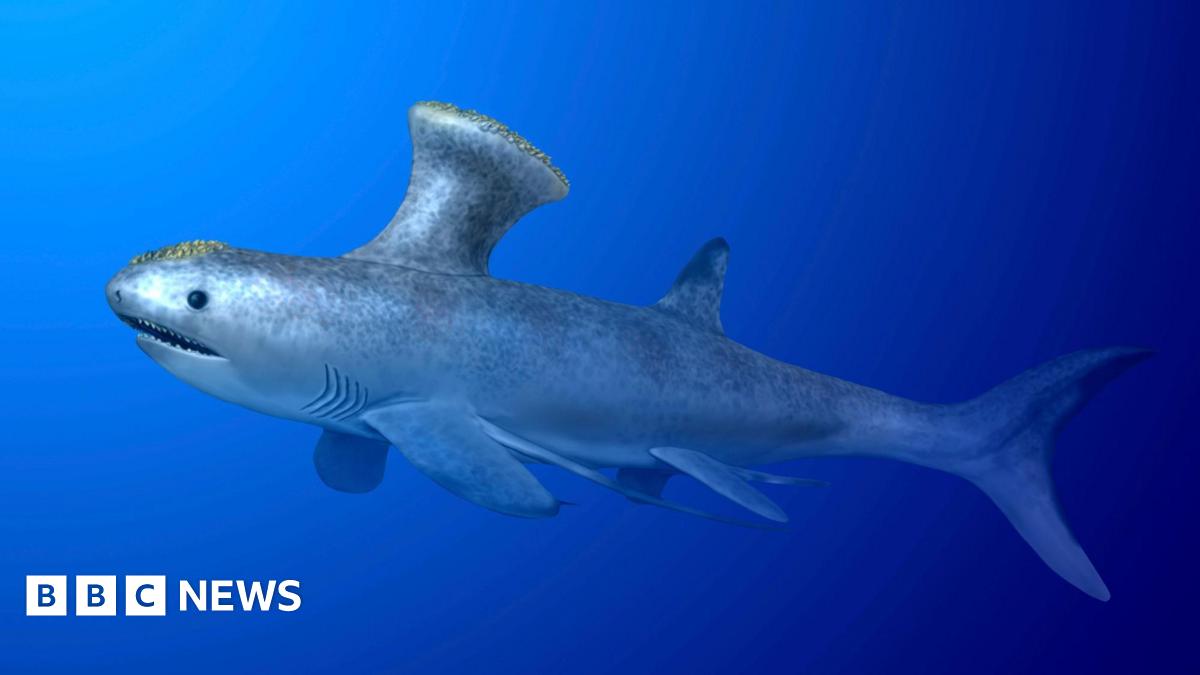
Given this was hundreds of millions of years ago, Scotland bore no resemblance to the land it is today, instead being located near the equator.
“What is now Bearsden was part of a lagoon,” explains Neil Buchanan, an enthusiast on the shark.
“That lent to the type of fish that were there, shrimps and the like. Then there was some sort of catastrophic event for the shark, which killed it, but it seemed to sink into mud.”
Yet while soft tissue usually rots away, the lack of oxygen caused by the manner of the shark’s death and more mud landing on top preserved the fish.
A plaque on a small cairn already marks where the discovery was made, but Mr Buchanan and others in the Bearsden Shark Group, external would now like to see a sculpture in the town as a memento of the shark.
“People are beginning to forget about it, ” he says.
“You mention the Bearsden shark to people and sometimes they have no idea about it.
“One of the things we have come to realise is that the site itself is isolated from the population, so we came up with the idea of a permanent display in the town centre.
“The quality would hopefully be attractive enough for people locally to look at, and maybe even have visitors come.”