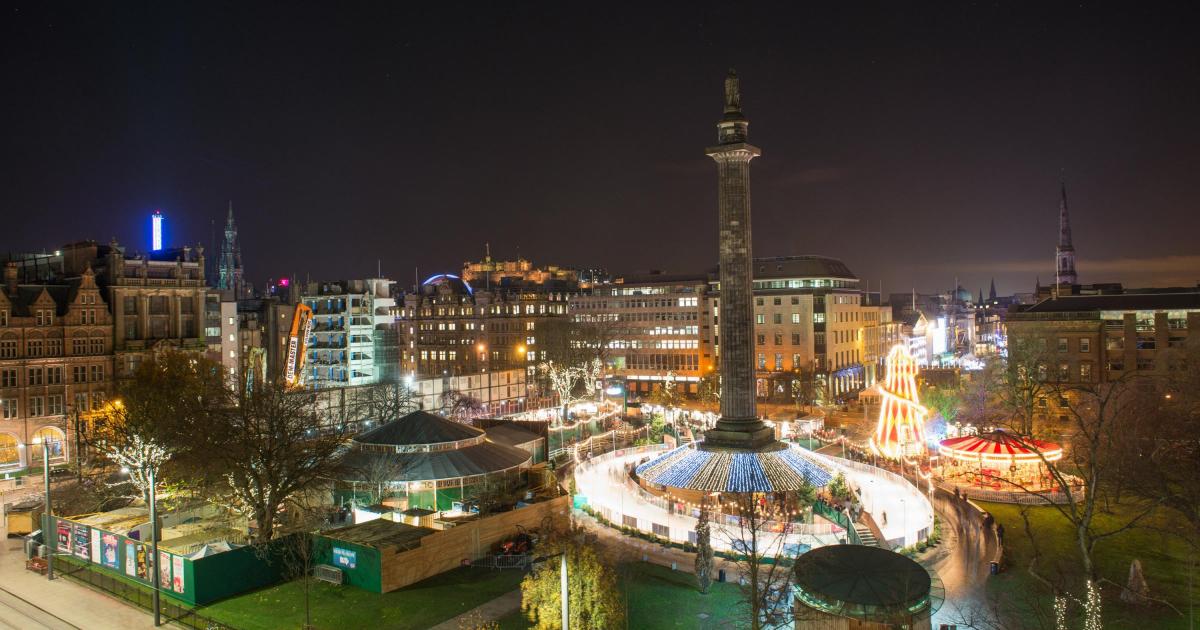
The thinking behind the plan is to have a dedicated representative for venues, pubs and other workplaces which operate between 6pm and 6am, as well as residents and visitors who spend time in the city centre at night.
Read more
The council says the capital’s Night-Time Economy Coordinator – who it is expected will be independent from the local authority but paid £50,000 a year using public funds – would “strengthen coordination and representation across sectors” including hospitality, culture, live music, retail, transport, health and social care, and public safety.
It said this didn’t “just mean pubs, bars or clubs – it includes all the activities, services and people who contribute to city life at night, from hospitality and transport to healthcare, culture retail, leisure”.
Night czars have been appointed in several cities across the world in recent years including London, Manchester, Bristol, Amsterdam and Melbourne, with each taking a different approach.
Some have been credited with successfully lobbying for better public transport links through the small hours, later operating licences for businesses and public safety initiatives for women and night workers.
There is, however, no shortage of critics of such appointments, particularly in London, where Mayor Sadiq Khan has repeatedly pledged since his election almost a decade ago to make the UK’s capital a thriving ‘24-hour city’.
To that end, in 2016 he named Amy Lamé as London’s night czar – the first in the UK at the time. A DJ and performer, she was selected from a crowded field of candidates for her “extensive knowledge and experience of the night time economy” and work on campaigns for under-threat nightclubs.
Lamé held the post for eight years, earning a generous salary of £132,846 by the time she stepped down in October 2024. However, she left amid questions over her effectiveness, the results she delivered, and the public value of her six-figure remuneration.
Critics often note that more than 3,000 London venues closed during her tenure and challenge whether the czar had any meaningful powers to improve the city’s night-time economy and support its 1.3 million workers, especially since licensing decisions are made by borough councils rather than the mayor’s office. Accusations of toothlessness came to the fore in 2018 when Hackney Council introduced a new licensing policy requiring all new venues in the borough to close at midnight, prompting Lamé to acknowledge that “neither I nor the mayor have the power to tell local authorities what to do”.
She also received praise for launching a Women’s Night Safety Charter and, according to Mayor Khan’s office, for championing popular venues at risk, being “instrumental in reopening Fabric, protecting the 100 Club, securing the future of Printworks, overseeing the reopening of the Black Cap after 10 years of closure, and enabling Drumsheds to open, among others”.
But over a year on from Lamé’s departure, the mayor is still yet to confirm if she will be replaced. Earlier this year he launched a London nightlife taskforce which is expected to advise on whether a new night czar should be recruited.
An Edinburgh Council report said the key lessons learned from other cities with night-time coordinators include that strong leadership and clear accountability “are essential to effective coordination,” and engagement with communities, transport providers, and businesses “is critical”.
Their proposed remit of the role is to:
· ‘Act as a connector across services and sectors, advocating for the needs of Edinburgh’s night time economy (NTE) and help shape strategy’
· ‘Coordinate the delivery of a cross-sector Night Time Economy Action Plan aligned with Council business plan and other relevant city plans.’
· ‘Support cross-cutting priorities including public safety, late-night transport, culture and live music, workforce wellbeing, inclusion, and business resilience.’
· ‘Help align NTE activity with the Council’s emerging Music Strategy, the future use of Visitor Levy funding, and the ambitions of the City Centre Transformation Programme.’
· ‘Champion equity, safety, and diversity across all areas of the night time economy.’
· ‘Ensure the role is rooted in lived experience and city-wide expertise, with ongoing stakeholder engagement to maintain legitimacy and long-term impact.’
· ‘Provide strategic insight to feed into policy, partnerships and citywide planning.’
· ‘Help establish and maintain a Night Time Economy Forum or similar model to support coordination and accountability.’
An annual £50,000 already set aside in the council’s budget for the position “will be used for salary costs,” officials said, with recruitment of a night czar for Edinburgh expected in “early 2026”.
“It is possible that proceeds from the Visitor Levy could be used to pay for this post, subject to approval by the relevant Committee,” they added.
Greens city councillor Alex Staniforth, who first proposed the creation of a night-time coordinator position, told The Herald: “They are essentially is someone to manage the city’s night-time economy, both to ensure that it thrives and to ensure that it is a safe and friendly environment for everyone involved, including those who are the people using nighttime businesses, night-time services, but also those working in it as well.
“The idea is you have someone who is connected to the night time economy, who can bring together disparate services.
“For example, they can speak to Lothian Buses and the various taxi companies and private hire companies we have in the city to ensure that transport at night is accessible and reliable.
“The type of person I would expect to be in the role, rather than coming from an officer background and that sort of local government background, they would come with a strong knowledge and experience of the night-time economy themselves.”
The council is running a public consultation until January 11 to understand “how people live, work and spend time in the city between 6pm and 6am”. It said the results will “directly inform” the work of Edinburgh’s night czar “whose role will be to identify key challenges, opportunities, and practical improvements for making Edinburgh’s night time offer safer, more inclusive and enjoyable for everyone”.
An online questionnaire is gathering residents’ views on Edinburgh’s night-time economy, including perceptions of safety in the city centre at night, ease of night-time travel, and the availability of family-friendly or alcohol-free options, among other factors.