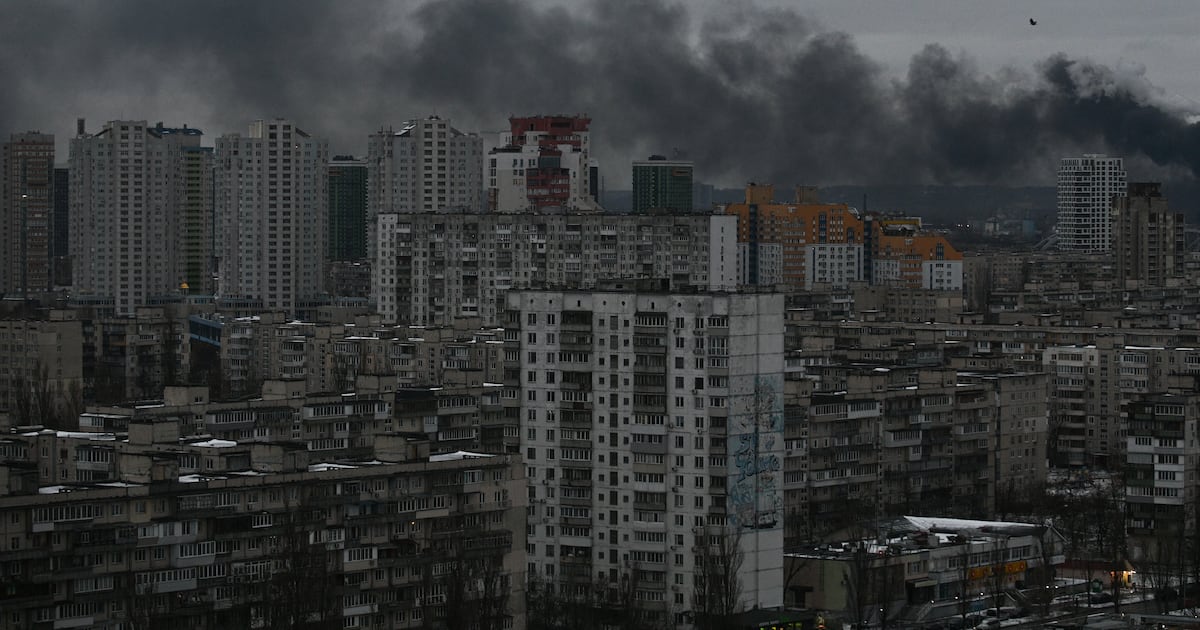
A third of Kyiv is without heating after a Russian drone and missile barrage on the Ukrainian capital cut off power supplies, leaving hundreds of thousands of people facing freezing temperatures.
Ukraine’s president, Volodymyr Zelenskiy, said Moscow had used nearly 500 drones and 40 missiles, including ballistic missiles, in the overnight attack. “The primary target is Kyiv – energy facilities and civilian infrastructure,” he said in a post on X.
The intense overnight strikes, which lasted 10 hours and killed one person and wounded two dozen others, came before a call on Saturday between European leaders and Zelenskiy.
The call is part of a growing push for a peace deal that will involve the Ukrainian leader heading to Florida on Sunday for a face-to-face meeting with Trump, who has proposed a plan to end nearly four years of fighting that has killed tens of thousands.
But Zelenskiy said the overnight bombings showed international pressure on Russia was insufficient. “If Russia turns even the Christmas and new year period into a time of destroyed homes and burned apartments, of ruined power plants, then this sick activity can only be responded to with truly strong steps,” he said. “The United States has this capability. Europe has this capability. Many of our partners have this capability. The key is to use it.”
The European Commission president, Ursula von der Leyen, will take part in the call with Zelenskiy and European leaders on Saturday, a commission spokesperson told Reuters. Key sticking points include Ukrainian security guarantees and reconstruction, plus territorial discussions regarding the Donbas region and the Zaporizhzhia nuclear power plant.
[ Russian drones and missiles pound Ukraine before Zelenskiy-Trump meetingOpens in new window ]
Sunday’s meeting with Trump in Florida is “specifically intended to refine things as much as we possibly can”, Zelenskiy said on Friday. He added that a proposed 20-point peace plan was “90% ready”. “Our goal is to bring everything to 100%,” Zelenskiy said. “As of today, our teams – the Ukrainian and American negotiating teams – have made significant progress.”
Zelenskiy is willing to hold a referendum on a peace plan if Russia agrees to a ceasefire of at least 60 days, Axios reported, after an interview with the Ukrainian president on Friday. Zelenskiy reportedly said he would need to seek approval of the Ukrainian public if he failed to secure a “strong” position on territory.
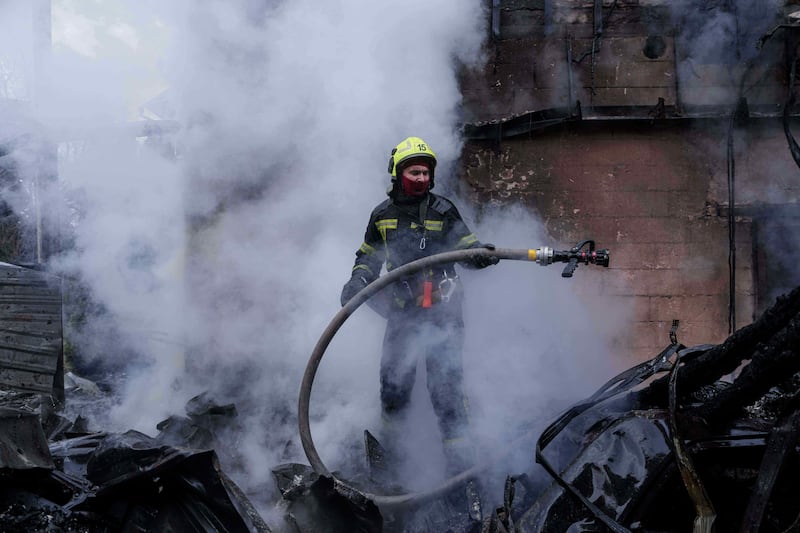 A rescue worker puts out a fire in a house destroyed in a missile strike. Photograph: Evgeniy Maloletka/AP
After the strikes on Saturday, Ukraine’s foreign minister, Andrii Sybiha, said Russia’s “only response to peace efforts” was “brutal attacks using hundreds of drones and missiles against Kyiv and other cities and regions”. The minister said that a third of the capital was without heating. The temperature in Kyiv was about 0C (32F).
The Russian strikes forced Polish fighter jets to scramble, and two airports in south-eastern Poland – Rzeszów and Lublin – were temporarily closed.
The latest peace efforts follow a burst of diplomatic activity last weekend in Miami, where Trump’s envoy Steve Witkoff met separately with Russian and Ukrainian representatives, as well as Trump’s son-in-law Jared Kushner.
The plan is considered an updated version of an earlier 28-point document agreed several weeks ago between the US envoys and Russian officials, a proposal widely viewed as skewed towards the Kremlin’s demands.
Ukraine has pushed for security guarantees modelled on Nato’s article 5 mutual defence pledge under any proposed peace deal with Russia, though it remains unclear whether Moscow would accept such terms.
In an interview with Politico on Friday, Trump said he anticipated a “good” meeting with the Ukrainian leader, though he offered no endorsement of Zelenskiy’s plan. “He doesn’t have anything until I approve it,” Trump told the news website. “So we’ll see what he’s got.”
The Russian deputy foreign minister, Sergei Ryabkov, used a Russian television appearance on Friday to criticise Zelenskiy and European allies on their work on the peace plan. “Our ability to make the final push and reach an agreement will depend on our own work and the political will of the other party,” Ryabkov said.
He said the proposal drawn up with Zelenskiy’s input “differs radically” from points initially drawn up by US and Russian officials in contacts this month. “Without an adequate resolution of the problems at the origin of this crisis, it will be quite simply impossible to reach a definitive accord,” Ryabkov added. – Guardian