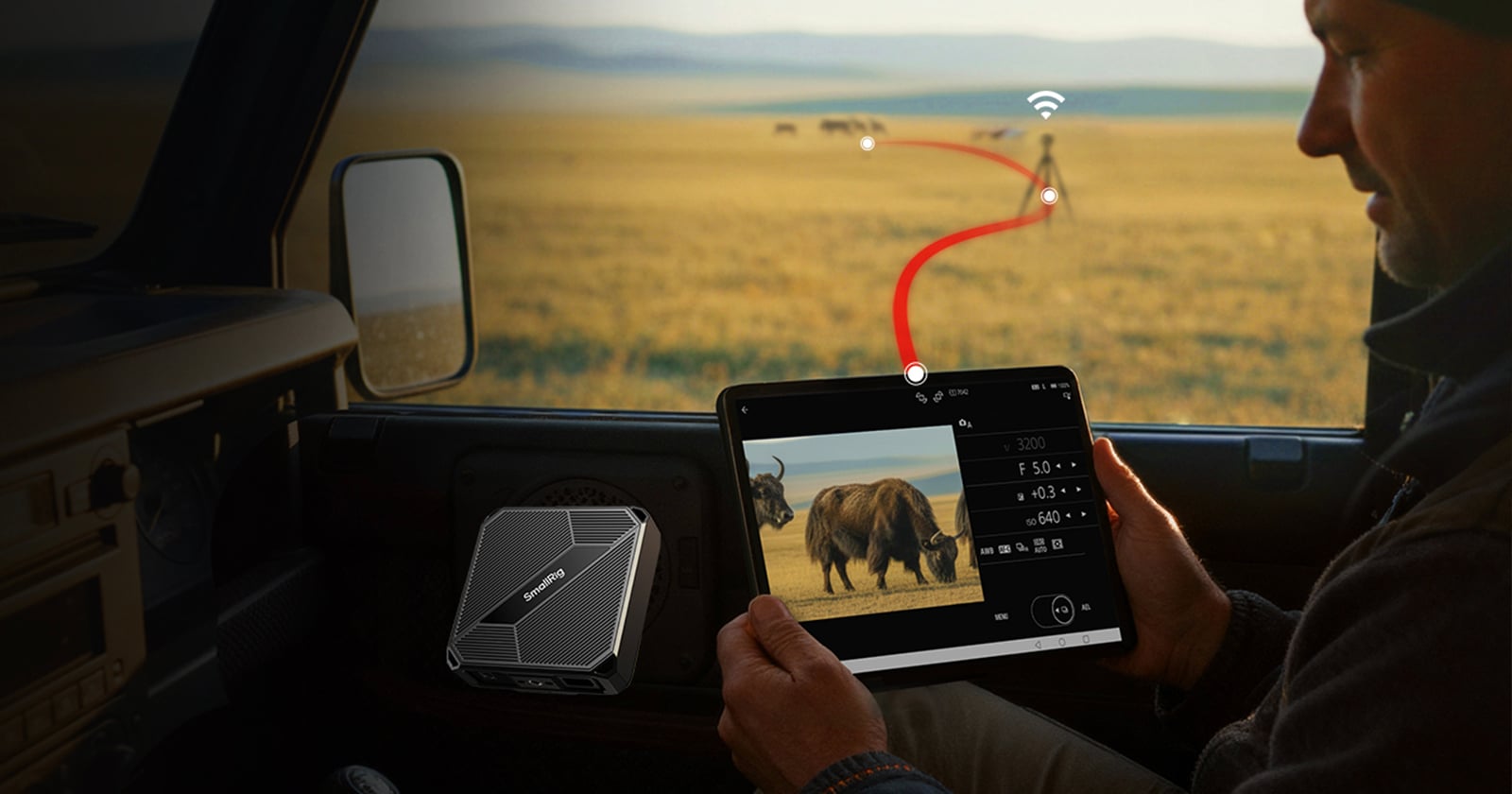
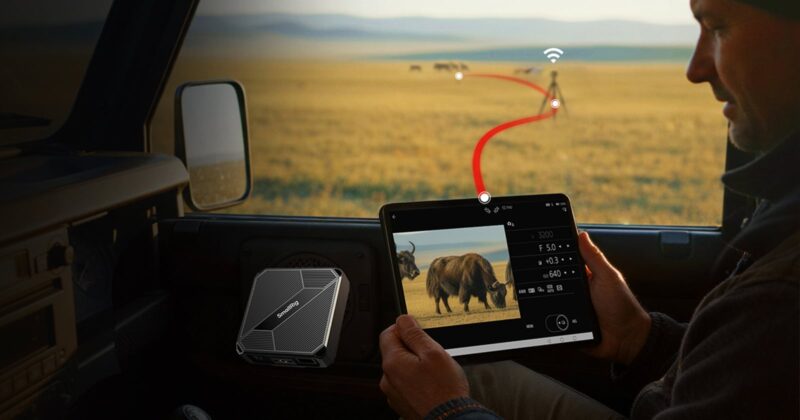
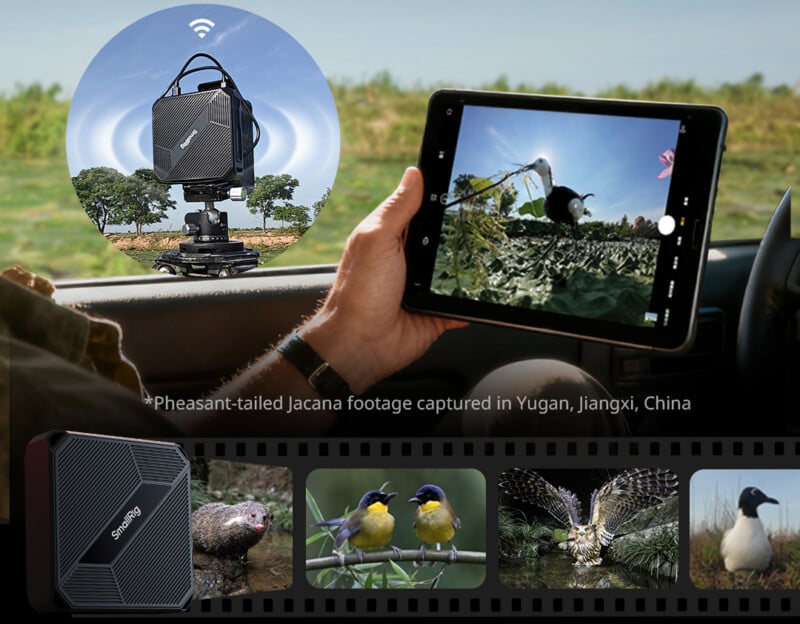
For wildlife photographers, distance has always been both a necessity and a limitation. Get too close, and the subject disappears. Stay too far away, and the image loses intimacy. SmallRig is attempting to rethink that balance with the launch of the Remote Wildlife Pro Wireless Repeater, a long-range Wi-Fi hub designed to give photographers control over cameras placed deep in the field while they remain hundreds of meters away.
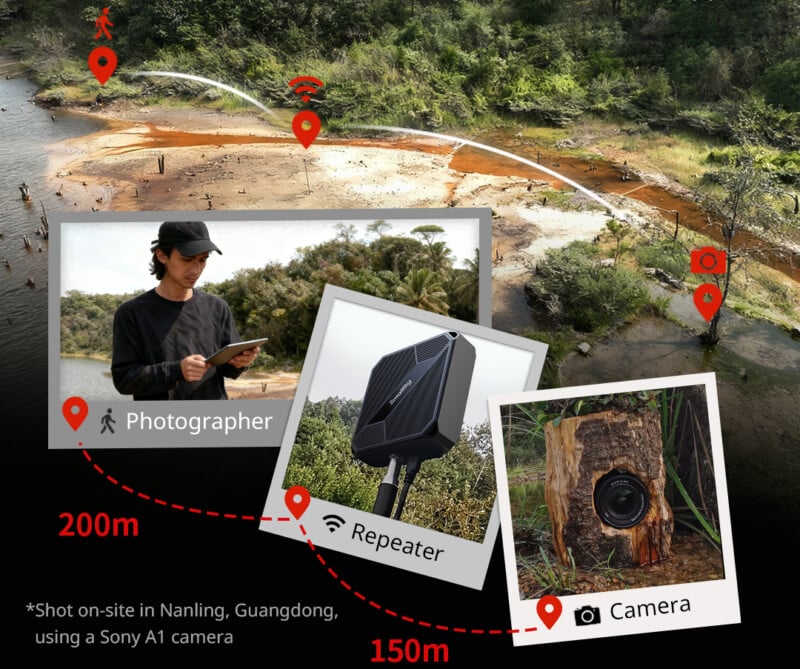
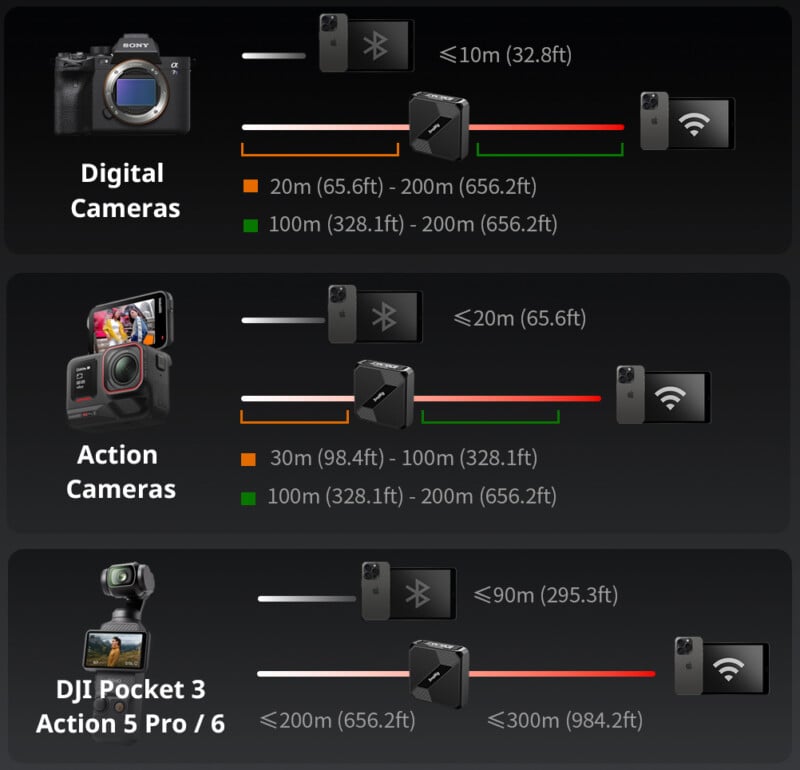
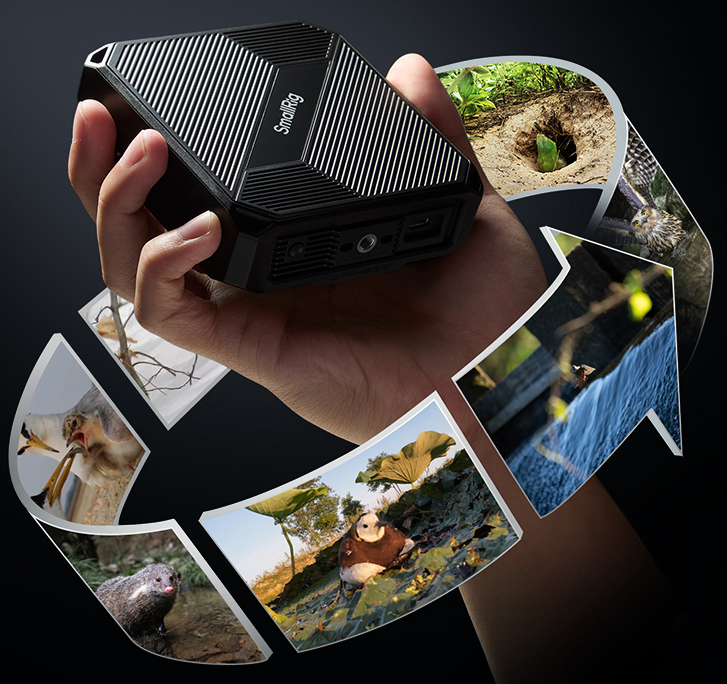
The Remote Wildlife Pro is, at its core, a wireless repeater built specifically for camera control rather than simple file transfer. By relying on Wi-Fi 6 instead of Bluetooth, it dramatically extends operational range while maintaining low latency. SmallRig lists a maximum control distance of up to 1640 feet (500 meters) under optimal conditions, a meaningful jump from the short-range wireless solutions typically bundled into modern cameras.
A Tool Built Around Minimal Intrusion
SmallRig is positioning the Remote Wildlife Pro squarely at wildlife shooters who rely on concealment, camera traps, or remote hides. The ability to operate cameras remotely reduces the need for physical presence near animals, lowering stress on subjects while increasing the odds of capturing natural behavior. At $149, it sits well below many dedicated wireless video systems while offering functionality explicitly tailored to wildlife and remote field shooting.
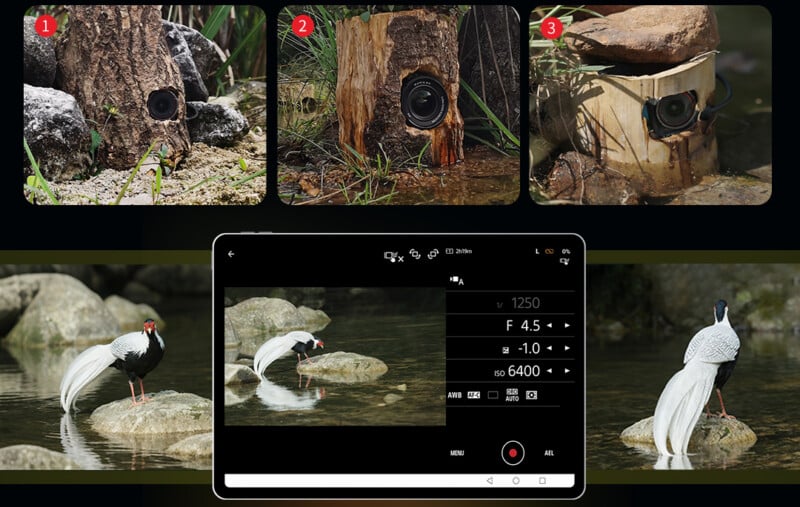
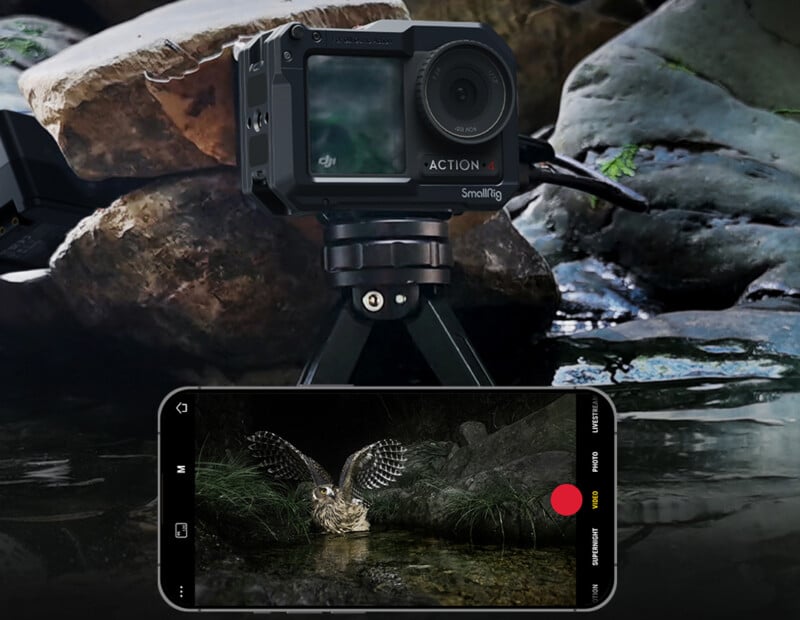
Unlike traditional remote triggers, the system enables complete app-based camera control through manufacturers’ native software. Photographers can adjust focus, exposure parameters, zoom, and switch between photo and video modes in real time, while monitoring a live feed on a smartphone or tablet connected to the shared Wi-Fi network.
The repeater is compatible with cameras from Sony, Canon, Nikon, Panasonic, DJI, and Insta360, though it does not support Fujifilm cameras, a limitation that will matter for some shooters.
Speed, Sync, and Multi-Camera Workflows
Latency is rated at 0.06 seconds, which SmallRig says is fast enough to capture fleeting moments, such as birds taking flight or animals breaking cover. On-demand recording allows shooters to trigger capture only when needed, helping preserve battery life and storage, particularly useful when cameras are deployed for long periods.
One of the more ambitious features is multi-camera synchronization. The Remote Wildlife Pro supports networking up to five devices, enabling one-to-many or many-to-many control for multi-angle coverage. This opens up documentary-style workflows where photographers or filmmakers can place cameras at ground level, in trees, or near water sources and trigger them simultaneously.
There are caveats. Mirrorless cameras support one-to-many pairing, while action cameras are limited to one-to-one connections, meaning real-world compatibility depends heavily on the specific camera ecosystem in use.
Designed for the Field
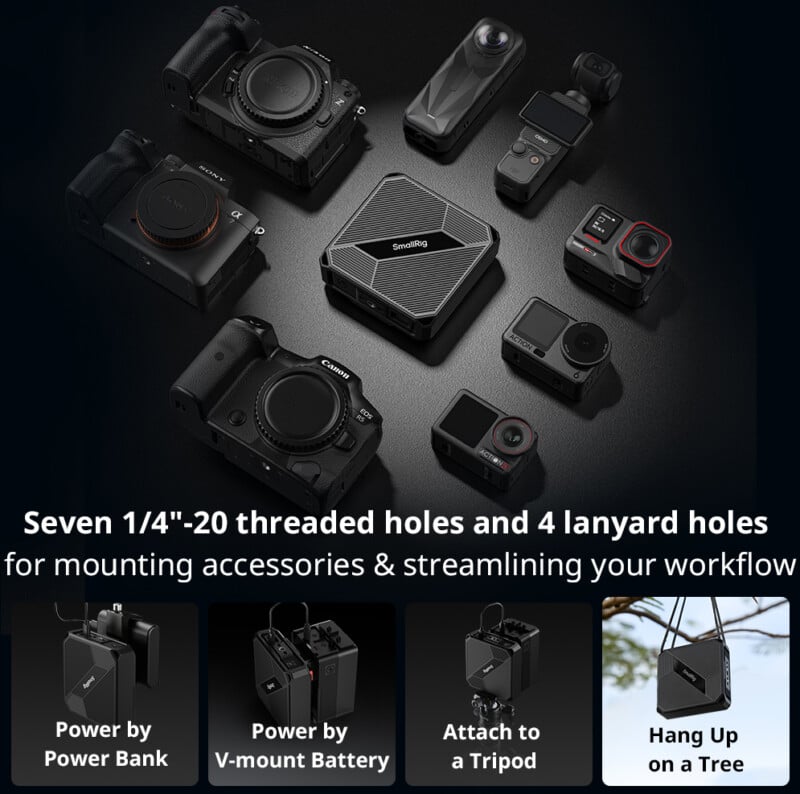
Weighing 7.7 ounces (218 grams), the repeater is compact enough to carry on long hikes and consumes approximately 3 watts of power. It can be powered by standard USB power banks or mounted to a mini V-lock plate for more robust battery solutions. SmallRig estimates around 10 hours of operation when paired with a 10,000 mAh power bank.
Seven 1/4″-20 threaded mounting points on the body allow flexible placement on tripods, clamps, or custom rigs, and the device operates across a wide temperature range from -40°F to 140°F (-40°C to 60°C), reinforcing its outdoor focus. Somewhat unexpectedly, SmallRig also notes that the repeater can double as a home Wi-Fi signal booster when not in the field.
However, unlike pricier camera traps, the unit is not waterproof, and SmallRig advises users to elevate the repeater and keep it clear of obstructions for the most stable signal. This could be a major issue for some wildlife photographers.
A Shift Away From Telephoto Dependence
SmallRig frames the Remote Wildlife Pro as a way to lower the barriers to wildlife photography, a genre long dominated by large, expensive telephoto lenses and physically demanding field techniques. By enabling photographers to work with wide-angle, mirrorless, and action cameras placed close to subjects, the company is advocating for a different creative approach, one that prioritizes perspective, storytelling, and reduced intrusion over brute optical reach.
Whether the Remote Wildlife Pro becomes a staple tool will depend on its real-world reliability and camera compatibility, but its arrival signals growing interest in remote-first workflows for photographers who want to get closer to wildlife without flushing it or altering its natural behavior.
Pricing and Availability
The SmallRig Remote Wildlife Pro Wireless Repeater is shipping now worldwide, with U.S. availability beginning December 29, priced at $149.
Image credits: SmallRig