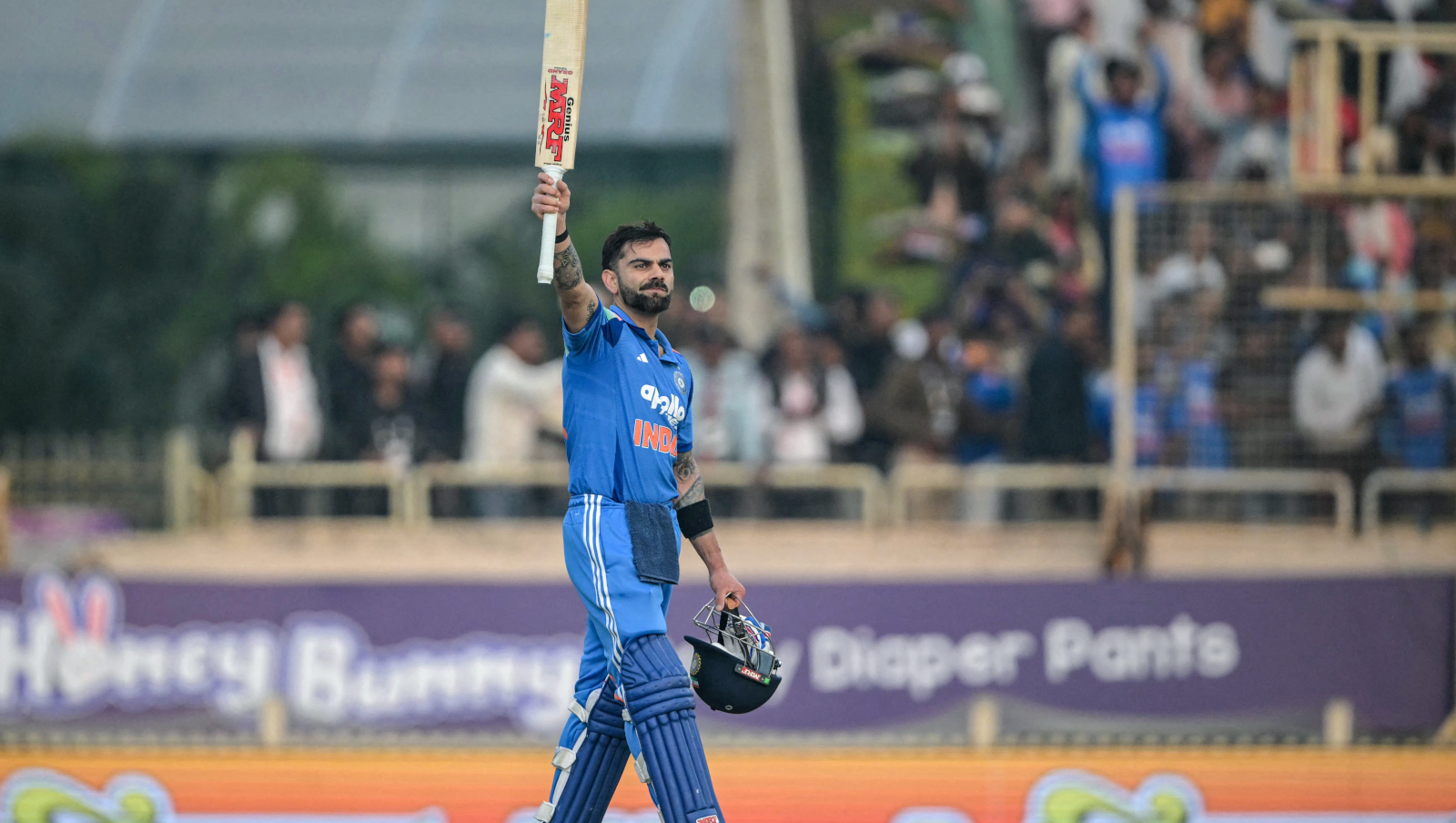
There has been plenty of outstanding ODI cricket played in 2025 with the year starting with the ICC Champions Trophy in Pakistan and continuing from there.
Although the 50-over format is not as widely played as it was before the advent of T20I, it is still a key part of the annual schedule and a unique format of the game.
The days when a national team was the best eleven players and they played all formats has long gone, such is the level of differentiation between the three different formats.
With that in mind, here is our selection for the best ODI eleven based on performances from 2025.
1. George Munsey (Scotland)
- Runs: 735
- Strike rate: 107.45
- Average: 73.50
Few players in world cricket have enjoyed a breakout year of such scale as George Munsey. Scotland’s left-handed opener has long been a formidable presence in T20Is, but in 2025 he transferred that explosiveness seamlessly to the 50-over arena.
His tally of 735 runs at an average above 70 reflects both consistency and intent, and the strike rate north of 100 underlines his ability to dominate even in situations that traditionally reward patience.
While he may only be playing for an associate nation such has been the volume of runs, he has scored and the incredible average, that it is hard to leave him out. Munsey’s success highlights the growing competitiveness of Associate cricket.
He produced several defining innings against Full Member nations, repeatedly giving Scotland the robust starts that made them a difficult side to pry open.
For a role often dominated by household Test names, Munsey’s inclusion is a reminder of the expanding ODI ecosystem and the players who are driving it.
2. Rohit Sharma (India)
- Runs: 650
- Strike rate: 100.46
- Average: 50.00
Rohit Sharma’s reputation as one of the modern ODI greats remains intact following another year of high-quality run-scoring. His ability to bat long, absorb pressure and shift tempo without apparent effort was a cornerstone of India’s year.
While he has retired from Test and T20 cricket Rohit’s one-day game remains wonderfully classical: crisp timing, authoritative pull shots and a method built for 50-over pacing.
His 650-run haul came in a year when India were continually adjusting their combinations, but Rohit supplied the stability they needed at the top.
He also saved his best for high stakes matches, including key contributions in the Champions Trophy and against South Africa. Rohit’s strategic nous as a senior opener continues to make India’s top order one of the most accomplished in the world.
3. Virat Kohli (India)
- Runs: 651
- Strike rate: 96.15
- Average: 65.10
A year that began with debates about Kohli’s long-format future ended with another ODI masterclass. Scoring 651 runs at an average exceeding 65, Kohli reaffirmed his status as the format’s most reliable chaser and builder of innings.
His strike rate, near 100, reflects the subtle, risk-managed acceleration that has become his hallmark.
Kohli’s performances during the Champions Trophy were especially crucial, blending composure with precision in conditions that often-challenged stroke play.
When India required control through the middle overs, Kohli delivered, and when they needed impetus, he supplied that too. His continued mastery of pacing an innings cements him at No 3 in this XI.
4. Shai Hope (West Indies, wicketkeeper)
- Runs: 613
- Strike rate: 103.02
- Average: 55.72
Shai Hope’s transformation from a classical accumulator to a modern ODI aggressor has been one of the stories of 2025. With more than 600 runs and a strike rate above 100, he has pushed the West Indies into a new era of 50-over cricket, marrying stability with controlled intent.
Behind the stumps, he provides reliability, and with the bat he remains one of the most balanced ODI players in the world. His finishing power and calm under pressure played a central role throughout the year.
There have been plenty of outstanding performances in 2025 from batsmen at number four – South Africa’s Matthew Breetzke had a breakthrough season and became the first ever player to pass 50 in each of his first five innings.
But such has been Hope’s form that he makes the side.
Also read: Cricket’s bromances – 7 duos who have played together the most
5. Salman Agha (Pakistan)
- Runs: 647
- Strike rate: 94.31
- Average: 53.91
Salman Agha has become one of Pakistan’s most essential middle-order batters across formats, but his ODI output in 2025 was particularly striking.
With nearly 650 runs at an average comfortably above 50, he bridged the gap between Pakistan’s top order and their often-inconsistent lower middle.
Salman’s greatest attribute is adaptability. He can anchor, rebuild or accelerate depending on the game’s rhythm, and his technique proved especially valuable during the Champions Trophy, where Pakistan’s surfaces demanded craft and concentration.
His ability to manipulate spin and rotate the strike ensures this XI remains balanced through the middle overs.
6. Glenn Phillips (New Zealand)
- Runs: 353
- Strike rate: 115.35
- Average: 70.60
Glenn Phillips brings the explosiveness that every modern ODI XI needs. His aggregate of 353 runs batting at six, may not match some of the top-order tallies, but his role and impact were immense.
With a strike rate above 115 and an average over 70, Phillips repeatedly delivered quick-fire counterpunches that changed the trajectory of matches.
Equally important is his versatility. Phillips can bat anywhere from No 5 to No 7, adapt to match scenarios and contribute with excellent fielding.
His power hitting at the death phase was central to New Zealand’s competitiveness in 2025, particularly when their senior players rotated in and out of the squad. Handy with the ball as well, Phillips is good for a few overs.
7. Azmatullah Omarzai (Afghanistan)
Bowling
- 14 wickets
- Strike rate: 18.3
- Average: 16.21
Batting
- 189 runs
- Strike rate: 98.41
- Average: 31.00
Azmatullah Omarzai strengthens this XI as a genuine all-round option, offering incisive seam bowling and valuable lower-order batting.
His bowling numbers tell the story: 14 wickets at an average barely above 16 and a strike rate of 18.3 mark him as one of the most efficient middle-overs operators of the year.
With the bat, he supplied stability and power, often rescuing Afghanistan after collapses or lifting them to competitive totals. His emergence mirrors Afghanistan’s continued growth in ODI cricket, where they now possess both skill depth and tactical clarity.
Omarzai’s contributions in tight matches stood out, making him a natural fit in this side. He is currently the top ranked ODI allrounder and, along with Mitchell Santner, adds useful balance to our side.
8. Mitchell Santner (New Zealand, captain)
Bowling
- 25 wickets
- Strike rate: 35.20
- Average: 26.84
Batting
- 162 runs
- Strike rate: 135.00
- Average: 32.40
Mitchell Santner had one of his most complete ODI years. His left-arm spin brought crucial control, offering wickets in the middle overs and a miserly economy that strangled opposition batting plans.
Taking 25 wickets at a healthy average, he remained New Zealand’s most reliable spin option.
But his batting was arguably just as impactful. With a strike rate of 135 and the ability to clear the rope at will, Santner became a genuine threat at No 8.
His finishing skills added depth to New Zealand’s lower order, and his calmness under pressure makes him indispensable to this XI. Having done a great job in leading New Zealand to second place in the ICC ODI rankings, Santner gets the job of leading our XI.
9. Jaden Seales (West Indies)
Wickets: 27
Strike rate: 18.9
Average: 18.14
Jaden Seales produced one of the standout fast-bowling years in ODI cricket. His raw pace, tight lines and improved tactical nous brought him 27 wickets at a remarkable average of just over 18.
What made Seales especially effective was his ability to strike early; he repeatedly broke opening stands as he set the tone for West Indies’ bowlers.
Seales also demonstrated growing maturity in the death overs, an area where the West Indies have historically struggled. His strike rate of 18.9 reflects his ability to influence matches across phases, and he forms the perfect spearhead for this XI’s pace attack.
10. Matt Henry (New Zealand)
- Wickets: 31
- Strike rate: 21.50
- Average: 18.58
Matt Henry continues to be one of the world’s premier ODI seamers, and 2025 added further weight to that reputation. With 31 wickets at an average below 19, he delivered one incisive spell after another.
Henry’s new-ball precision remains his defining strength: movement both ways, impeccable control and the knack for targeting the top of off stump.
He was equally effective in the middle overs when asked to hold an end or search for breakthroughs. Henry’s consistency was vital for New Zealand across conditions, and he forms the backbone of this attack.
11. Adil Rashid (England)
- Wickets: 30
- Strike rate: 24.10
- Average: 23.63
No ODI side feels complete without a world-class leg spinner, and Adil Rashid continues to fit that role perfectly. Even as England cycled through new personnel, Rashid remained their most potent wicket-taking threat in the middle overs.
His variations, drift and control brought him 30 wickets at a fine average of 23.63.
Rashid’s ability to turn a match on its head is invaluable. Whether breaking partnerships or attacking aggressively, he gives this XI a point of difference that complements the pace trio beautifully.
Even in challenging conditions, he held his nerve and delivered, proving once again why he remains one of England’s most trusted one-day cricketers.
Read next: The 9 mega brands behind Virat Kohli’s extreme wealth