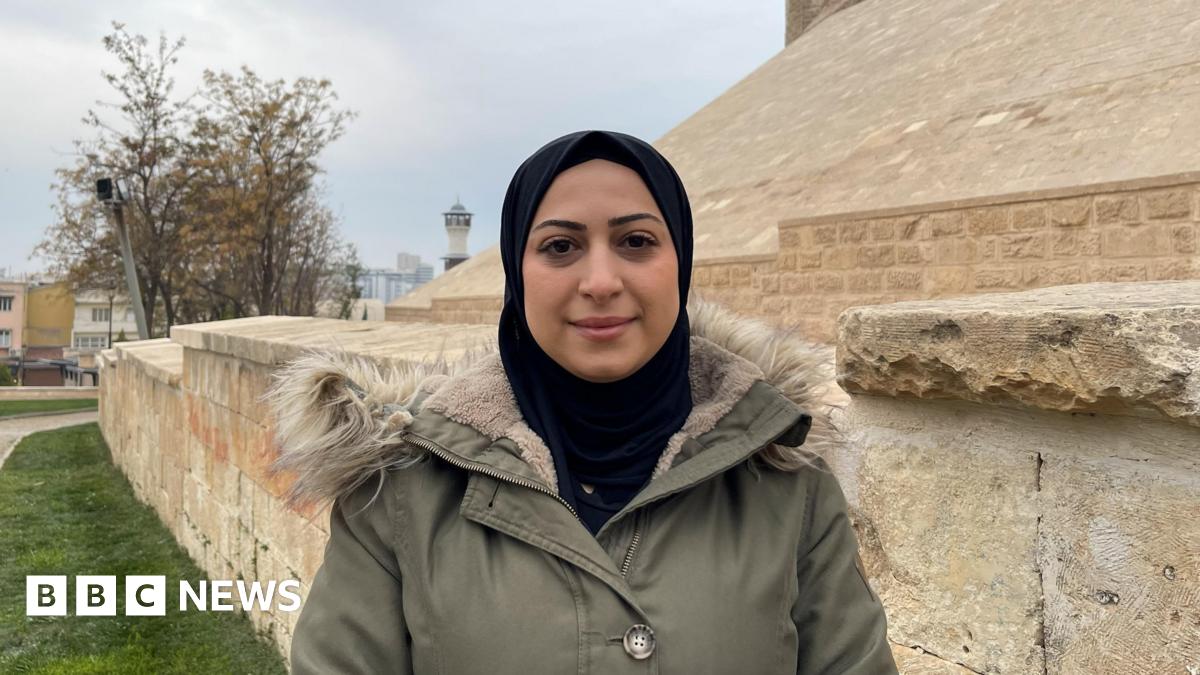
Aya Mustafa, 32, is eager to leave – but not yet. We meet under a winter sun by the stone walls of a castle, which has towered over Gaziantep since the Byzantine era. Her hometown, Aleppo, is less than two hours’ drive away.
She says going back is a constant topic of conversation in the Syrian community.
“Every day, every hour, we speak about this point,” says Aya, whose family were lawyers and teachers back home, but had to start again in Turkey, baking and hairdressing to earn a living.
“We are talking about how we can return, and when, and what we can do. But there are many challenges, to be honest. Many families have children who were born here and can’t even speak Arabic.”
Then there is the level of destruction in new Syria – where war has done its worst – and where the interim president, Ahmed Al Sharaa, is a former senior leader of Al Qaeda who has worked to reinvent his image.
Aya saw the ruins of Aleppo for herself when she went back to visit. Her family home is still standing but now occupied by someone else.
“It’s a big decision to go back to Syria,” she says, “especially for people with elderly relatives. I have my grandmother and my disabled sister. We need the basics like electricity and water and jobs to survive there.”
For now, she says, her family can’t survive in Syria, but they will return in time.
“We believe that day will come,” she says, with a broad smile. “It will take some years [to rebuild]. But in the end, we will see everyone in Syria.”