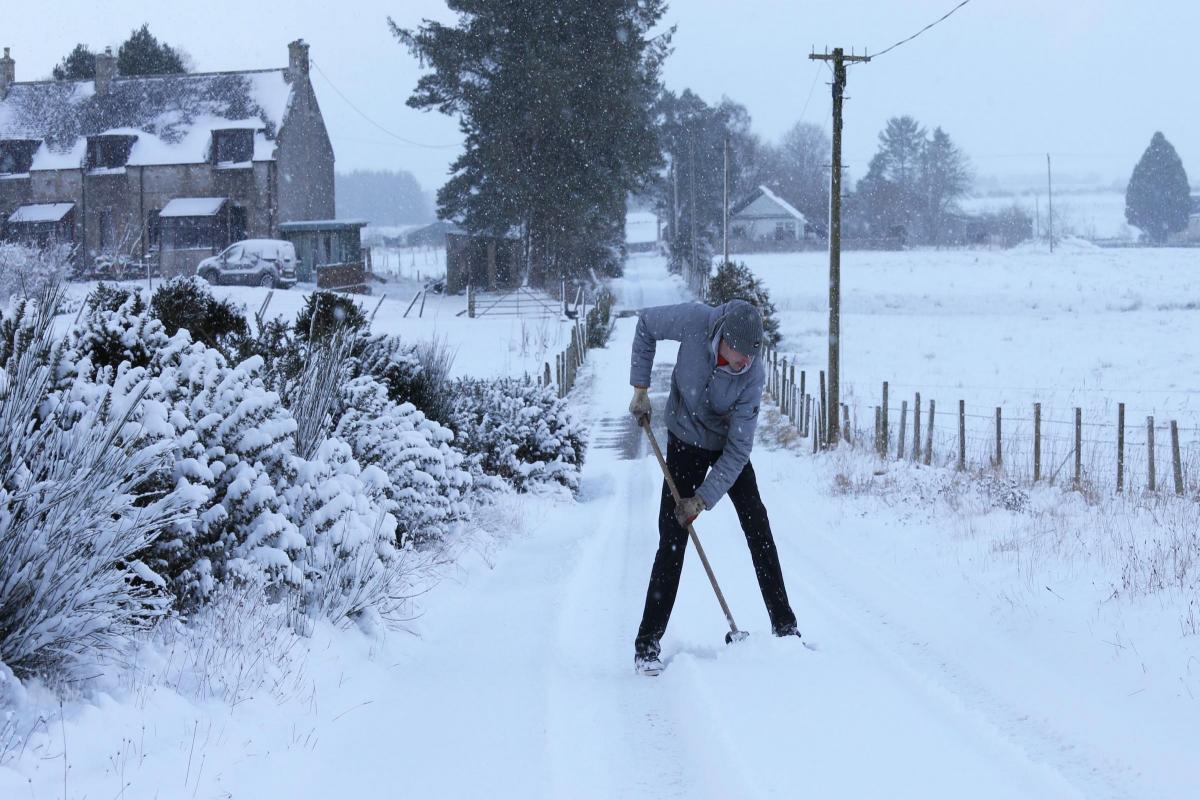
Heavy snow showers are on the way across parts of Scotland with a weather warning issued by the Met Office.
A yellow alert for snow and ice has been put in place from 6am on New Year’s Day until midnight on January 2, covering all parts of the country north of Perth.
The Met Office said the yellow warning for snow and ice means “frequent and heavy snow showers may lead to some travel disruption”.
By Friday morning, the Met Office is predicting 2-5cm of snow, with 10cm in certain local areas and 10-20cm in some areas above 200m.
On the highest routes and hills, 30cm or more may build through the period, the forecaster added.
The Met Office said the final days of 2025 will not be “particularly fantastic”, with temperatures of 7-8C, but things will take a turn as 2026 arrives.
Read More:
Northern parts of the country are expected to bear the brunt of the chillier conditions from January 1 onwards, with brisk winds bringing increasingly wintry showers to the north as the week progresses.
Forecaster Dan Stroud said: “We’re losing this sort of settled but chilly conditions, and bringing in something a little bit more showery with more wintry hazards in the forecast, particularly for the north of the country.”
The colder conditions and wintry hazards will develop more widely in the new year, with more warnings for snow and ice likely, the Met Office said.
Met Office deputy chief forecaster Mark Sidaway said: “It certainly looks like we are in for a taste of ‘winter’ as we welcome in the new year, initially in the north, but more widely across the UK for the first week of 2026.
“Arctic air and strong northerly winds will bring cold or very cold conditions to all parts of the UK, and it will feel especially cold in the strong winds. Widespread and locally severe frosts are expected, along with the first snow of the winter for many.
“A yellow warning for snow and ice has been issued for northern Scotland on New Year’s Day and beyond, where frequent and heavy snow showers may lead to some travel disruption.
“These colder conditions and wintry hazards – snow, ice and strong winds – will develop more widely as we enter the new year, with more warnings for snow and ice likely. It looks like this cold spell will last through at least the first week of January, so it’s important people keep up to date with the latest forecast and warnings.”