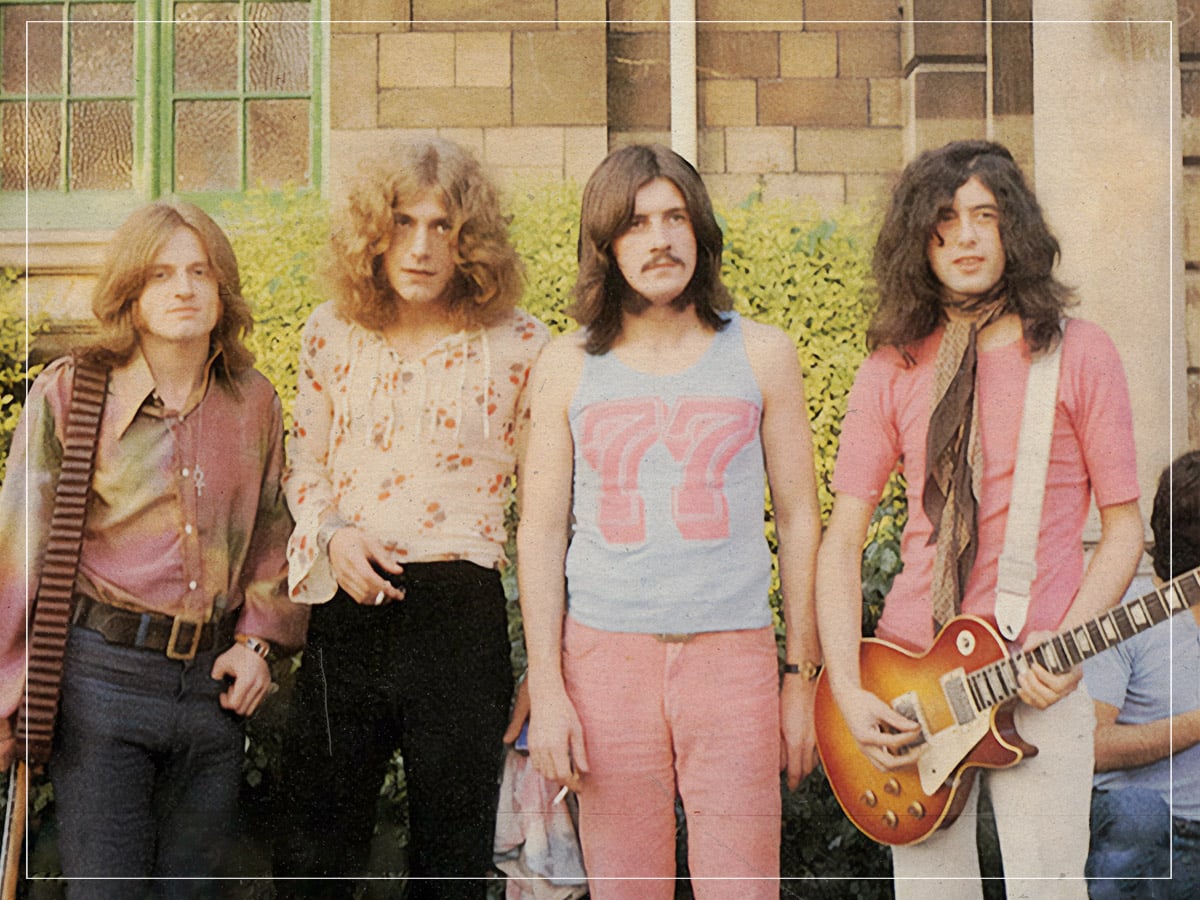
Credits: Far Out / ©2025ParadisePicturesLtd
Mon 29 December 2025 20:45, UK
There were only two ways to experience Led Zeppelin’s powerhouse classic rock.
First was live. A fiery burnishing of each member’s musical alchemy, from Jimmy Page’s effortless guitar virtuosity, John Bonham’s thunderous drumming heft, John Paul Jones’ exotic polymath instrumentalism, and frontman Robert Plant’s bare-chested gyrating bellow, cemented the classic rock template still enduring in the popular impression of exactly what the 1970s rock archetype looks like. Along with The Who and The Rolling Stones, Led Zeppelin stood as the world’s premier live act during their pomp.
The other flip to their essentiality was the LP. Landing at the tail end of the 1960s counterculture, the album as an art form had been truly realised, the apex of any artist’s creative expression in the era when singles had long lost their cache. Such a climate was perfect for Led Zeppelin. Crafting transportive experiences with each record, the band’s classic album run sat in the rock canon with a mystical aura, packed with weighty escapism and traversal beckoning on each side of vinyl.
With so much mystique resting on their live prowess and vinyl offerings, naturally, much of the music industry’s other avenues were reluctantly met by Led Zeppelin. Too mammoth in aura to be confined to TV studios, and conceptually looking far beyond the Hot 100, the quartet always kept their appearances off the stage sparing, rightly deeming their brand too gargantuan an outfit to be stuffed into much of the day’s music programmes.
“We decided we didn’t have to do all of those pop shows if we didn’t do singles,” Jones told Classic Rock. “Some places in the early days you had to…We were never really part of the pop scene, though. We were thinking about other things. We had just started out and were in the same boat as everyone else – we hadn’t become successful yet – but doing pop shows on TV just wasn’t us; it was never what Led Zeppelin was supposed to be about. Our thing was always playing live.”
Singles were released reluctantly by the band; many of their biggest hits were promo-only for FM radio benefit, including their immortal ‘Stairway to Heaven’. Lauded numbers like ‘Kashmir’ or ‘When the Levee Breaks’ stand taller amid their holy records, just not finding a suitable home outside of the respective apartment blocks on Physical Graffiti or the weathered thatcher from 1971’s untitled LP effort.
Then there’s the TV shows. While Led Zeppelin could no doubt have pulled off a decent slot for The Old Grey Whistle Test, the BBC’s flagship muso show still feels too staid and stilted to fully translate their power. And what of Beeb’s Top of the Pops? Despite nicking their ‘Whole Lotta Love’ for its theme—played by budget imitators CCS—primitive solarisation effects and stiff superimposition may well have held a nostalgic charm, but miming to a studio track was a million miles removed from what made the Zeppelin behemoth so special.
“It was the era, perhaps, as much as anything,” Jones concluded. “What we were doing was regarded as underground music. The kind of celebrity that doing pop TV and having lots of hit singles brings was simply not a part of what we did or who we were as a band.”
He furthered, “There’s nothing wrong in paying the rent. But I know, personally, that I just didn’t want to do that. That wasn’t the way I wanted to make my way in my own musical life. If I was going to join a band it was to do music that I wanted to do – and not compromise.”
Related Topics
The Far Out Led Zeppelin Newsletter
All the latest stories about Led Zeppelin from the independent voice of culture.
Straight to your inbox.