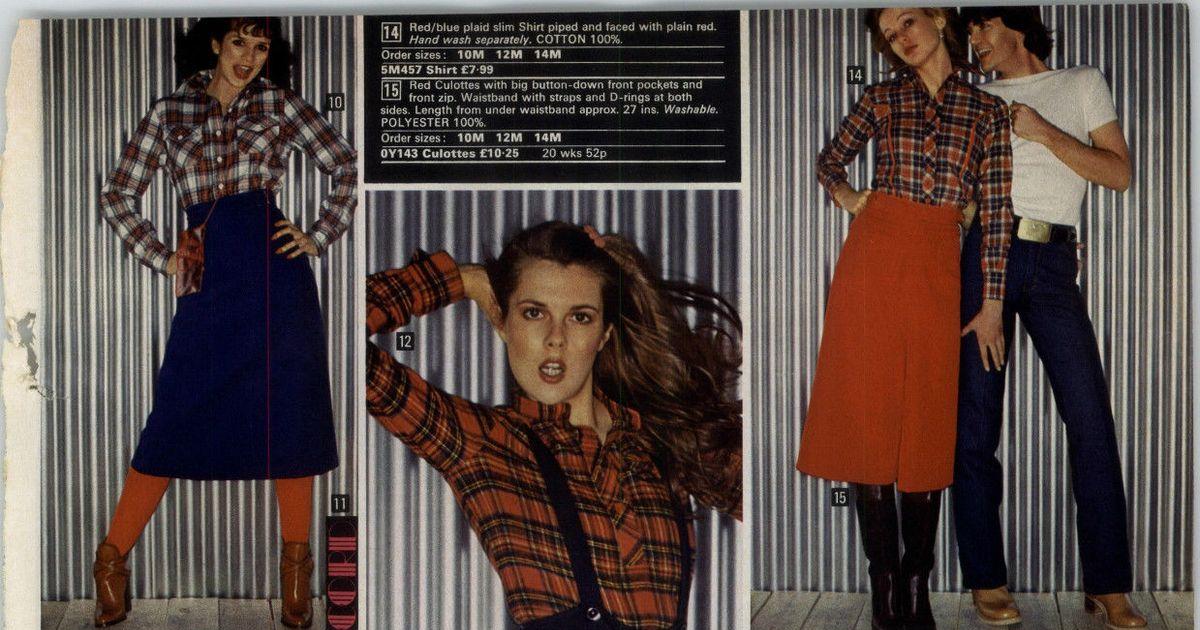
In the Seventies and Eighties, if you couldn’t get to the shops to buy clothes or electrical goods a mail order catalogue was the only option.
Grattan pioneered the ‘shop from home’ concept and if it had been quicker to spot the retail possibilities of online shopping, who knows, perhaps today we would be talking about Grattan rather than Amazon?
There was a time when almost every home in every street in Bradford had either an Empire Stores or Grattan catalogue.
Catalogue shopping was one of the few forms of interest-free credit available to the working classes – largely industrial and agricultural workers.
Grattan was established on Manchester Road in 1912, the year after Bradford City won the FA Cup. There is a connection. The trophy was designed in Bradford at Fattorini’s and Grattan’s grew out of John Fattorini’s book clubs. Famously, Fattorini set up Grattan after falling out with his cousin who operated the Empire catalogue business.
These clubs were established to increase the purchasing power of ordinary folk – and do manufacturing and retailing a bit of good too.
Buying, making and selling made Bradford grow.
Grattan catalogues were a lifeline for people who couldn’t get out (Image: Grattan)
By the 1990s Grattan was the UK’s fourth largest catalogue company with 13% of the mail order market.
The company’s electronic customer database, run from a secret location in Bradford, was the envy of the retail world.
It was used to help establish a fast growing youth fashion retailer in the mail order market – a business that became the Next Directory.
Staff at Grattan headquarters. (Image: Grattan)
Next paid £300m for the business in 1986 and immediately got its hands on Grattan’s electronic mail order expertise.
Back in 2009, former Lord Mayor of Bradford Stanley King told the T&A how, when he was a boy in the 1950s, the shopping habits of people were very different to what they have subsequently become.
He said: “If you look in the directories of that time you’ll be astounded at the number of shops Bradford had. Some were chain stores such as Hansons the grocers and Economic Stores of Halifax; plus there were loads of family-run stores.
A page from a Grattan catalogue (Image: Grattan)
“Gradually they were run out of existence by larger stores and then annihilated by supermarkets. A tremendous number of jobs were lost; but Empire Stores and Grattans created new jobs, so it was swings and round-abouts.”
When J B Priestley’s satirical comic play When We Are Married had its premiere at Manchester Opera House on September 19, 1938, a good many of the domestic comforts of married life flowed from illustrated catalogues.
This continued to be a way of life for thousands of people in the city, in spite of occasional fluctuations in trade and until the Empire Stores catalogue was discontinued by French parent company Redcats in 2008.
Eileen Gunn, of Heaton, had been a regular Grattan catalogue shopper for 43 years.
Back in 2009, she told the T&A: “It was my auntie who started me off really. She always had a Grattan catalogue and there was always something you wanted. I certainly don’t get everything from them but I have found it handy. I am an agent but I don’t have any customers, I only have it for myself.
“I find it easy because it’s delivered to your door. If it’s bulky it’s difficult for me to carry. I use it mainly for birthdays and Christmas or for the garden. I have no set pattern. Depends on what I see.
“I do like looking through the catalogue but I do think Grattan focuses too much on the younger end of the market; perhaps they should have a bit more choice for older people, in fashion I would say.
“I think I would miss my catalogue if it was stopped.
“I think fewer people shop like that now. Perhaps they shop around more than I do.”
Jacqueline Wakefield was also a catalogue shopper for ten years, mainly with Empire Stores, when her two daughters were small and the family lived near Peel Park.
“I had an agent at first, then I was persuaded to take a catalogue myself. I used it for Christmas and special occasions like birthdays.
“I stopped doing it because sometimes the clothes didn’t seem good quality or they weren’t the same that you saw in the catalogue. I have more time now to go shopping myself.”
But even 16 years ago times were changing.
For Mrs Wakefield catalogue shopping felt a bit redundant. She confessed to the T&A in 2009 that she liked to shop for books and DVDs online.
Between 1977 and 1982 former Bradford Chamber of Commerce president and businesswoman Judith Donovan was in charge of advertising at Grattan.
She said: “The sector is not dead. Grattan has been losing money for years, so it’s not just a credit crunch thing.”
In April 2004 Grattan’s former boss Mike Hawker told the T&A candidly: “Grattan does not have a successful history and has never really made huge profits. Even in the 1980s, it was losing money… We have moved from losing money to break-even point over the last few years.”
Judith Donovan said: “There were 5,000 staff when I was there – more than 3,500 in Bradford.
“The bedrock of catalogue culture was working-class credit when the wife had control of the family finances and wanted a bit of pin money in commission she could earn as an agent.”
But the idea that the business generated by Grattan and Empire Stores – fashion, photography, printing – stayed in Bradford is a myth.
As the world changed, Grattan had to change too. That meant sourcing from abroad where products could be made – and sold – for less. Catalogues were printed by Tap and Toothill’s in Leeds. Specialist printing was done elsewhere in the world. Eventually it was done in Italy.
Today Grattan still exists.
Where other catalogue companies have fallen by the wayside, Grattan has moved into online retailing.
It operates a popular online retailing business specialising in fashion, electrical, toys and leisure goods – a selection not so different from the old catalogue publishing days.
The company still has its registered office in Little Germany and retains links with the city where it all began more than a century ago.
- Do you have memories of Grattan? Did your parents buy from ‘the book’? Leave a comment below and share your thoughts.