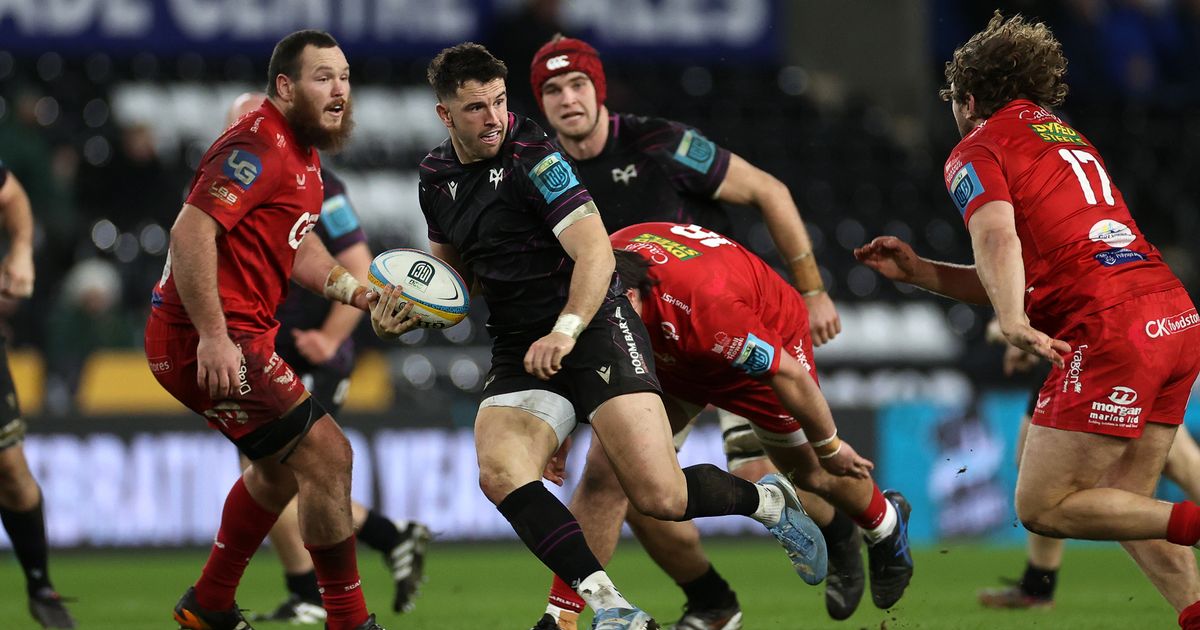
The midfield is an area Wales have struggled in of late and a reset is required in the Six Nations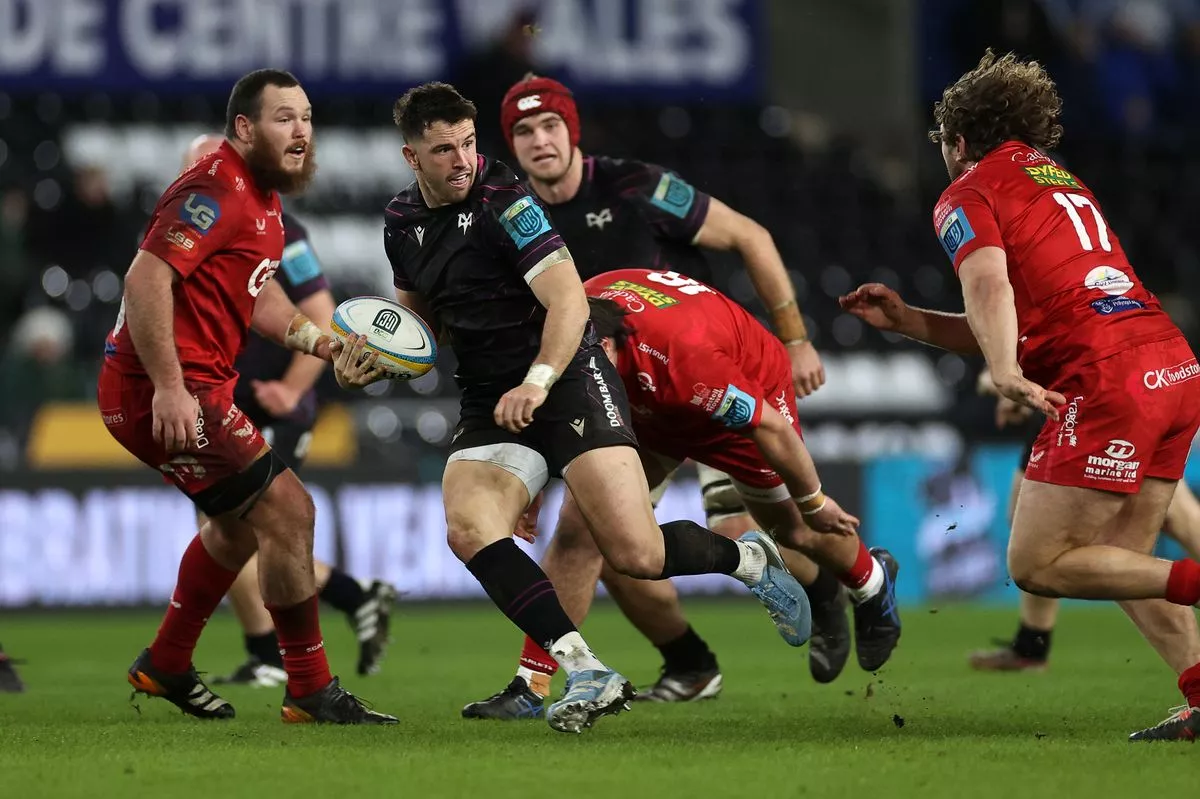 Ospreys and Wales centre Owen Watkin(Image: Chris Fairweather/Huw Evans Agency)
With the Six Nations rapidly approaching it is safe to say Wales head coach Steve Tandy has a plethora of areas in need of significant improvement after a difficult autumn which culminated in a 73-0 defeat to South Africa.
Strengthening the pack along with tightening up the defence – Wales conceded a combined total 200 points and 27 tries during the autumn – has to be Tandy’s priority. But finding the correct balance in midfield is also something which Wales have struggled with since the conclusion of the 2023 Rugby World Cup.
Max Llewellyn has been a regular in the number 13 jersey since the midway point of last season’s Six Nations and started the first three games of the autumn.
But the Gloucester centre has been ruled out until the “latter part” of the season, with a knee injury meaning Tandy has to find a replacement.
The return to fitness of experienced Ospreys centre Owen Watkin is very timely.
Watkin has not been available for selection under Matt Sherratt or Tandy to date after rupturing ligaments in his knee 11 months ago.
The 43-times-capped international was outstanding for the Ospreys in their 26-19 victory over the Scarlets on Boxing Day.
Wales’ defence leaked like a sieve during the autumn and Watkin’s point of difference is undoubtedly his ability to marshal the defence, while his reading of the game is very good.
The attack was far more enterprising than it had been for a while during the first three games of the autumn – with 11 tries scored – but Tandy must strengthen the fundamental areas of the game with regards physicality, defence and the aerial game.
The Six Nations opener against England at the Allianz Stadium has the potential to get very ugly for Wales, so it goes without saying they must tighten up in defence and become more difficult to beat.
Watkin is strong in defence, carries well and makes good decisions but arguably does not have the cutting edge in attack as other outside centres in the Six Nations.
Scarlets centre Joe Roberts is another option, as is Nick Tompkins.
In the long run Wales might need more of an offensive threat at 13 with Louie Hennessey, Macs Page or even Mason Grady potential long-term options but in the short term Watkin is the right choice to start at the Allianz Stadium.
But who wears the number 12 jersey is arguably the more important question.
Sherratt – the Wales attack coach – has always preferred a playmaker at inside centre in the mould of a traditional Southern Hemisphere second five-eighth.
Ben Thomas and Joe Hawkins are two players who can also play outside-half with strong distribution and peripheral vision.
Thomas has been a regular for Wales but he wasn’t at his best in the autumn and eventually lost his place in the team to Hawkins.
But the man who has put a spanner in the works, who wasn’t available in the autumn, is Scarlets centre Eddie James.
The 23-year-old is a very powerful carrier who regularly makes post-contact metres – a rare commodity in Welsh rugby these days – but also has good footwork and distribution.
“I compare him to Andre Esterhuizen,” said Scarlets forwards coach Albert van der Berg. “I was at the Sharks when Andre came through the ranks.
“He was this young boy coming through, just like Eddie is now. He’s got the size, he’s got everything. He needs a bit of time.
“As he gets more experience, I think he’s going to play for Wales for many years. He’s a really good player.
“He’s got speed as well. He’s a big boy who can offload too.”
James has been playing 13 for the Scarlets but outside centre is arguably the toughest position to defend which is why Wales needs a safe pair of hands against England.
His long-term future at Test level is at inside centre and he has the potential to become a high-class international midfielder.
But it is difficult to see Sherratt moving away from either Thomas or Hawkins at 12.
Expect to see James named in the Six Nations squad but he will have to bide his time before breaking into the starting team.
Ultimately, Wales find themselves caught between immediate necessity and long-term ambition in the midfield.
With confidence fragile and defensive solidity non-negotiable, the Six Nations is unlikely to be the stage for bold experimentation.
Watkin’s experience and organisational strength offer a measure of control Wales desperately need, while Thomas or Hawkins provide the distribution Sherratt values at 12.
Players like James represent the future and the attacking edge Wales will eventually require, but for now pragmatism must trump potential.
If Wales are to avoid another bruising start to the campaign, getting the midfield right — even if it lacks sparkle — could prove just as important as any gains made up front or in defence.