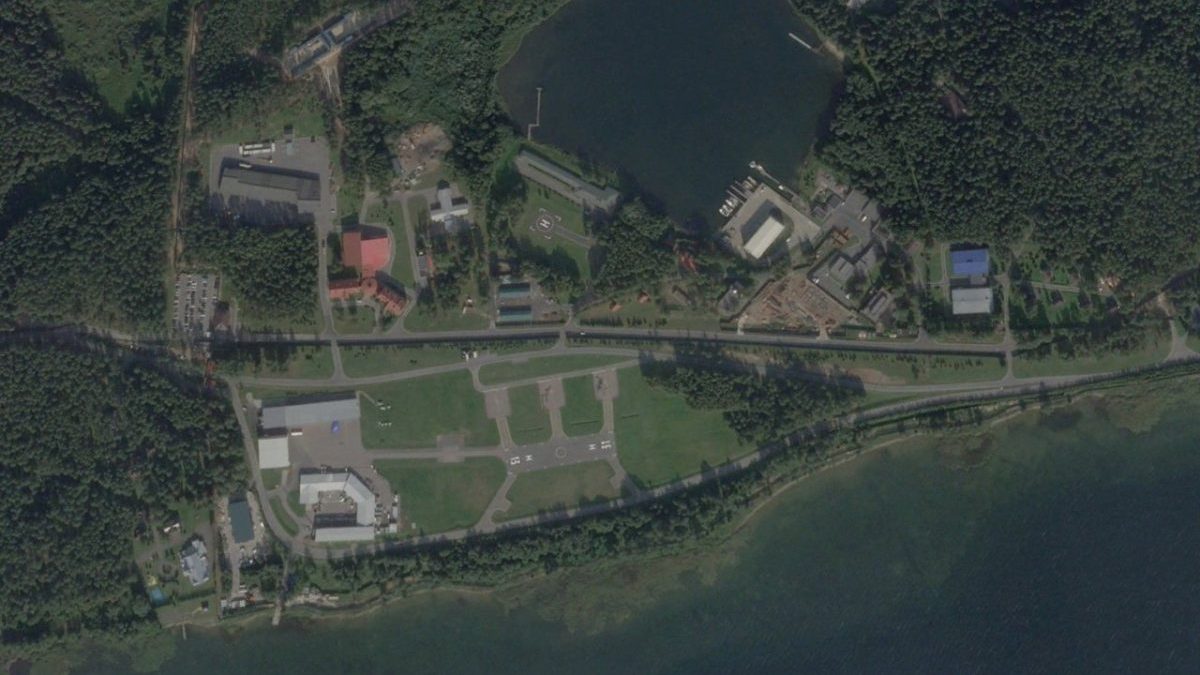
The Kremlin claims Kyiv launched a drone attack on the Russian president’s residence, but has not provided evidence
Donald Trump’s unquestioning belief in Vladimir Putin’s claims about Ukraine threatens to derail peace talks once again after the US President appeared to side with Russia in a spat over an alleged attack on a presidential palace.
Russian foreign minister Sergei Lavrov claimed that 91 long-range drones were shot down over one of Putin’s residences, saying Russia’s position in peace talks would “be revised” as a result. He did not provide any evidence for the alleged attack.
The residence lies on the shores of Lake Valdai, in the Novgorod region of north-western Russia.
New FeatureIn ShortQuick Stories. Same trusted journalism.
Kyiv has denied claims that it was behind any attack, with Volodymyr Zelensky saying the claim was a “complete fabrication” designed to justify further attacks on Ukraine and undermine peace talks.
Residents of Valdai said they had not heard or seen any signs of a large-scale drone attack on Monday, according to independent media. Fourteen residents told Mozhem Obyasnit, a pro-democracy organisation based outside Russia, that they had received no text alerts warning of a drone attack, nor seen anything resembling an attack.
But Trump criticised Ukraine over the incident, saying it left him “very angry”.
“You know who told me about it? President Putin, early in the morning, he said he was attacked. It’s no good,” he told reporters outside his Mar-a-Lago home after a phone call with Putin.
“It’s a delicate period of time. This is not the right time. It’s one thing to be offensive because they’re offensive. It’s another thing to attack his house. It’s not the right time to do any of that.”
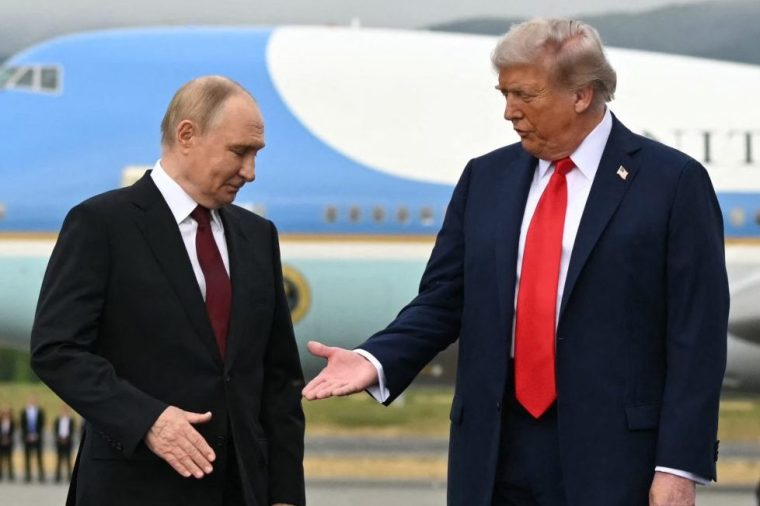 Donald Trump and Vladimir Putin before their meeting in Anchorage, Alaska, in August 2025. The Kremlin may have won short-term favour in the peace talks from Trump over the recent incident (Photo: Andrew Caballero-Reynolds/AFP)
The palace attack allegations come shortly after the US and Ukraine agreed some key peace terms during crunch talks in Florida this weekend.
The incident is a further blow to the US-brokered peace negotiations, which have continued throughout the year but have so far failed to bear fruit.
Defence insiders had hoped that a deal might be reached over Christmas, with the British military ramping up preparations for a possible deployment to Ukraine to act as a peacekeeping force after a ceasefire.
After talks this weekend, the US has offered Ukraine security guarantees for 15 years, Zelensky said, though Kyiv was seeking agreement up to 50 years. Trump said consensus on the guarantee was “close to 95 per cent”.
The final unresolved issues are territory, including the Russian-occupied Zaporizhzhia nuclear plant, Zelensky said.
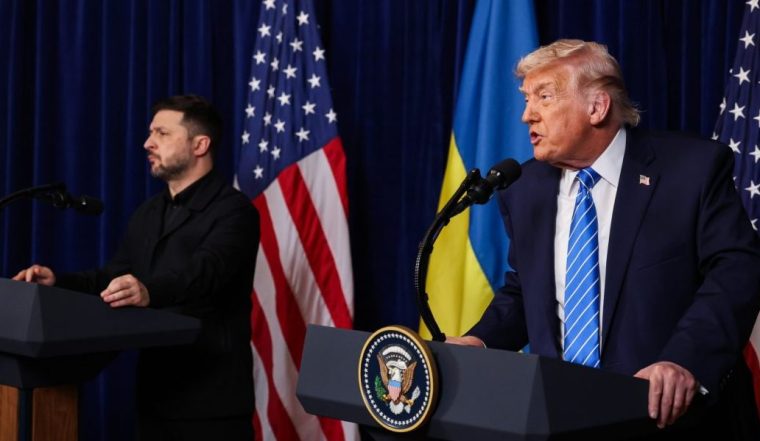 Trump and Volodymyr Zelensky following their meeting in Florida over the weekend. The palace attack allegations come shortly after the US and Ukraine agreed some key peace terms (Photo: Joe Raedle/Getty)
Dr Keir Giles, a former senior consulting fellow with the Russia and Eurasia programme at Chatham House and author of the book Who Will Defend Europe, said the alleged Ukrainian drone attack seemed to be a straightforward case of Russian propaganda.
“The meeting between Trump and Zelensky did not deliver the kind of results that Russia wanted, and it looked as though there was in fact going to be some kind of movement towards a settlement which would not be to Russia’s advantage,” he said.
“So, Russia moved immediately afterwards to try to redress the balance by persuading Trump that Ukraine is the problem, by telling Trump that there had been a Ukrainian attack that he would disapprove of… regardless of the fact that this is the kind of attack that’s carried out against Ukraine regularly.”
Giles said that the lack of evidence was likely to be because it was a “rush job”.
“The key point is that it doesn’t take any evidence at all that anything is real for Putin to persuade Trump to be angry about it,” he said.
The Russia expert said that the Kremlin may have won short-term favour in the peace talks from Trump over the incident – but that this may not last.
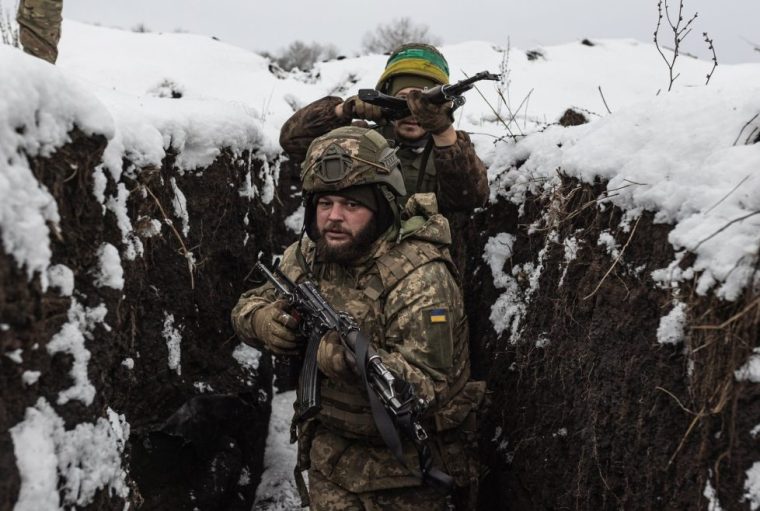 Ukrainian soldiers train in the Kharkiv Oblast. Moscow wants Kyiv to withdraw from the entire Donbas region, most of which it occupies (Photo: Diego Herrera Carcedo/Anadolu via Getty)
“It never takes a great deal to tip the balance of Trump’s mind one way or the other. For the time being, the Kremlin might have regained the advantage… but this has been a very fluid situation throughout the whole of this year, and it won’t be the last time that Trump flip-flops between one extreme,” he said.
Giles said that irrespective of the palace incident, the peace talks appeared to have stalled once again because none of what the US and Ukraine had agreed would be acceptable to Putin – the only person with the power to end the war.
Dr Marina Miron of the war studies department at King’s College London said she was less convinced that it was a false flag operation, but agreed that peace talks were stalling regardless.
Miron said a false flag attack was likely to have come before the Florida talks rather than after, and would have involved planted evidence for maximum effect. She also suggested there might be little cause, because Ukraine had failed to agree its desired security arrangement with the US.
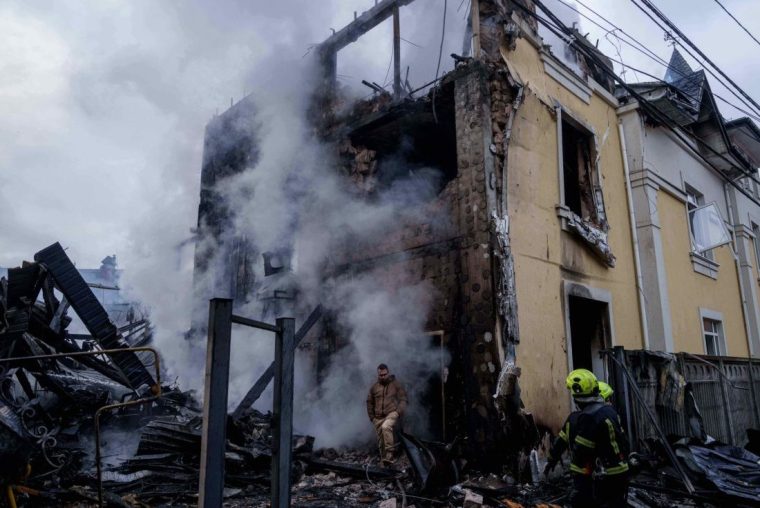 The aftermath of a Russian strike on Kyiv on Saturday. Ukraine fears Moscow will use the latest incident to launch a new wave of drone attacks (Photo: Evgeniy Maloletka/AP)
Although Trump had criticised Ukraine over the incident, Miron said it was unlikely to change the course of the negotiations.
Miron pointed to similar criticism of Russia for continuing to bomb Ukrainian cities during peace talks, and said political pressure would dictate that he had to make a public statement of some sort.
“Trump has his agenda,” she said, adding that she did not think this was likely to factor into the American negotiating position strongly.
“I don’t think that there will be any sort of breakthrough [in the peace talks] even if we take this incident out of consideration for now,” Miron said.
“Publicly, the US and Ukraine are saying they made good progress. But the final 10 per cent [which has not been agreed] are the most important, where you cannot find a compromise that both sides will agree on.”