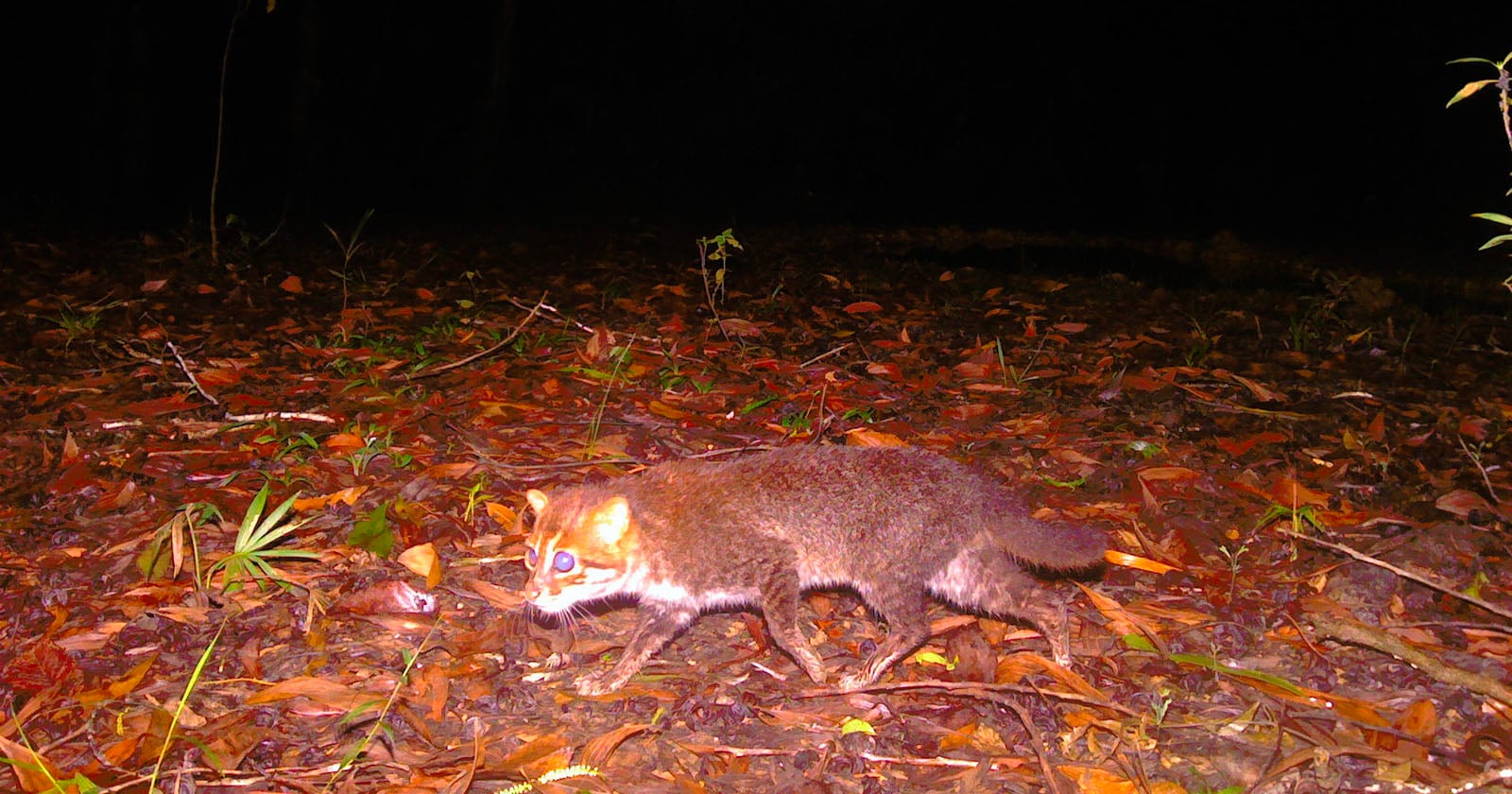
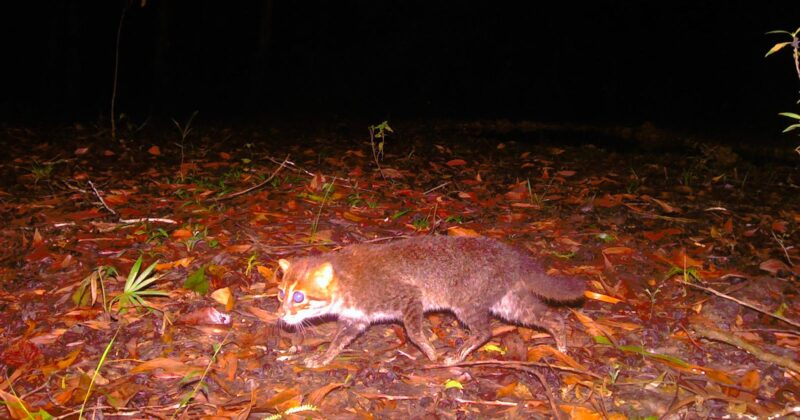
 The flat-headed cat has been officially recorded in Thailand for the first time since 1995.
Trail cameras have documented the presence of the endangered flat-headed cat in southern Thailand, marking the species’ first confirmed appearance in the country in nearly three decades.
The flat-headed cat (Prionailurus planiceps), named for its flattened forehead and elongated skull, is one of the world’s rarest wild felines. It lives in fragmented habitats across Brunei, Indonesia, and Malaysia, and had been considered possibly extinct in Thailand.
Remote camera traps deployed in Thailand’s Princess Sirindhorn Wildlife Sanctuary recorded the species in 2024 and 2025, representing the first detections in the country since 1995. Thirteen detections were documented in 2024, followed by sixteen more in 2025, as part of what Panthera described as the largest-ever survey of the species.
 The discovery was announced by Thailand’s Department of National Parks, Wildlife and Plant Conservation and the wild cat conservation organization Panthera.
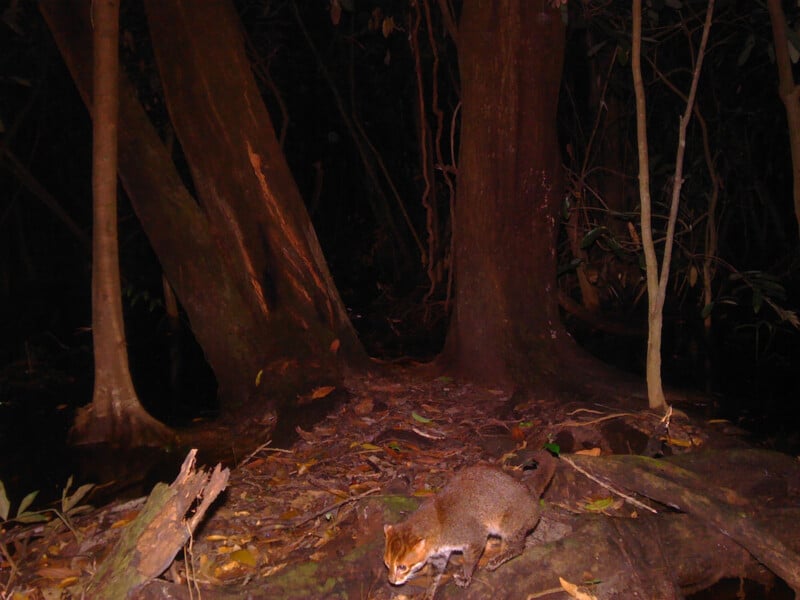
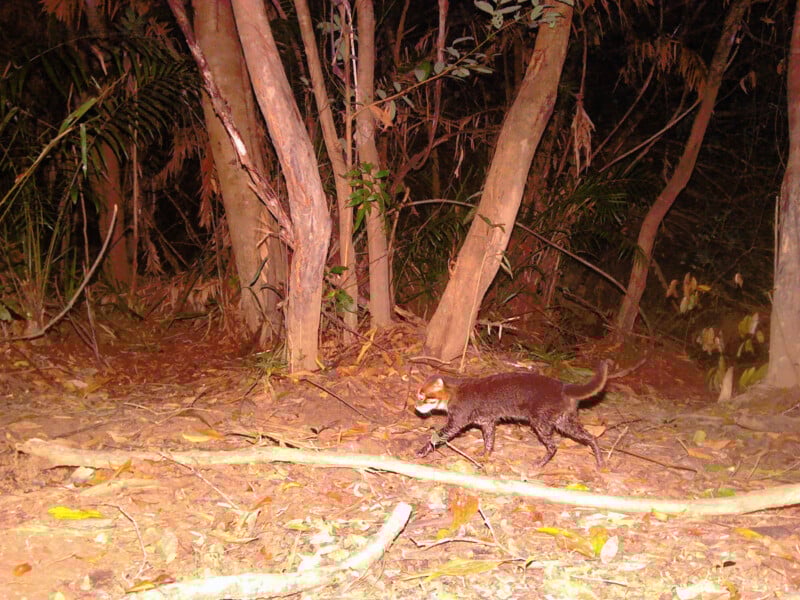
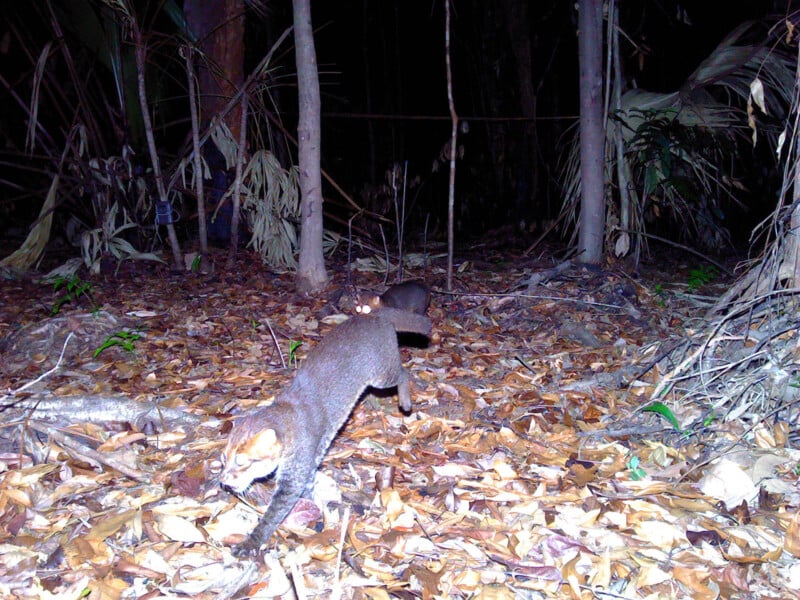 The researchers also captured this image of a female cat with a cub.
Among the images captured was a female flat-headed cat with a cub, evidence that the species is breeding in the region. Researchers noted that this finding is particularly significant because flat-headed cats typically produce only a single cub per litter.
“For decades, the flat-headed cat has been classified as ‘likely extinct,’ but after years of sustained protection, strong scientific partnerships, and community stewardship, we can now celebrate its return to Thailand this National Wildlife Day,” Suchart Chomklin, Thailand’s minister of Natural Resources and Environment, says in a statement.
The flat-
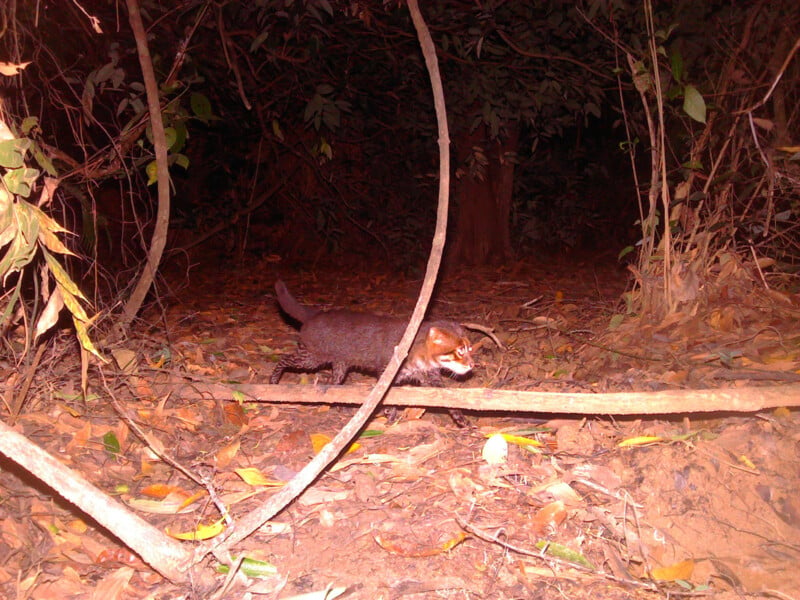
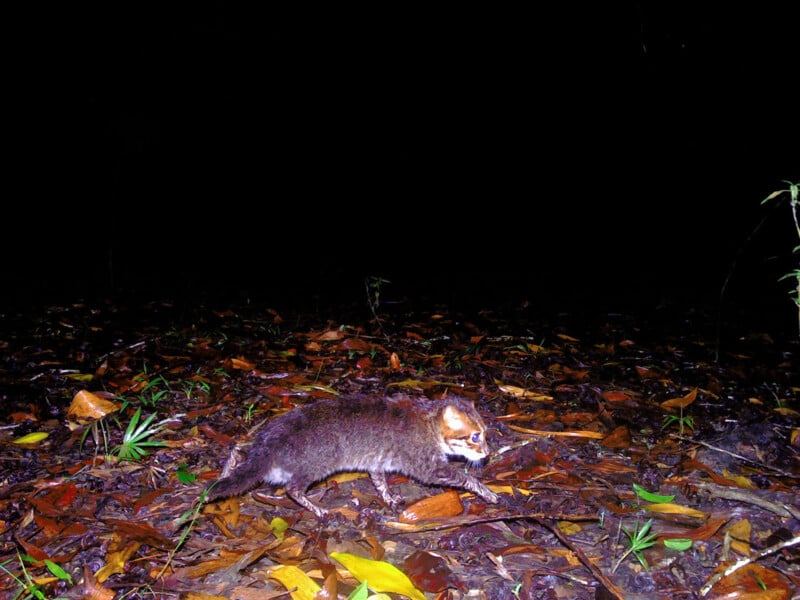
The flat-headed cat is the smallest wild cat species in Southeast Asia, weighing about 4.4 pounds (2 kilograms), less than a typical domestic cat. It has a short, tubular body, slender legs, and a stubby tail. Webbed toes help it move through wetland environments, including peat-swamp forests, marshes, lakes, streams and riverine forests, where it is thought to hunt fish and other aquatic prey. Its small size, nocturnal behavior and preference for dense, waterlogged habitats make it exceptionally difficult to observe, and scientists know relatively little about its behavior and ecology.
Panthera and its partners are using the new data as part of updated IUCN Red and Green List assessments of the species, which are expected to be published in early 2026. Researchers say the confirmation of a breeding population underscores the importance of continued protection of Thailand’s remaining wetland and lowland forest habitats.
Image credits: DNP/Panthera Thailand