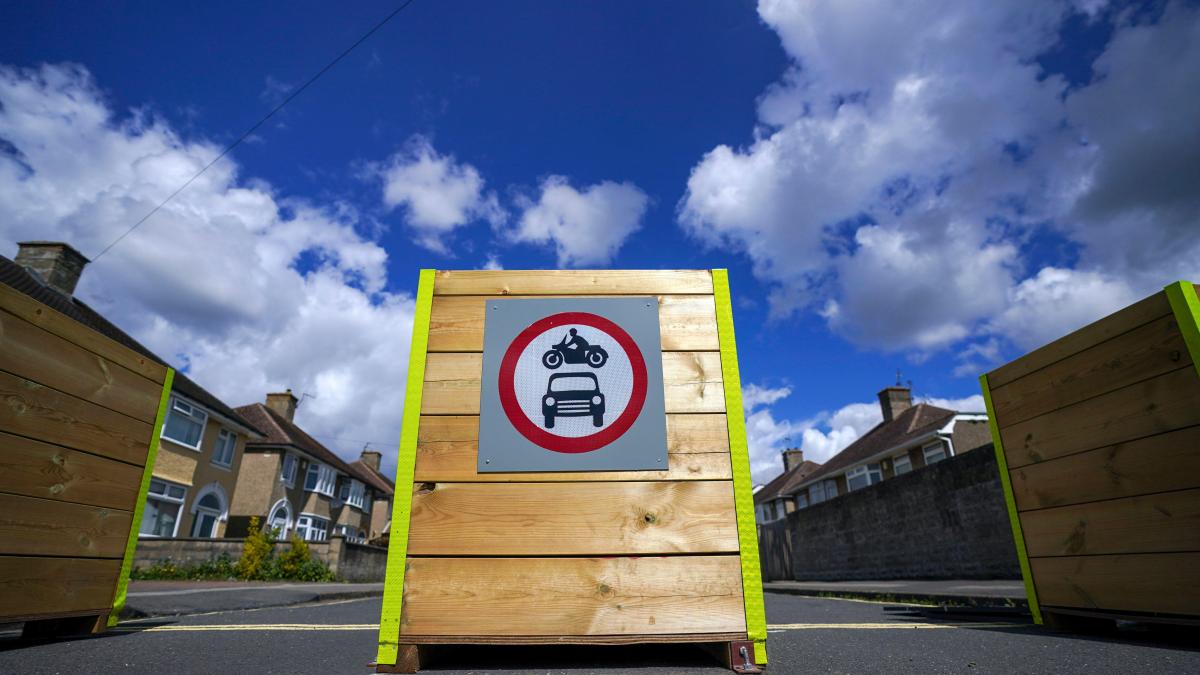
Restrictive climate policies such as inner-city car bans can backfire by turning people off environmentalism, a large-scale survey has suggested.
The study by the Santa Fe Institute found strong opposition to the idea of the government imposing strict climate policies, such as banning short-haul flights, banishing cars from city centres and requiring people to eat less meat and turn their thermostats down.
Opposition was high even among those who supported the government taking softer steps to encourage these same behaviours, suggesting that overly strict climate policies may sap people’s willingness to make greener choices.
• Sarah Ditum: Climate cultists to blame for rising scepticism
The researchers said the results showed that policymakers needed to design climate policies carefully to ensure they did not “cultivate anti-environmentalist values”. More than 3,300 Germans were asked about their views on climate change-related policies for the survey.
“Policies don’t just spur a target behaviour,” said the study’s lead author, Katrin Schmelz. “They can change people’s underlying values, leading to unintended negative effects.”
Asked whether they supported a ban on cars in city centres, nearly two fifths of those surveyed said they were strongly opposed, compared with less than a fifth who were strongly opposed to the government simply discouraging people from driving into town.
Over half were strongly opposed to enforced limits on meat consumption, compared with less than a fifth who were opposed to government encouragement to eat less meat.
The researchers found that of all proposed restrictions, people were most in favour of a ban on short-haul flights. They speculated this was because the European train network provided a cheap and easy alternative. “People … respond much more positively if they don’t feel that a policy restricts their freedom,” said Sam Bowles, a co-author.
The previous German government endured a harsh lesson in the unpopularity of bans when it attempted to stop the installation of new gas boilers from last year. After a public outcry the measure was watered down to require new heating systems to use mostly renewable energy by 2028. In February’s election the Greens lost power to the Christian Democrats, who pledged to water down the regulation further.
In a move thought to be inspired by the German Greens’ unpopularity, Ed Miliband confirmed in January that the government would not ban new gas boilers in 2035, as previously planned. He said he was “very wary” of stopping people installing boilers “when we can’t guarantee that heat pumps are going to be cheaper for people”.
Labour faced a backlash of its own when it lost an Uxbridge by-election in 2023, widely seen as a result of Sir Sadiq Khan, the London mayor, expanding the city’s ultra-low emission zone (Ulez). Since its expansion, opposition to Ulez has died down — only 13 per cent of Londoners told the Energy and Climate Intelligence Unit they thought it was an important issue last year — but Labour has abandoned plans for a similar clean air zone in Manchester.
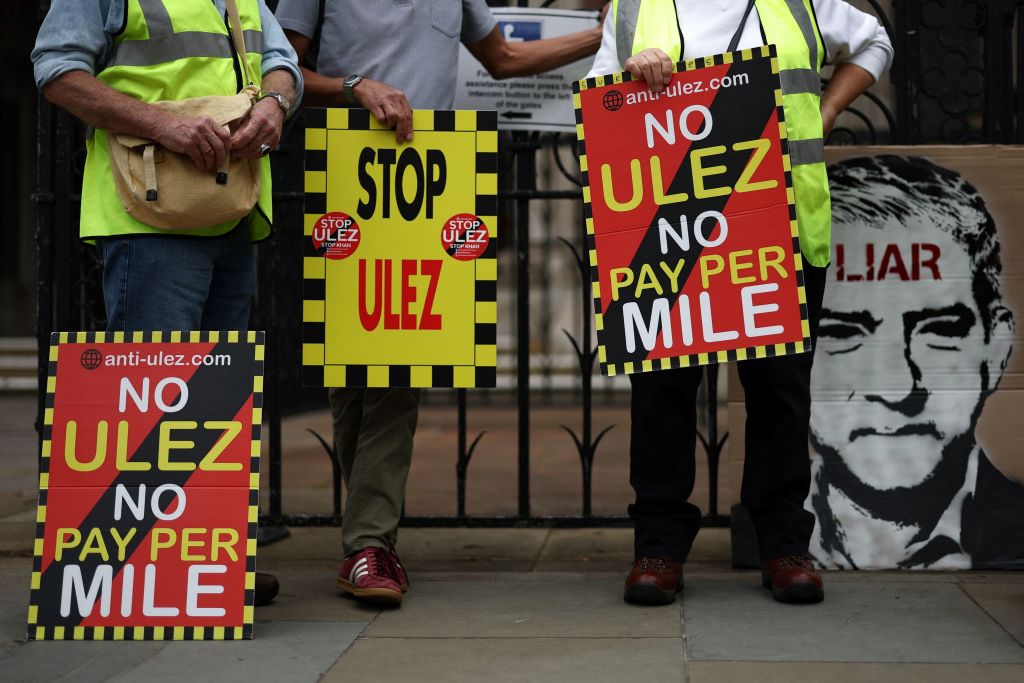
A protest against Sir Sadiq Khan’s Ulez expansion at the High Court in 2023
HENRY NICHOLLS/AFP
While the government has reinstated a ban on new petrol cars by 2030, its climate policies largely consist of grants to encourage people to make greener choices. Households can already get £7,500 off the price of a heat pump and up to £3,750 off the price of an electric car, and the government’s £13 billion effort to increase home energy efficiency will also include grants for solar panels and batteries.
The authors of the study said their research did not indicate that governments should never resort to banning polluting behaviours, just that they should “find ways to mitigate” their unintended effect on public attitudes. “To mitigate climate change … policy designers need to ensure that climate policies are themselves sustainable in the long run,” they said.