Viggo Terling, is a Research Associate at the Adam Smith Institute and member of Chatham House’s Common Futures Conversations.
“Ingratitude is the vice of small souls.”
Those words, attributed to the French philosopher Nicolas de Condorcet, are what spring to mind when watching one of the Foreign Office’s latest social media stunts.
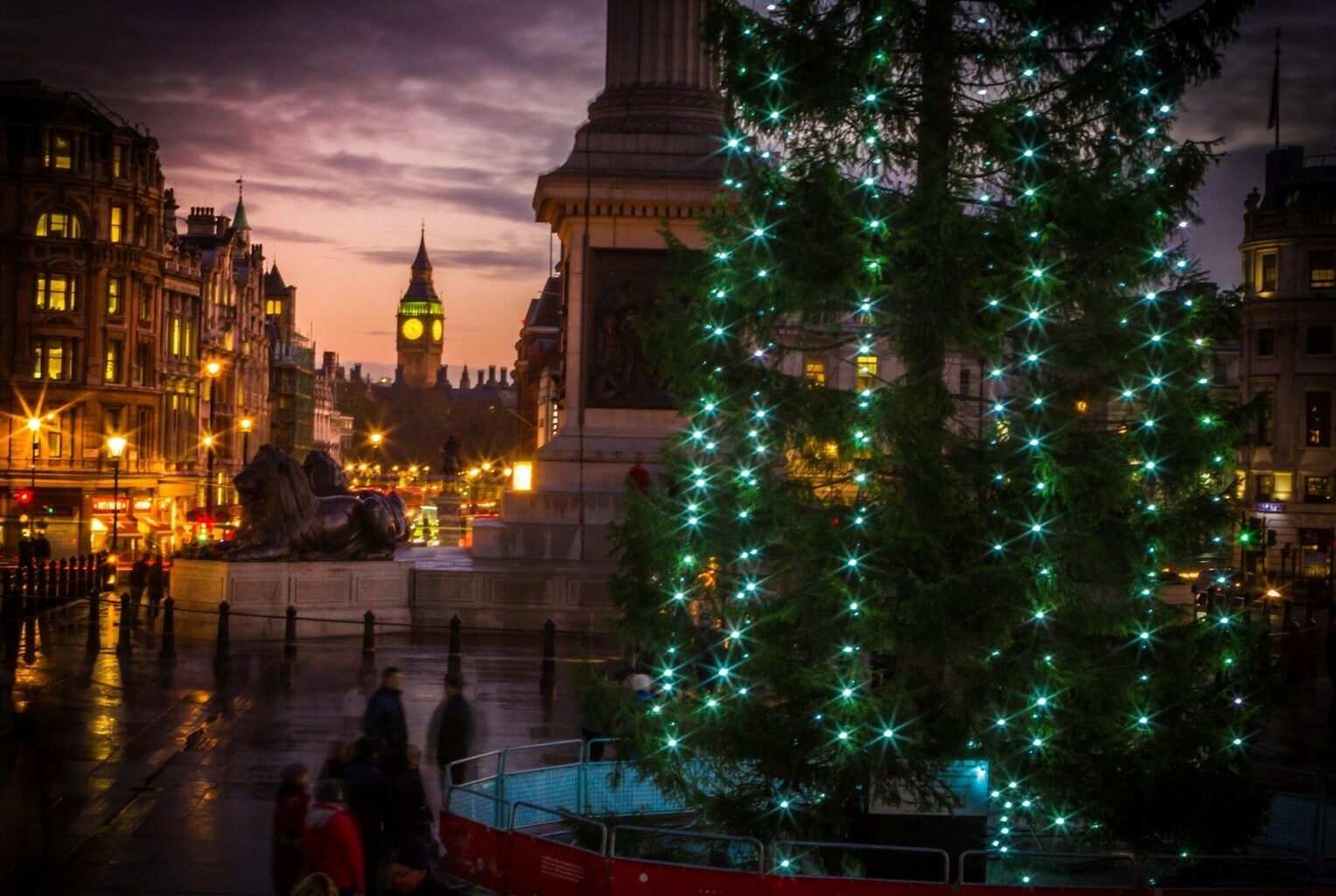
The video in question features the Norwegian Foreign Minister, Espen Barth Eide, who—rather than announcing a new partnership in defence or trade—proceeds to read a series of “mean tweets” about the Trafalgar Square Christmas tree.
The annual Christmas tree, gifted from the City of Oslo in gratitude for Britain’s role in the Second World War, has long been treated as a national punchline. As Barth Eide discovers, Londoners are unyielding in their criticism of the tree: a “depressing cactus”, a “wonky corn on the cob”, a symbol, so it seems, of national decline.
Comparisons are often drawn with Christmas trees across the pond, and none more so than the Rockefeller Center tree in New York: vast, glossy, and unapologetically commercial, festooned to within an inch of its life. Against this American spectacle, our Norwegian spruce is routinely cast as an emblem of British smallness—of the diminished ambition and fading relevance of this island.
But this is nonsense—and worse than nonsense, it is embarrassing.
With Christmas less than a week away and a sense of festive spirit sorely needed in this country, why do we continue to find reasons to bask in our supposed misery? Our denigration of the Trafalgar Square tree should embarrass us—not least because of the ingratitude it shows towards a historic British partner, but because it represents a disregard for what makes Britain great.
Through his light smile and good humour, Barth Eide comes across as unfazed by Londoners’ “mean tweets”. Yet, if not ungrateful, the only other impression he might reasonably take from them is that Britain is a country deeply out of touch with its own history. The Trafalgar Square tree represents Britain at her best because it reminds us of a time when we were first in line, ready to sacrifice ourselves in defence of another nation’s freedom. It is not meant to be flashy, nor a tourism gimmick. The tradition of this gift is a testament to what that freedom continues to mean to Norway today.
Norway was invaded by Germany on 9 April 1940. When King Haakon VII was presented with an ultimatum to surrender, alongside promises to respect Norway’s “territorial integrity and political independence”, his reply was unequivocal:
“For my part, I cannot accept the German demands. It would conflict with all that I have considered to be my duty as King of Norway.”
Instead, he journeyed with his family perilously across Norway, zig-zagging through the country as they evaded the German onslaught. Being only 16 miles away, the obvious place of refuge was my native Sweden, a neutral country during the war. Yet Sweden chose caution over conscience, threatening Haakon with detention should he cross the border—a decision he (understandably) never forgave.
Britain, by contrast, showed courage. On 29 April, HMS Glasgow, under intense Luftwaffe bombardment, transported the Norwegian royal family some 620 miles to the northern city of Tromsø. Two months later, they were brought to Britain aboard HMS Devonshire.
The price of this was not trivial, but it was one Britain was willing to pay. The evacuation effort ultimately cost an aircraft carrier and two escort ships. However, once safely in exile, the Norwegian royal family became a living symbol of national resistance until they returned home in June 1945, once again aboard a British ship.
Ultimately, the Trafalgar Square Christmas tree is not a symbol of decline. It tells the story of two countries that defied the odds and stood, stoically, against the tyranny of Nazism. As a Swede, it doesn’t come naturally to speak kindly of the Norwegians. As a Brit, however, I find it astonishing that we lambast a country for trying to recognise our contribution to history, especially when so many at home seem allergic to doing so. Much like the statue of Churchill placed in central Oslo, the tree is a symbol of respect and remembrance; a simple “thank you”. I wonder—does the Rockefeller tree come with the same history?
Britain has long known the difference between right and wrong. Her steadfast support for Ukraine today continues to demonstrate that. The Trafalgar Square tree embodies this tradition. It deserves respect, not ridicule.
And one final point. The Christmas tree tradition originated in Northern Europe, and the Trafalgar Square tree is decorated in the traditional Scandinavian style: simple and minimalist. As Espen Barth Eide put it, Christmas trees need not be “overfilled with plastic”.
If you want your Christmas trees Americanised, then move to America.