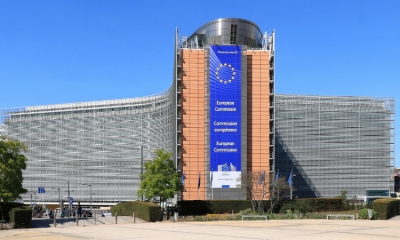
The European Commission has paid €1.1 billion to Croatia as the seventh tranche under the Recovery and Resilience Mechanism, after the country successfully fulfilled all 53 planned reform and investment milestones, the Croatian Ministry of Finance announced on Tuesday.
This represents the largest single payment Croatia has ever received from the EU budget, bringing the total funds paid out so far under the National Recovery and Resilience Plan (NRRP) to €6.4 billion, out of the €10 billion available to Croatia under the programme.
According to the Ministry of Finance, Croatia is currently the only EU member state for which the European Commission has confirmed the full completion of all milestones and targets across seven approved payment requests.
The reforms and investments covered by the seventh payment include the implementation of the first set of measures under the fifth Action Plan to reduce administrative burdens on businesses, worth €207 million, as well as the simplification or removal of 62 regulatory requirements in professional services. Support was also provided for projects aimed at the commercialisation of innovation.
Significant progress was recorded in infrastructure and energy, including the upgrade of 328.1 kilometres of overhead high-voltage power lines and the connection of 1,500 megawatts of renewable energy capacity to the national grid.
Other measures include the integration of water service providers, a reduction in the share of municipal waste sent to landfill to 51 percent, and the reconstruction and upgrade of a 3.4-kilometre double-track railway section between Kustošija, Zagreb West Station and Zagreb Main Station.
The payment also reflects advances in digitalisation, with 32 public agricultural services digitised and multiple e-services integrated into a new mobile public services platform.
In the social and labour sphere, Croatia adopted a new Labour Market Act, increasing both the amount and duration of unemployment benefits, reducing administrative requirements for vulnerable workers, and fully digitalising the unemployment benefit application process. Pension income and minimum pensions were increased, while social welfare benefit information was digitised at the national level.
Finally, the Ministry highlighted the development and adoption of a new adult education programme focused on green skills in the construction sector, aimed at workers from third countries.
The European Commission’s approval of the payment further strengthens Croatia’s position among the most successful EU member states in implementing recovery and resilience funding, the Ministry said.
@sa.alaoui ????Brussels, Belgium ???????????????????????? #internationalrelations #publicdiplomacy #diplomacy #politicalscience #europeanunion #europeancommission #europe #IR #irstudent #career #CapCut ♬ after hours – nadia